THE ADVENTURE COLLECTIVE® · Independent discovery and booking for outdoor travel

A full-day journey from Accra that pairs the Kakum canopy walk with visits to Elmina and Cape Coast castles—an immersive mix of rainforest heights and heavy history. Expect nine hours of walking, coastal scenery, and a thoughtful look at Ghana’s colonial past.
A full-day journey from Accra that pairs the Kakum canopy walk with visits to Elmina and Cape Coast castles—an immersive mix of rainforest heights and heavy history. Expect nine hours of walking, coastal scenery, and a thoughtful look at Ghana’s colonial past.
You step off the air-conditioned minivan and the Atlantic breeze pushes past the line of palms that borders Ghana’s coastline. The day opens with the sharp hum of insects and the rainforest canopy above Kakum National Park, where a suspended steel walkway threads through emergent trees and dares you to look down at the shadowed understory.
Verified experiences and guided adventures in the surrounding area.
Operated by Kaya Tours · Accra, Greater Accra Region
You step off the air-conditioned minivan and the Atlantic breeze pushes past the line of palms that borders Ghana’s coastline. The day opens with the sharp hum of insects and the rainforest canopy above Kakum National Park, where a suspended steel walkway threads through emergent trees and dares you to look down at the shadowed understory.
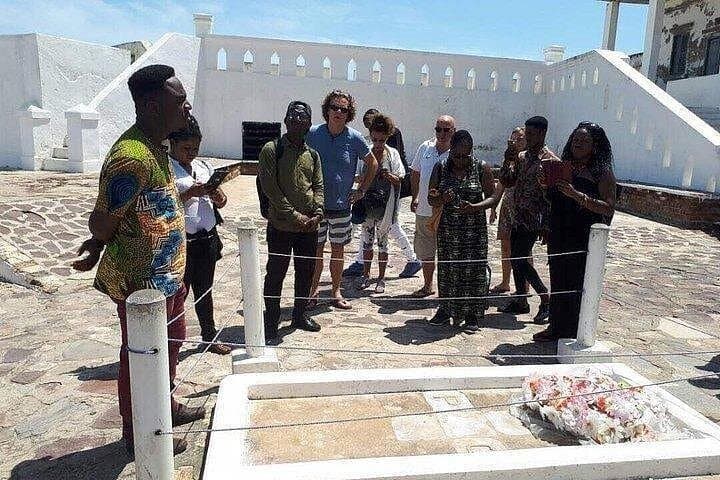
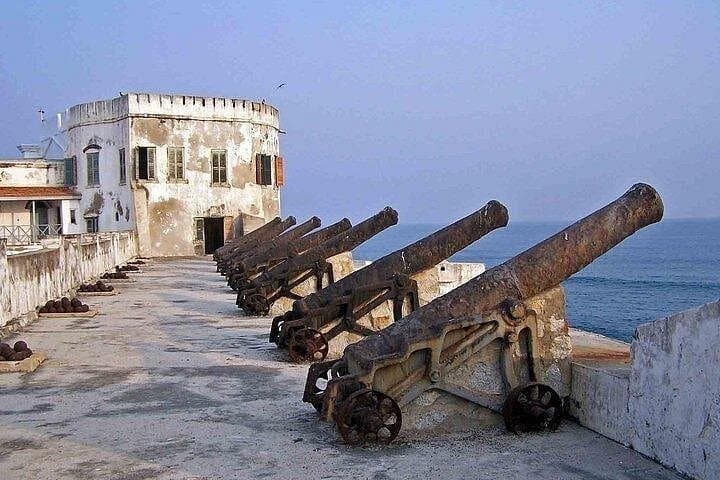
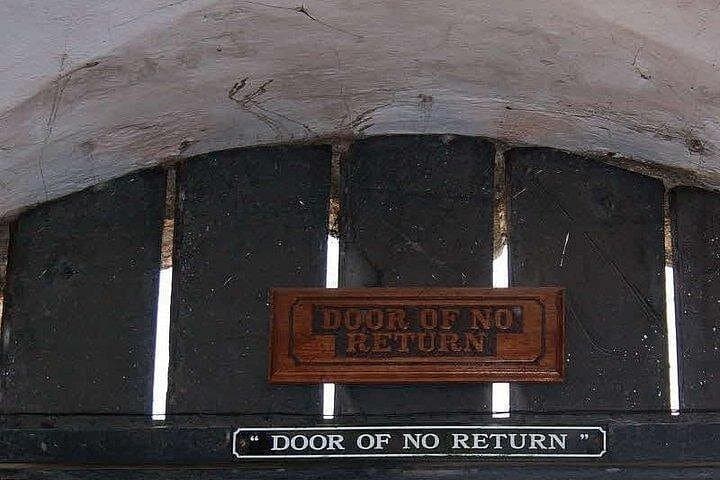
This one-day loop links three distinct histories: the coastal forts of Elmina and Cape Coast—European-built trading posts turned slave dungeons from the 15th–19th centuries—and the lowland rainforest of Kakum, a remnant of West Africa’s once-extensive evergreen forests. Geologically the coast is a mix of sandy beaches and coastal plains underlain by ancient metamorphic rocks inland; the forest floor holds lateritic soils that feed tall, buttressed trees and a dense understory. Culturally, the route traces Ghana’s role in Atlantic trade and modern efforts at memorialization and education. Local guides narrate the castles’ rooms, the dungeons’ cramped passageways, and the administrative history of the Gold Coast while inviting reflection on resilience and diasporic ties.
Practically: expect a full nine-hour day with moderate walking—forest trails, elevated bridges, and castle staircases. Wear grippy shoes, bring sun protection and steady hydration, and carry small bills for entrance fees or souvenirs. Photography is common but observe guided restrictions inside memorial spaces. Plan on breakfast before departure and a local lunch included at the end of the route, and allow time to absorb both the landscape and the heavy history it frames.
The tour runs about nine hours and typically includes private transport from Accra, entrance fees to Kakum and the castles, breakfast, and lunch.
The canopy bridge is stable but elevated; visitors with a strong fear of heights may find sections challenging—guides often allow participants to turn back at platforms.
Yes—there are restroom facilities at the park and castle sites, and a local lunch is provided as part of the tour package.
The tour is marketed as physically easy in some listings, but it involves stairs, uneven surfaces, and heights; check with the operator about mobility needs and infant seating.
Kaya Tours operates guided outdoor trips and adventures with an emphasis on safety, stewardship, and memorable experiences.
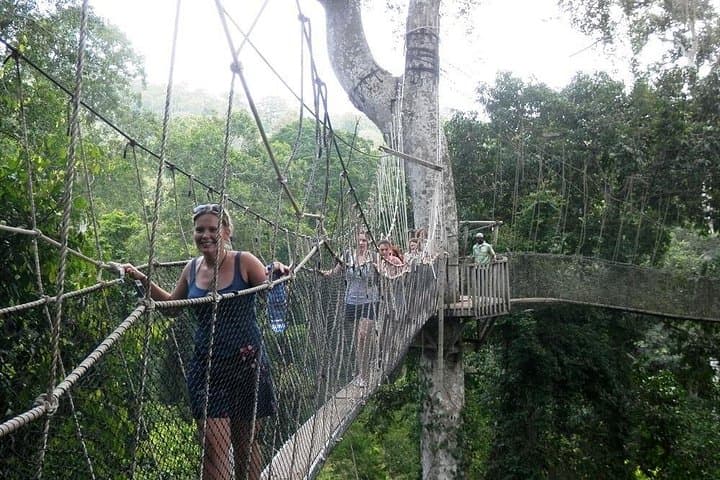
You step off the air-conditioned minivan and the Atlantic breeze pushes past the line of palms that borders Ghana’s coastline. The day opens with the sharp hum of insects and the rainforest canopy above Kakum National Park, where a suspended steel walkway threads through emergent trees and dares you to look down at the shadowed understory.
You step off the air-conditioned minivan and the Atlantic breeze pushes past the line of palms that borders Ghana’s coastline. The day opens with the sharp hum of insects and the rainforest canopy above Kakum National Park, where a suspended steel walkway threads through emergent trees and dares you to look down at the shadowed understory.
This one-day loop links three distinct histories: the coastal forts of Elmina and Cape Coast—European-built trading posts turned slave dungeons from the 15th–19th centuries—and the lowland rainforest of Kakum, a remnant of West Africa’s once-extensive evergreen forests. Geologically the coast is a mix of sandy beaches and coastal plains underlain by ancient metamorphic rocks inland; the forest floor holds lateritic soils that feed tall, buttressed trees and a dense understory. Culturally, the route traces Ghana’s role in Atlantic trade and modern efforts at memorialization and education. Local guides narrate the castles’ rooms, the dungeons’ cramped passageways, and the administrative history of the Gold Coast while inviting reflection on resilience and diasporic ties.
Practically: expect a full nine-hour day with moderate walking—forest trails, elevated bridges, and castle staircases. Wear grippy shoes, bring sun protection and steady hydration, and carry small bills for entrance fees or souvenirs. Photography is common but observe guided restrictions inside memorial spaces. Plan on breakfast before departure and a local lunch included at the end of the route, and allow time to absorb both the landscape and the heavy history it frames.