THE ADVENTURE COLLECTIVE® · Independent discovery and booking for outdoor travel

Walk with a private caravan from M'Hamid to the towering Chegaga dunes over four days—about 20 km of varied terrain daily, nights in traditional bivouac, and a 4x4 return. This trek blends nomadic hospitality, desert geology, and practical, low-impact travel.
Walk with a private caravan from M'Hamid to the towering Chegaga dunes over four days—about 20 km of varied terrain daily, nights in traditional bivouac, and a 4x4 return. This trek blends nomadic hospitality, desert geology, and practical, low-impact travel.
Morning light cuts the horizon as the caravan laces itself out of M'Hamid—camels lowing, guides tightening loads, walkers adjusting packs. The first day is a measured introduction: five hours of walking across stony plains and salt flats, then into low dunes where the wind draws ridges like calligraphy on the sand.
Verified experiences and guided adventures in the surrounding area.
Operated by Sahara Peace · M'Hamid El Ghizlane, Drâa-Tafilalet
Morning light cuts the horizon as the caravan laces itself out of M'Hamid—camels lowing, guides tightening loads, walkers adjusting packs. The first day is a measured introduction: five hours of walking across stony plains and salt flats, then into low dunes where the wind draws ridges like calligraphy on the sand.
This route follows centuries-old tracks used by nomadic families who moved herds and goods across the southern edge of the Sahara. Geologically the landscape shifts quickly: rocky hamada, gravelly reg, and the sweeping sand sea of Erg Chegaga, formed by wind redistribution of sediments from the Atlas and Sahara. Culturally the trek is as much about hospitality as distance—bivouac life centers around shared meals, tea rituals, and nights under an enormous sky.
Expect steady, moderate walking—roughly 20 km a day—on varied terrain with temperature swings between hot afternoons and cool nights. Guides set up tents, supply mattresses and blankets, and prepare three meals a day; a 4x4 meets the group at Chegaga for the return transfer and a hot shower at the bivouac.
Practical edge: carry a daypack with water, sun protection, and layered clothing; break in boots on mixed terrain; plan for early starts to avoid midday heat. Respect local customs—ask before photographing people—and leave no trace: fuel for the bivouac is managed by the team, but human waste and trash should be packed out. By the third sunset on the dunes, the desert has a habit of making distance feel like accomplishment.
Typically about 20 km per day, roughly 4–6 hours of walking depending on pace and terrain.
Yes—bivouac supplies mattresses, blankets and communal tents; you should bring a personal sleeping liner if you prefer extra hygiene.
Travelers should have moderate fitness; the trip is private so pace can be adjusted, but it’s not recommended for those with serious mobility or cardiovascular issues.
On day four a 4x4 collects the group at Chegaga and returns to the bivouac, where a hot shower and midday meal await.
Sahara Peace operates guided outdoor trips and adventures with an emphasis on safety, stewardship, and memorable experiences.
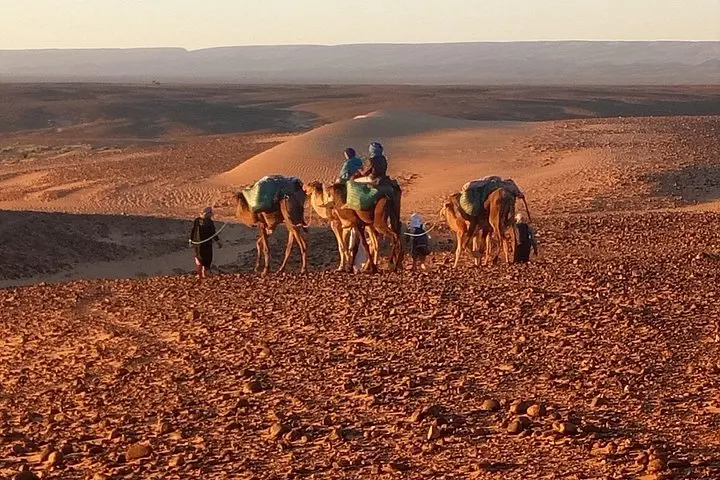
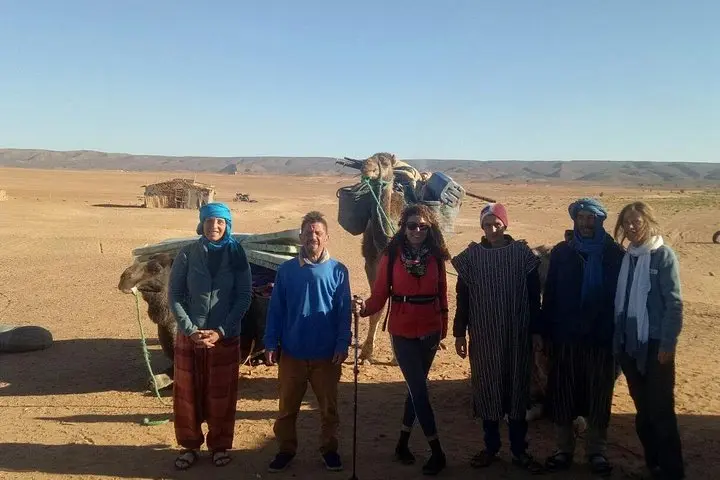
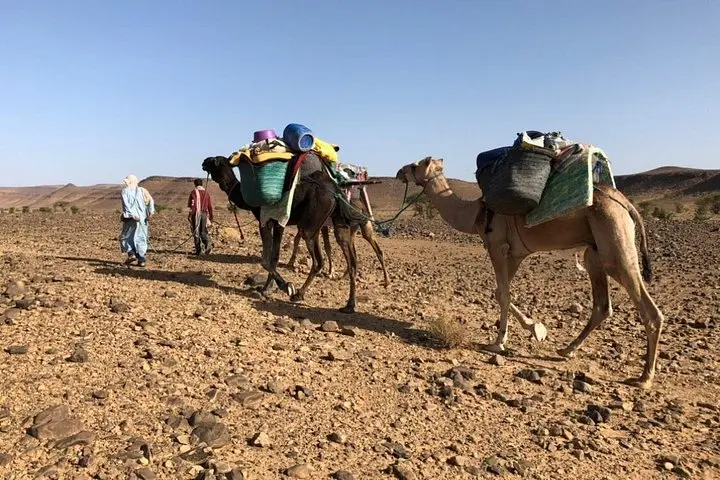
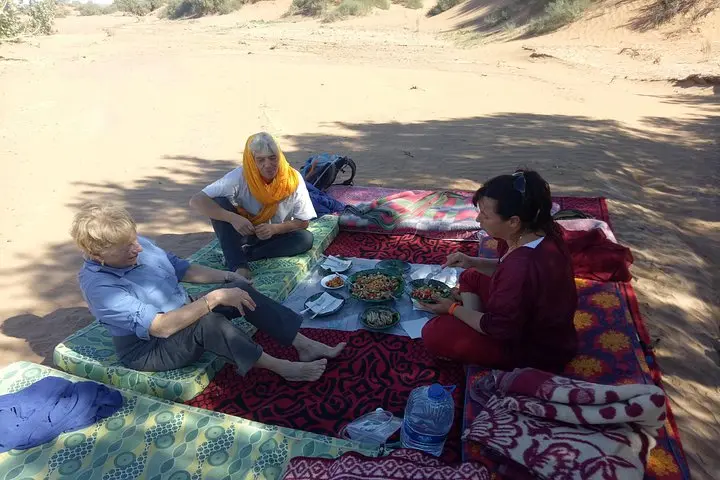
Morning light cuts the horizon as the caravan laces itself out of M'Hamid—camels lowing, guides tightening loads, walkers adjusting packs. The first day is a measured introduction: five hours of walking across stony plains and salt flats, then into low dunes where the wind draws ridges like calligraphy on the sand.
Morning light cuts the horizon as the caravan laces itself out of M'Hamid—camels lowing, guides tightening loads, walkers adjusting packs. The first day is a measured introduction: five hours of walking across stony plains and salt flats, then into low dunes where the wind draws ridges like calligraphy on the sand.
This route follows centuries-old tracks used by nomadic families who moved herds and goods across the southern edge of the Sahara. Geologically the landscape shifts quickly: rocky hamada, gravelly reg, and the sweeping sand sea of Erg Chegaga, formed by wind redistribution of sediments from the Atlas and Sahara. Culturally the trek is as much about hospitality as distance—bivouac life centers around shared meals, tea rituals, and nights under an enormous sky.
Expect steady, moderate walking—roughly 20 km a day—on varied terrain with temperature swings between hot afternoons and cool nights. Guides set up tents, supply mattresses and blankets, and prepare three meals a day; a 4x4 meets the group at Chegaga for the return transfer and a hot shower at the bivouac.
Practical edge: carry a daypack with water, sun protection, and layered clothing; break in boots on mixed terrain; plan for early starts to avoid midday heat. Respect local customs—ask before photographing people—and leave no trace: fuel for the bivouac is managed by the team, but human waste and trash should be packed out. By the third sunset on the dunes, the desert has a habit of making distance feel like accomplishment.