THE ADVENTURE COLLECTIVE® · Independent discovery and booking for outdoor travel

Spend a focused day moving through Addis Ababa’s museums, markets, and mountain viewpoints. This seven-hour route pairs cultural immersion with practical tips for altitude, crowds, and local etiquette.
Spend a focused day moving through Addis Ababa’s museums, markets, and mountain viewpoints. This seven-hour route pairs cultural immersion with practical tips for altitude, crowds, and local etiquette.
Morning light hits the red-tiled roofs of Addis Ababa and the city wakes with the smell of roasted beans—an immediate invitation to move through neighborhoods that hold centuries of history.
Verified experiences and guided adventures in the surrounding area.
Operated by Explore With Bruk · Addis Ababa, Addis Ababa
Morning light hits the red-tiled roofs of Addis Ababa and the city wakes with the smell of roasted beans—an immediate invitation to move through neighborhoods that hold centuries of history.
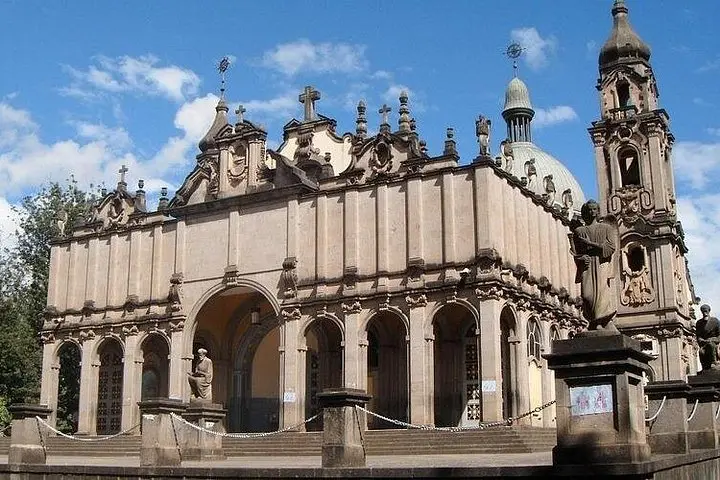
This seven-hour circuit threads you from the solemn columns of Holy Trinity Cathedral to the quiet, luminous halls of the National Museum, where "Lucy" anchors Ethiopia’s claim as the Cradle of Humanity. Drive up to Mount Entoto and feel the eucalyptus-scented wind push against the city below; the highlands here are lava-formed, their volcanic soils feeding the coffee trees that define local life. In Mercato, Africa’s largest open-air market, the pulse of trade beats fast: spices, textiles, and recycled goods stacked shoulder-high.
Along the way you’ll pass Piassa’s Tomoca Coffee—an institution—and the historic Taitu Hotel, a reminder of early 20th-century modernization under Empress Taitu and Menelik II. The Ethnological Museum, set in Haile Selassie’s former palace, reframes cultural artifacts around life stages rather than regions, offering an intimate look at ritual, cloth, and craft.
Practical guidance: expect lots of short walks and some uneven surfaces, plus traffic between sites. Altitude matters—Addis sits around 2,300 m (Entoto rises higher), so hydrate and take your time climbing stairs. Dress modestly for religious sites; comfortable walking shoes and a light jacket are smart year-round. Start early to avoid peak market crowds, carry small bills for haggling, and bring a charged camera—Addis rewards both curiosity and patience.
Yes—this tour’s inclusions list entrance fees to the National Museum, Ethnological Museum, and other specified sites as covered.
The provider notes wheelchair accessibility for transportation and many surfaces, but some historical sites may have stairs—check specifics with the operator.
The route is low-impact with short walks and driving between stops; however, altitude can make activity feel harder than at sea level.
Bottled water and coffee/tea are included; full meals are not listed, so plan for a snack or stop at a local café during the day.
Explore With Bruk operates guided outdoor trips and adventures with an emphasis on safety, stewardship, and memorable experiences.
Morning light hits the red-tiled roofs of Addis Ababa and the city wakes with the smell of roasted beans—an immediate invitation to move through neighborhoods that hold centuries of history.
Morning light hits the red-tiled roofs of Addis Ababa and the city wakes with the smell of roasted beans—an immediate invitation to move through neighborhoods that hold centuries of history.
This seven-hour circuit threads you from the solemn columns of Holy Trinity Cathedral to the quiet, luminous halls of the National Museum, where "Lucy" anchors Ethiopia’s claim as the Cradle of Humanity. Drive up to Mount Entoto and feel the eucalyptus-scented wind push against the city below; the highlands here are lava-formed, their volcanic soils feeding the coffee trees that define local life. In Mercato, Africa’s largest open-air market, the pulse of trade beats fast: spices, textiles, and recycled goods stacked shoulder-high.
Along the way you’ll pass Piassa’s Tomoca Coffee—an institution—and the historic Taitu Hotel, a reminder of early 20th-century modernization under Empress Taitu and Menelik II. The Ethnological Museum, set in Haile Selassie’s former palace, reframes cultural artifacts around life stages rather than regions, offering an intimate look at ritual, cloth, and craft.
Practical guidance: expect lots of short walks and some uneven surfaces, plus traffic between sites. Altitude matters—Addis sits around 2,300 m (Entoto rises higher), so hydrate and take your time climbing stairs. Dress modestly for religious sites; comfortable walking shoes and a light jacket are smart year-round. Start early to avoid peak market crowds, carry small bills for haggling, and bring a charged camera—Addis rewards both curiosity and patience.