THE ADVENTURE COLLECTIVE® · Independent discovery and booking for outdoor travel

Ride one of Sri Lanka’s most scenic rail lines from Ella to Haputale, walk through tea plantations to the historic Adisham Bungalow, and return the same day—an easy highland introduction to plantation history and Himalayan-like ridgelines.
Ride one of Sri Lanka’s most scenic rail lines from Ella to Haputale, walk through tea plantations to the historic Adisham Bungalow, and return the same day—an easy highland introduction to plantation history and Himalayan-like ridgelines.
Mist clings to the rails as the blue train eases out of Ella, the valley opening like a page of green tea rows. By the time the carriage drops you at Haputale station, the hills have shifted from soft mist to sunlit plantations; the walk along the track toward Adisham Bungalow threads you through village gardens and terraces that tilt toward the sky.
Verified experiences and guided adventures in the surrounding area.
Operated by Overa Tours · Haputale, Uva Province
Mist clings to the rails as the blue train eases out of Ella, the valley opening like a page of green tea rows. By the time the carriage drops you at Haputale station, the hills have shifted from soft mist to sunlit plantations; the walk along the track toward Adisham Bungalow threads you through village gardens and terraces that tilt toward the sky.
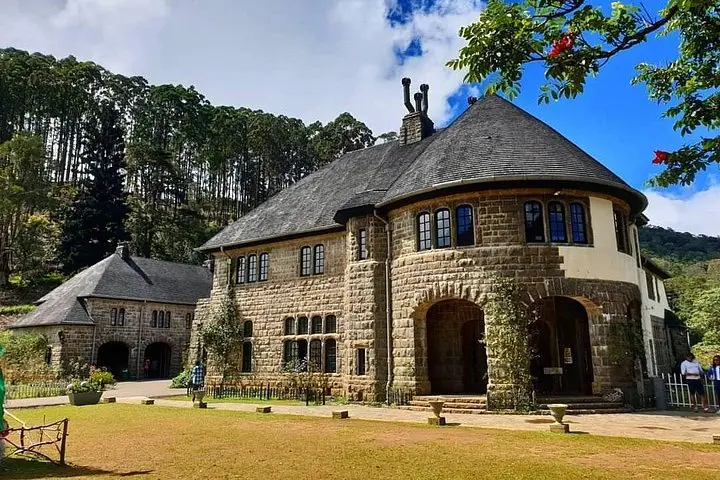
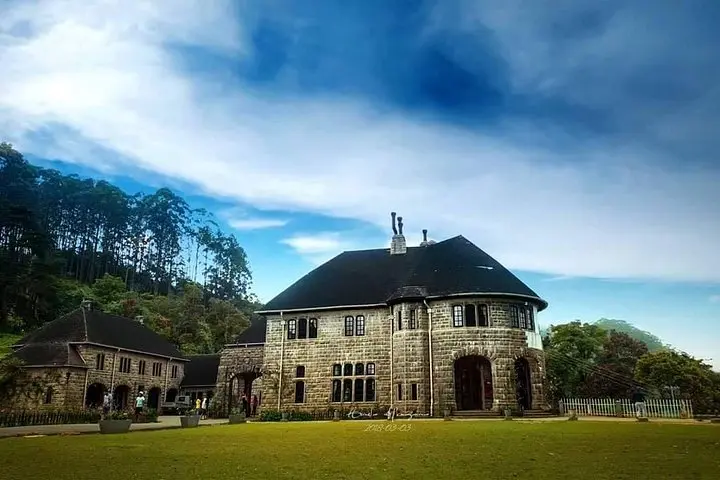
The bungalow itself is a 1931 Tudor-Jacobean manor built by Sir Thomas Villiers and later sold and converted into the Adisham Monastery of Saint Benedict. Perched on roughly 10 acres above the Haputale Gap (Haputale sits near 1,400 m elevation), the house keeps its period fittings and a chapel relic, offering a clear window into colonial plantation history and the Catholic monastic presence that followed.
Geology here is highland schist folded into steep ridges; the land encourages fast-draining soils perfect for tea, and viewpoints reveal the southern plains falling away toward the coast. Culturally, the route crosses small Tamil and Sinhalese tea-working communities—simple roadside stalls selling fresh curd and tea give quick local context.
Practical guidance: the full circuit is an easy, mostly flat day with short uneven sections along rail and plantation paths—expect 1–3 miles of walking total. Bring closed-toe shoes, sun protection, and a light rain layer; mornings and late afternoons can be cool. Trains run on a schedule so allow buffer time for connections; carry your passport for site entry and follow the guide’s safety directions when walking on or near tracks. The tour is low-impact but rewarding for anyone who prefers scenery with history rather than hardcore hiking.
Yes — the tour includes the scenic train segments between Ella and Haputale as listed in the itinerary.
Expect one to three miles of mostly easy walking between Haputale station and Adisham Bungalow on compacted paths and short stretches along the railway.
Adisham Bungalow (Adisham Monastery) is open to visitors; the tour notes admission is included so you won’t need to pay separately on this package.
The experience is family-friendly but involves uneven ground and some steps; infants must sit on laps for the train and the tour is not recommended for those with serious mobility or heart/spine conditions.
Overa Tours operates guided outdoor trips and adventures with an emphasis on safety, stewardship, and memorable experiences.


Mist clings to the rails as the blue train eases out of Ella, the valley opening like a page of green tea rows. By the time the carriage drops you at Haputale station, the hills have shifted from soft mist to sunlit plantations; the walk along the track toward Adisham Bungalow threads you through village gardens and terraces that tilt toward the sky.
Mist clings to the rails as the blue train eases out of Ella, the valley opening like a page of green tea rows. By the time the carriage drops you at Haputale station, the hills have shifted from soft mist to sunlit plantations; the walk along the track toward Adisham Bungalow threads you through village gardens and terraces that tilt toward the sky.
The bungalow itself is a 1931 Tudor-Jacobean manor built by Sir Thomas Villiers and later sold and converted into the Adisham Monastery of Saint Benedict. Perched on roughly 10 acres above the Haputale Gap (Haputale sits near 1,400 m elevation), the house keeps its period fittings and a chapel relic, offering a clear window into colonial plantation history and the Catholic monastic presence that followed.
Geology here is highland schist folded into steep ridges; the land encourages fast-draining soils perfect for tea, and viewpoints reveal the southern plains falling away toward the coast. Culturally, the route crosses small Tamil and Sinhalese tea-working communities—simple roadside stalls selling fresh curd and tea give quick local context.
Practical guidance: the full circuit is an easy, mostly flat day with short uneven sections along rail and plantation paths—expect 1–3 miles of walking total. Bring closed-toe shoes, sun protection, and a light rain layer; mornings and late afternoons can be cool. Trains run on a schedule so allow buffer time for connections; carry your passport for site entry and follow the guide’s safety directions when walking on or near tracks. The tour is low-impact but rewarding for anyone who prefers scenery with history rather than hardcore hiking.