THE ADVENTURE COLLECTIVE® · Independent discovery and booking for outdoor travel

Three hours of coastal trails, four beaches, and the chance to swim with your horse—this advanced-only ride on St. Lucia’s Atlantic side pairs dramatic surf with fast canters on wet sand. Read on for what to expect and how to prepare.
Three hours of coastal trails, four beaches, and the chance to swim with your horse—this advanced-only ride on St. Lucia’s Atlantic side pairs dramatic surf with fast canters on wet sand. Read on for what to expect and how to prepare.
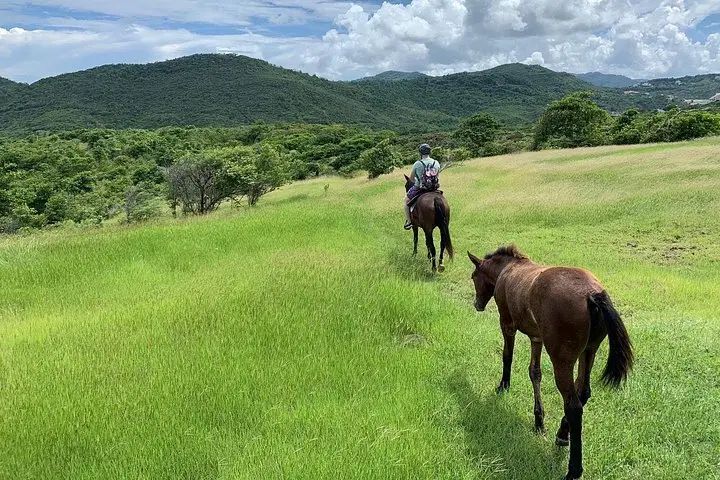
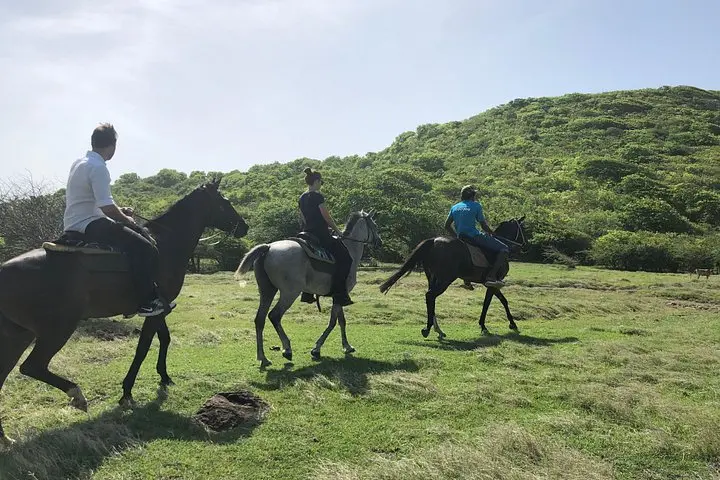
Salt-scented wind pushes across an open saddle as you crest a low ridge and the Atlantic spreads out, silver and restless, below. Horses pick a steady line through grassy tracks, past grazing cows and the occasional fisherman hauling in a daily catch, until the trail bends and four beaches open up like chapters in a book.
Verified experiences and guided adventures in the surrounding area.
Operated by Sandy Hoofs St. Lucia Riding Stables · Soufrière, St. Lucia
Salt-scented wind pushes across an open saddle as you crest a low ridge and the Atlantic spreads out, silver and restless, below. Horses pick a steady line through grassy tracks, past grazing cows and the occasional fisherman hauling in a daily catch, until the trail bends and four beaches open up like chapters in a book.
St. Lucia’s coastline here is defined by volcanic geology and longshore currents: black sand and rocky headlands give way to sweeping stretches of shore where small islets—like the tiny Lapis island—pierce the bay. The island’s colonial-era fishing culture still shapes local life; colorful cottages and low stone walls mark former plantation boundaries and fishing hamlets. Horses arrived with European settlers and now form part of a small, skilled equestrian network offering coastal access few other vehicles can reach.
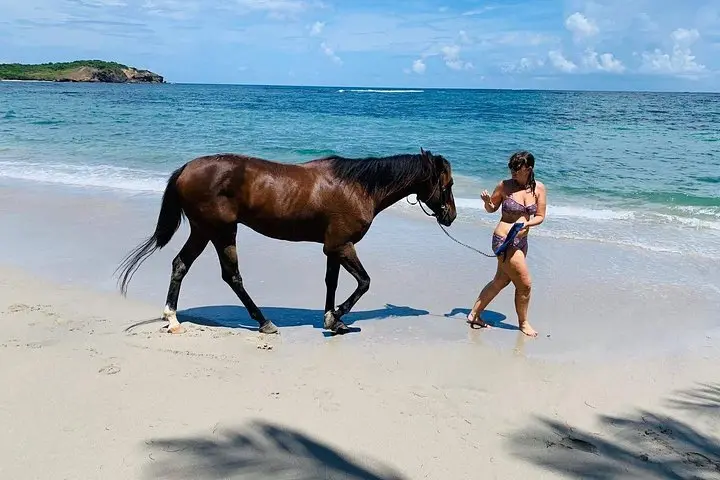
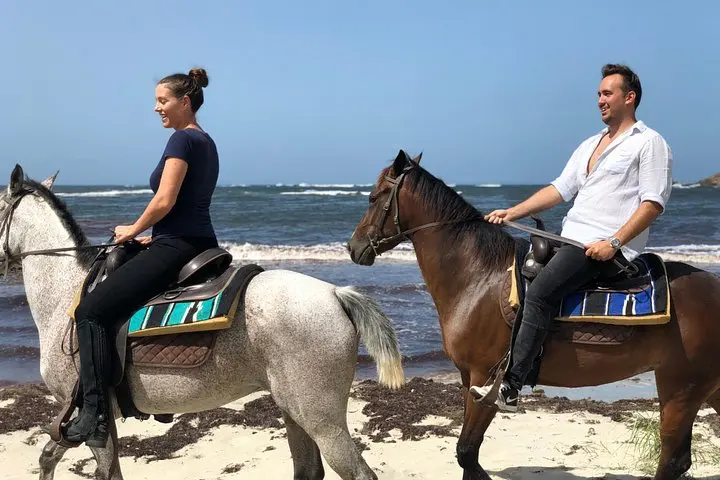
Expect a three-hour ride covering roughly 5–7 miles (8–11 km) over rolling coastal tracks with cumulative elevation gain around 100–200 ft (30–60 m). Terrain alternates packed dirt, pasture, soft sand, and occasional rocky spurs—good balance and confident control at all gaits are mandatory. When sea conditions allow, riders can swim with their horse in shallow Atlantic water and finish with a canter or gallop along firm, wet sand.
Practically: helmets are provided, a weight limit of 220 lbs/99 kg applies, and the operator enforces an advanced-rider standard. Bring closed-toe riding boots, sun protection, and expect to ride rain or shine unless conditions are dangerous. Hydrate, pass the pre-ride skill questionnaire honestly, and be ready to move with the horse—this coastal ride rewards preparation with open views and a rare, bracing ocean gallop.
Yes, when sea and beach conditions permit the ride includes a supervised swim with horses in shallow Atlantic water; seaweed or strong surf may cancel the swim for safety.
The strict weight limit is 220 lbs (99 kg); full disclosure at booking is required and guests over the limit cannot participate.
Yes—this is an advanced-only trail; riders must confidently control a horse at all gaits and be able to sit a buck or bolt without assistance.
Rides operate in most weather, but the operator will reschedule only if conditions are forecast to be dangerous; cancel at least 24 hours for a full refund per booking terms.
Sandy Hoofs St. Lucia Riding Stables operates guided outdoor trips and adventures with an emphasis on safety, stewardship, and memorable experiences.
Salt-scented wind pushes across an open saddle as you crest a low ridge and the Atlantic spreads out, silver and restless, below. Horses pick a steady line through grassy tracks, past grazing cows and the occasional fisherman hauling in a daily catch, until the trail bends and four beaches open up like chapters in a book.
Salt-scented wind pushes across an open saddle as you crest a low ridge and the Atlantic spreads out, silver and restless, below. Horses pick a steady line through grassy tracks, past grazing cows and the occasional fisherman hauling in a daily catch, until the trail bends and four beaches open up like chapters in a book.
St. Lucia’s coastline here is defined by volcanic geology and longshore currents: black sand and rocky headlands give way to sweeping stretches of shore where small islets—like the tiny Lapis island—pierce the bay. The island’s colonial-era fishing culture still shapes local life; colorful cottages and low stone walls mark former plantation boundaries and fishing hamlets. Horses arrived with European settlers and now form part of a small, skilled equestrian network offering coastal access few other vehicles can reach.
Expect a three-hour ride covering roughly 5–7 miles (8–11 km) over rolling coastal tracks with cumulative elevation gain around 100–200 ft (30–60 m). Terrain alternates packed dirt, pasture, soft sand, and occasional rocky spurs—good balance and confident control at all gaits are mandatory. When sea conditions allow, riders can swim with their horse in shallow Atlantic water and finish with a canter or gallop along firm, wet sand.
Practically: helmets are provided, a weight limit of 220 lbs/99 kg applies, and the operator enforces an advanced-rider standard. Bring closed-toe riding boots, sun protection, and expect to ride rain or shine unless conditions are dangerous. Hydrate, pass the pre-ride skill questionnaire honestly, and be ready to move with the horse—this coastal ride rewards preparation with open views and a rare, bracing ocean gallop.