THE ADVENTURE COLLECTIVE® · Independent discovery and booking for outdoor travel

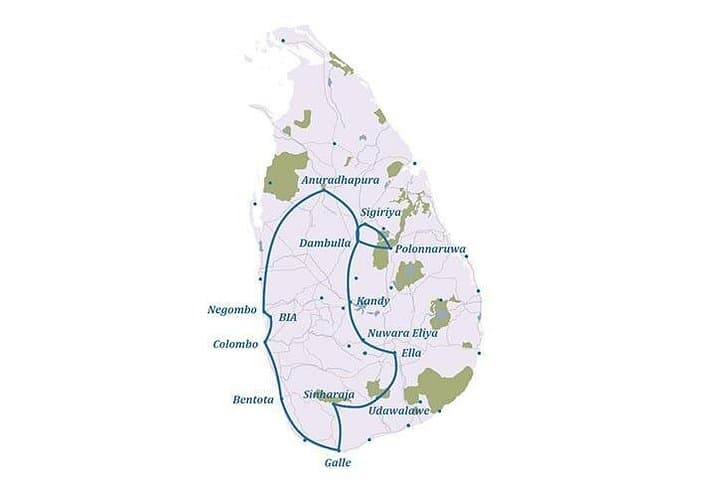
A private 13-day loop around Sri Lanka that pairs ancient ruins and misty tea country with elephant safaris and southern beaches. Expect long road days, easy-to-moderate walks, and a steady immersion in the island’s geology, history and flavors.
A private 13-day loop around Sri Lanka that pairs ancient ruins and misty tea country with elephant safaris and southern beaches. Expect long road days, easy-to-moderate walks, and a steady immersion in the island’s geology, history and flavors.
The first light on Day 1 slants across Negombo’s fishing boats, lacquered and patient, as the Atlantic breathes warm salt into the morning. Travelers on Advent Ceylon climb into a private vehicle and, over the next thirteen days, the island insists on movement—through ruined capitals where stone steps remember kings, into cool highlands where tea bushes slope like stitched green cloth, and out to a southern coast where waves press onto sand with a steady, practiced rhythm.
Verified experiences and guided adventures in the surrounding area.
Operated by Lakpura LLC · Colombo, Western Province
The first light on Day 1 slants across Negombo’s fishing boats, lacquered and patient, as the Atlantic breathes warm salt into the morning. Travelers on Advent Ceylon climb into a private vehicle and, over the next thirteen days, the island insists on movement—through ruined capitals where stone steps remember kings, into cool highlands where tea bushes slope like stitched green cloth, and out to a southern coast where waves press onto sand with a steady, practiced rhythm.
This itinerary is less a single trail than a stitched route through Sri Lanka’s layered history. In the Cultural Triangle, Anuradhapura and Polonnaruwa document a millennium of hydraulic engineering, stupas and monastic life; Sigiriya’s 5th-century rock fortress still keeps guard over terraced gardens and ancient cisterns. The British colonial era left its mark in Nuwara Eliya’s red-brick post office and the tea estates that introduced the world to Ceylon tea; at Loolecondera visitors can see the machines and methods refined since the 19th century.
Geology here is voice and movement: the central massif lifts the island’s weather, wringing mist across cloud forests in the Hill Country and funneling transport routes through dramatic gaps. Udawalawe’s plains and marshes open like a stage for the island’s most visible megafauna—herds of Sri Lankan elephants moving with deliberate intent—while Sinharaja’s rain-drenched canopy clings to endemic species that refuse easy sightings.
Culture is constant: temple bells in Kandy, spice gardens around Matale where leaves and bark still carry Ayurvedic stories, and the Dutch-influenced masonry of Galle Fort. Local guides thread myths into the landscape—how royals retreated to Sigiriya’s palace-rock, or how cinnamon is harvested on tiny islands in the Madu River.
Practical guide: Advent Ceylon is a private, chauffeur-guided loop covering long road segments (expect several 3–5 hour drives between major hubs). Plan for a mix of short hikes (Little Adam’s Peak, ~2–3 km roundtrip, ~200–300 m ascent) and moderate walking at archaeological sites where uneven stone and heat can slow your pace. A three-hour safari in Udawalawe is the best window for elephant viewing; forest treks in Sinharaja are often 2–4 hours through muddy, root-strewn paths.
Pack breathable layers, sturdy walking shoes, a lightweight rain jacket and robust insect repellent; drink bottled water between stops and carry electrolytes for long drives. Respect temple dress codes—shoulders and knees covered—and arrive early at key sites to avoid heat and crowds. With a balance of culture, wildlife and coastal calm, Advent Ceylon hands you a program that’s both deliberate and generous: long enough to see the island’s contrasts, practical enough to be savored without rush.
Yes—it's a private tour so the pace can be adjusted, but long drives and temple restrictions mean it's best for school-age children who can handle travel days.
No—entrance tickets are not included in the tour price; bring cash or card to pay admissions at sites and parks.
December to March is ideal for southern beaches and the Cultural Triangle; the Hill Country is pleasant year-round but can be misty during monsoon pockets.
Yes—chauffeur-guides can arrange meals to suit vegetarian, vegan or allergy needs, but notify the operator ahead of booking.
Expect several 3–5 hour drives between major destinations; some days include shorter transfers and walking tours instead of long road time.
No wildlife can be guaranteed, but Udawalawe’s three-hour safaris have a high likelihood of elephant sightings due to the park’s resident herds.
Lakpura LLC operates guided outdoor trips and adventures with an emphasis on safety, stewardship, and memorable experiences.



The first light on Day 1 slants across Negombo’s fishing boats, lacquered and patient, as the Atlantic breathes warm salt into the morning. Travelers on Advent Ceylon climb into a private vehicle and, over the next thirteen days, the island insists on movement—through ruined capitals where stone steps remember kings, into cool highlands where tea bushes slope like stitched green cloth, and out to a southern coast where waves press onto sand with a steady, practiced rhythm.
The first light on Day 1 slants across Negombo’s fishing boats, lacquered and patient, as the Atlantic breathes warm salt into the morning. Travelers on Advent Ceylon climb into a private vehicle and, over the next thirteen days, the island insists on movement—through ruined capitals where stone steps remember kings, into cool highlands where tea bushes slope like stitched green cloth, and out to a southern coast where waves press onto sand with a steady, practiced rhythm.
This itinerary is less a single trail than a stitched route through Sri Lanka’s layered history. In the Cultural Triangle, Anuradhapura and Polonnaruwa document a millennium of hydraulic engineering, stupas and monastic life; Sigiriya’s 5th-century rock fortress still keeps guard over terraced gardens and ancient cisterns. The British colonial era left its mark in Nuwara Eliya’s red-brick post office and the tea estates that introduced the world to Ceylon tea; at Loolecondera visitors can see the machines and methods refined since the 19th century.
Geology here is voice and movement: the central massif lifts the island’s weather, wringing mist across cloud forests in the Hill Country and funneling transport routes through dramatic gaps. Udawalawe’s plains and marshes open like a stage for the island’s most visible megafauna—herds of Sri Lankan elephants moving with deliberate intent—while Sinharaja’s rain-drenched canopy clings to endemic species that refuse easy sightings.
Culture is constant: temple bells in Kandy, spice gardens around Matale where leaves and bark still carry Ayurvedic stories, and the Dutch-influenced masonry of Galle Fort. Local guides thread myths into the landscape—how royals retreated to Sigiriya’s palace-rock, or how cinnamon is harvested on tiny islands in the Madu River.
Practical guide: Advent Ceylon is a private, chauffeur-guided loop covering long road segments (expect several 3–5 hour drives between major hubs). Plan for a mix of short hikes (Little Adam’s Peak, ~2–3 km roundtrip, ~200–300 m ascent) and moderate walking at archaeological sites where uneven stone and heat can slow your pace. A three-hour safari in Udawalawe is the best window for elephant viewing; forest treks in Sinharaja are often 2–4 hours through muddy, root-strewn paths.
Pack breathable layers, sturdy walking shoes, a lightweight rain jacket and robust insect repellent; drink bottled water between stops and carry electrolytes for long drives. Respect temple dress codes—shoulders and knees covered—and arrive early at key sites to avoid heat and crowds. With a balance of culture, wildlife and coastal calm, Advent Ceylon hands you a program that’s both deliberate and generous: long enough to see the island’s contrasts, practical enough to be savored without rush.