THE ADVENTURE COLLECTIVE® · Independent discovery and booking for outdoor travel

Two days that trade coastal comfort for hot springs and marble avenues: Pamukkale’s chalky terraces and the monumental ruins of Ephesus, with an overnight in Kuşadası and semi-private guiding throughout.
Two days that trade coastal comfort for hot springs and marble avenues: Pamukkale’s chalky terraces and the monumental ruins of Ephesus, with an overnight in Kuşadası and semi-private guiding throughout.
You arrive when the terraces are still cool to the touch and steam lifts from the pale pools like a slow breath. The white travertines of Pamukkale glare against a blue Anatolian sky; water traces delicate ridges that have built themselves, layer by mineral-rich layer. On the first day you trade the modern road for Roman stones—Hierapolis’ theater and baths recall an empire that made leisure into ritual.
Verified experiences and guided adventures in the surrounding area.
Operated by Turkey Experiences · Pamukkale, Denizli Province
You arrive when the terraces are still cool to the touch and steam lifts from the pale pools like a slow breath. The white travertines of Pamukkale glare against a blue Anatolian sky; water traces delicate ridges that have built themselves, layer by mineral-rich layer. On the first day you trade the modern road for Roman stones—Hierapolis’ theater and baths recall an empire that made leisure into ritual.
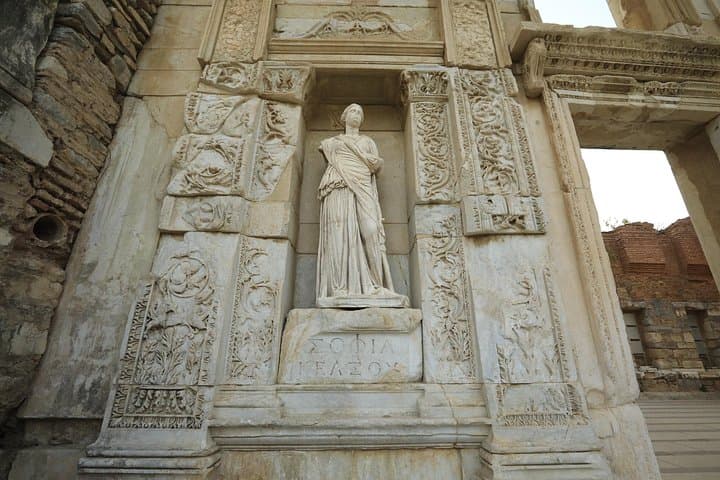
Geology here is theatrical: thermal springs deposit calcium carbonate that hardens into travertine, creating step-like basins that reroute the landscape. Hierapolis sits above those springs, a Roman and Byzantine palimpsest whose columns and streets still channel footsteps. The next day flips to Ephesus—marble avenues, the Library of Celsus, and a theater where voices once filled a harbor city that traded across the Mediterranean. Nearby Şirince offers the calm of a hillside village and small-batch fruit wines to sip after a day among ruins.
Practically: this semi-private, two-day loop moves fast—expect several hours of walking on uneven stone and wet terraces, guided lunch stops, and one night in Kuşadası. Bring sturdy shoes for ruins and a swimsuit if you want to enter thermal pools; allow time for airport transfers if you’re connecting to Istanbul or Cappadocia. The terrain asks for steady footing and sun protection; the sites ask for patience and respect—stay on designated paths, keep water close, and let the landscape do the talking.
Entrance to main sites is typically included by the operator for this package, but optional extras such as the Antique Pool or paragliding carry additional fees.
Groups are semi-private and capped at 10, but the itinerary involves uneven terrain and stairs; it’s not recommended for travelers with serious mobility, spinal, or cardiovascular issues.
Yes — most booking packages offer an option to fly from Izmir to Cappadocia instead of returning to Istanbul; confirm which package (not available with the Bronze option) at booking.
Expect several hours of walking each day—Ephesus has long marble avenues and steps, while Pamukkale requires cautious movement on wet travertine and archaeological stairways.
Turkey Experiences operates guided outdoor trips and adventures with an emphasis on safety, stewardship, and memorable experiences.



You arrive when the terraces are still cool to the touch and steam lifts from the pale pools like a slow breath. The white travertines of Pamukkale glare against a blue Anatolian sky; water traces delicate ridges that have built themselves, layer by mineral-rich layer. On the first day you trade the modern road for Roman stones—Hierapolis’ theater and baths recall an empire that made leisure into ritual.
You arrive when the terraces are still cool to the touch and steam lifts from the pale pools like a slow breath. The white travertines of Pamukkale glare against a blue Anatolian sky; water traces delicate ridges that have built themselves, layer by mineral-rich layer. On the first day you trade the modern road for Roman stones—Hierapolis’ theater and baths recall an empire that made leisure into ritual.
Geology here is theatrical: thermal springs deposit calcium carbonate that hardens into travertine, creating step-like basins that reroute the landscape. Hierapolis sits above those springs, a Roman and Byzantine palimpsest whose columns and streets still channel footsteps. The next day flips to Ephesus—marble avenues, the Library of Celsus, and a theater where voices once filled a harbor city that traded across the Mediterranean. Nearby Şirince offers the calm of a hillside village and small-batch fruit wines to sip after a day among ruins.
Practically: this semi-private, two-day loop moves fast—expect several hours of walking on uneven stone and wet terraces, guided lunch stops, and one night in Kuşadası. Bring sturdy shoes for ruins and a swimsuit if you want to enter thermal pools; allow time for airport transfers if you’re connecting to Istanbul or Cappadocia. The terrain asks for steady footing and sun protection; the sites ask for patience and respect—stay on designated paths, keep water close, and let the landscape do the talking.