THE ADVENTURE COLLECTIVE® · Independent discovery and booking for outdoor travel

Trace hot springs and ancient marble streets on a semi‑private Aegean circuit from Pamukkale’s white travertines to the grand avenues of Ephesus. This practical 3‑day route pairs thermal baths and UNESCO‑listed ruins with local food and small-group insights.
Trace hot springs and ancient marble streets on a semi‑private Aegean circuit from Pamukkale’s white travertines to the grand avenues of Ephesus. This practical 3‑day route pairs thermal baths and UNESCO‑listed ruins with local food and small-group insights.
White terraces spill down the hillside like frozen rivers and a warm wind from the Aegean tugs at your jacket as the guide leads the group across sun-bright travertine. On this semi‑private circuit you move from the steaming basins of Pamukkale and the ruins of Hierapolis into the marble streets of ancient Ephesus, then onward to the quieter ruins of Priene and Miletus where columns still throw sharp shadows.
Verified experiences and guided adventures in the surrounding area.
Operated by Turkey Experiences · Kuşadası, Aydın
White terraces spill down the hillside like frozen rivers and a warm wind from the Aegean tugs at your jacket as the guide leads the group across sun-bright travertine. On this semi‑private circuit you move from the steaming basins of Pamukkale and the ruins of Hierapolis into the marble streets of ancient Ephesus, then onward to the quieter ruins of Priene and Miletus where columns still throw sharp shadows.
The landscape is geological as much as historical: travertine terraces formed by mineral-rich thermal springs stack in stepped pools, while the fertile plains around Miletus and the Maeander River supported prosperous Ionian city-states. Ephesus, once a major Roman port, bears the Celsus Library and amphitheater; Laodicea and Priene speak to Hellenistic and Byzantine layers of settlement. Local culture is present in village cooperatives and seafood lunches in coastal towns — a useful counterpoint to stone and steam.
Expect guided walks over uneven ground, staircases at archaeological sites and time for optional extras like the Antique (Cleopatra) Pool or a tandem paragliding run above the white terraces. Practical notes: wear grippy footwear you can remove for the travertines, carry a refillable water bottle, and plan for sun and sudden wind on exposed ruins. If you want to connect onward to Cappadocia, the operator can arrange domestic flights; otherwise the loop returns toward Kusadasi or Izmir. This is archaeology and geology served briskly — immersive, tactile, and eminently doable with moderate fitness.
Yes — to protect the travertine the park requires visitors to remove shoes on the terraces; slip-on sandals make this easier.
Children are welcome but the itinerary involves stairs and uneven surfaces; the tour notes advise it’s not recommended for people with significant back, heart, or mobility problems.
Yes — the operator offers an option to continue to Cappadocia with domestic flight arrangements, though that alters your return flight included in standard itineraries.
Lunches, breakfasts at hotels, two nights’ accommodation and semi‑private guiding are included; some site entrance fees or optional activities (e.g., Antique Pool, paragliding) may be extra.
Turkey Experiences operates guided outdoor trips and adventures with an emphasis on safety, stewardship, and memorable experiences.
White terraces spill down the hillside like frozen rivers and a warm wind from the Aegean tugs at your jacket as the guide leads the group across sun-bright travertine. On this semi‑private circuit you move from the steaming basins of Pamukkale and the ruins of Hierapolis into the marble streets of ancient Ephesus, then onward to the quieter ruins of Priene and Miletus where columns still throw sharp shadows.
White terraces spill down the hillside like frozen rivers and a warm wind from the Aegean tugs at your jacket as the guide leads the group across sun-bright travertine. On this semi‑private circuit you move from the steaming basins of Pamukkale and the ruins of Hierapolis into the marble streets of ancient Ephesus, then onward to the quieter ruins of Priene and Miletus where columns still throw sharp shadows.
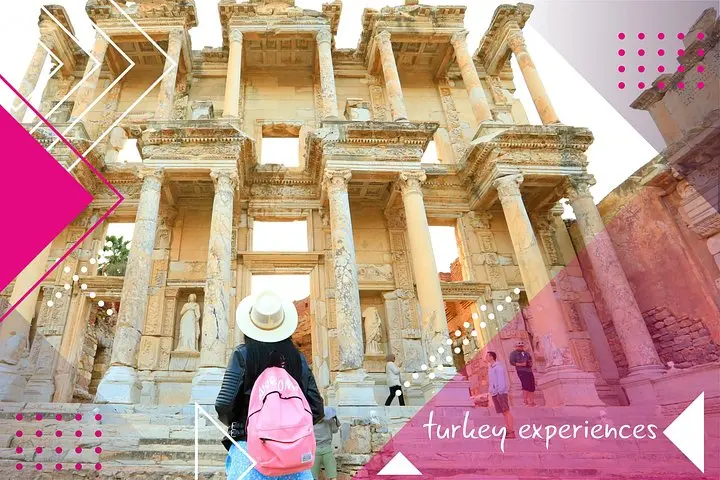
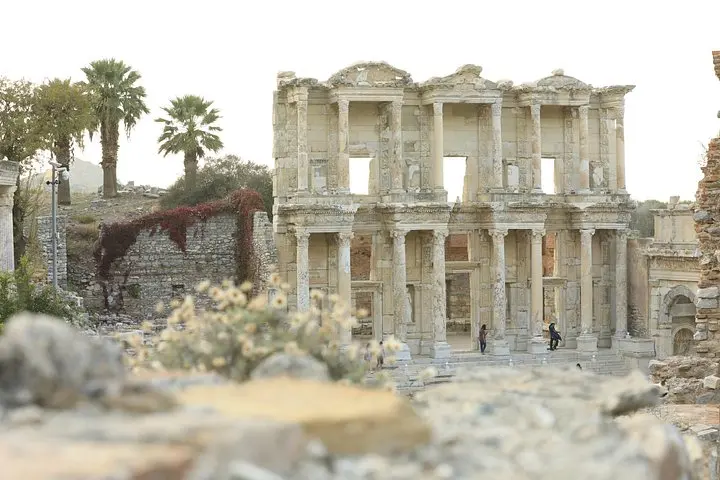
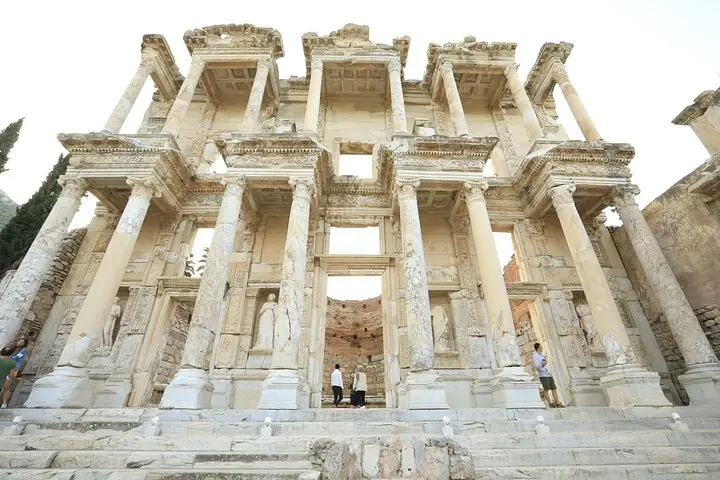
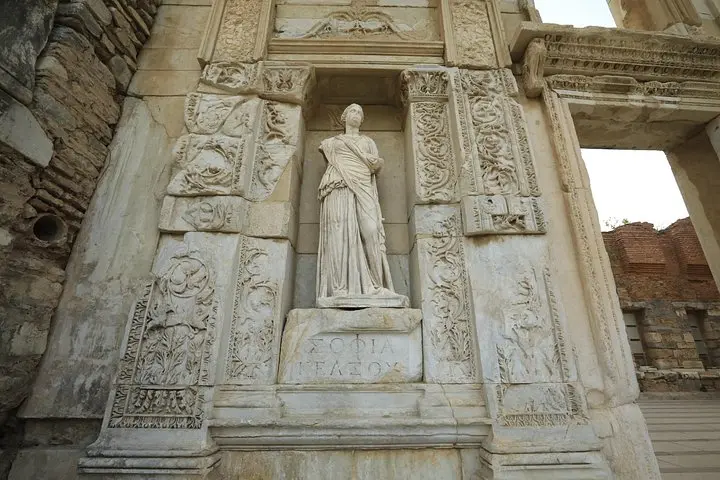
The landscape is geological as much as historical: travertine terraces formed by mineral-rich thermal springs stack in stepped pools, while the fertile plains around Miletus and the Maeander River supported prosperous Ionian city-states. Ephesus, once a major Roman port, bears the Celsus Library and amphitheater; Laodicea and Priene speak to Hellenistic and Byzantine layers of settlement. Local culture is present in village cooperatives and seafood lunches in coastal towns — a useful counterpoint to stone and steam.
Expect guided walks over uneven ground, staircases at archaeological sites and time for optional extras like the Antique (Cleopatra) Pool or a tandem paragliding run above the white terraces. Practical notes: wear grippy footwear you can remove for the travertines, carry a refillable water bottle, and plan for sun and sudden wind on exposed ruins. If you want to connect onward to Cappadocia, the operator can arrange domestic flights; otherwise the loop returns toward Kusadasi or Izmir. This is archaeology and geology served briskly — immersive, tactile, and eminently doable with moderate fitness.