THE ADVENTURE COLLECTIVE® · Independent discovery and booking for outdoor travel

This five-day Aegean circuit connects World War I sites, Bronze Age Troy, the marble grandeur of Ephesus and the otherworldly white terraces of Pamukkale. Expect long travel days, guided archaeological walks and thermal springs amid coastal scenery.
This five-day Aegean circuit connects World War I sites, Bronze Age Troy, the marble grandeur of Ephesus and the otherworldly white terraces of Pamukkale. Expect long travel days, guided archaeological walks and thermal springs amid coastal scenery.
Morning light washes the Bosphorus in pale gold as a coach pulls away from Istanbul and the Aegean coast unfolds like chapters of history. Over five days you move from wind-scoured WWI ridgelines at Gallipoli to the layered stones of Troy, then on through Pergamum and Ephesus to the bleached terraces of Pamukkale — each stop a different scale of human story and geological drama.
Verified experiences and guided adventures in the surrounding area.
Operated by Fez Travel · Istanbul, Istanbul
Morning light washes the Bosphorus in pale gold as a coach pulls away from Istanbul and the Aegean coast unfolds like chapters of history. Over five days you move from wind-scoured WWI ridgelines at Gallipoli to the layered stones of Troy, then on through Pergamum and Ephesus to the bleached terraces of Pamukkale — each stop a different scale of human story and geological drama.
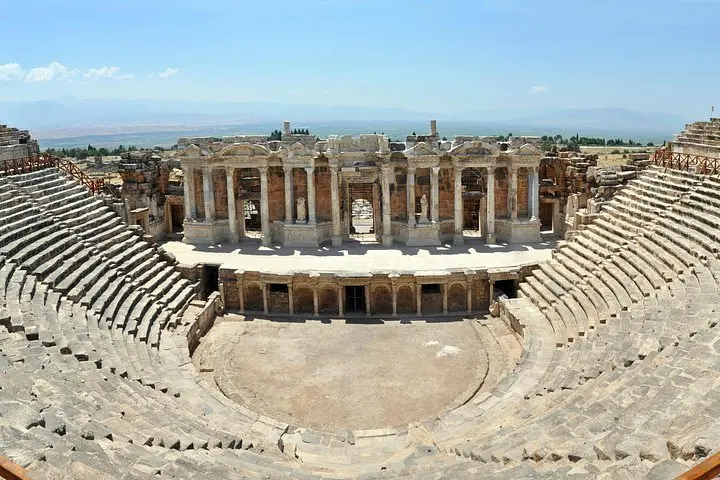
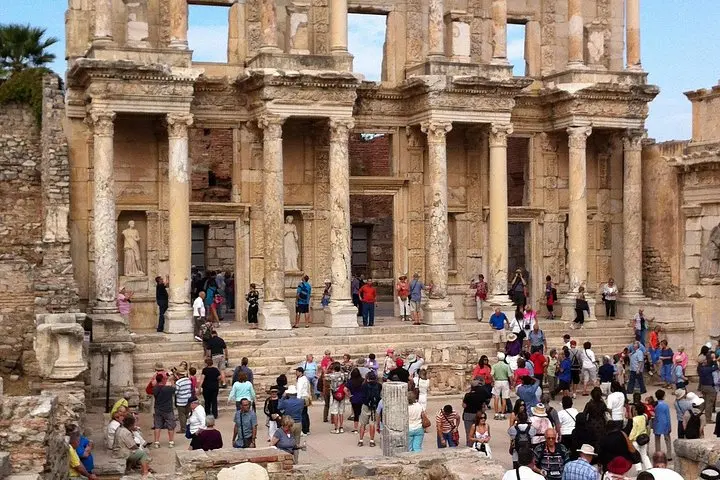
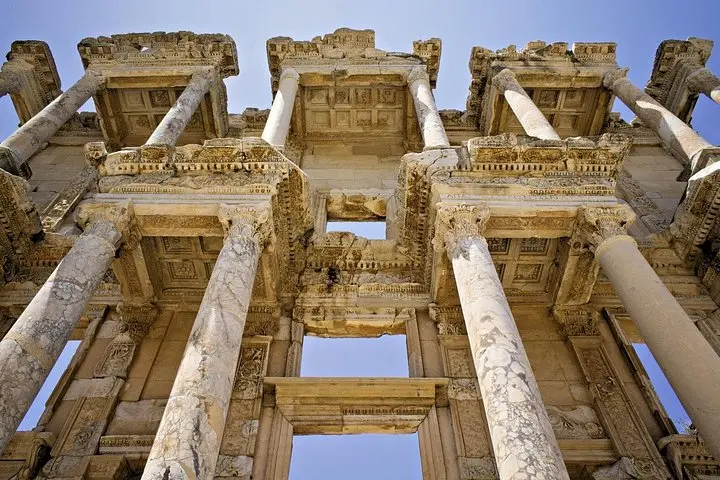
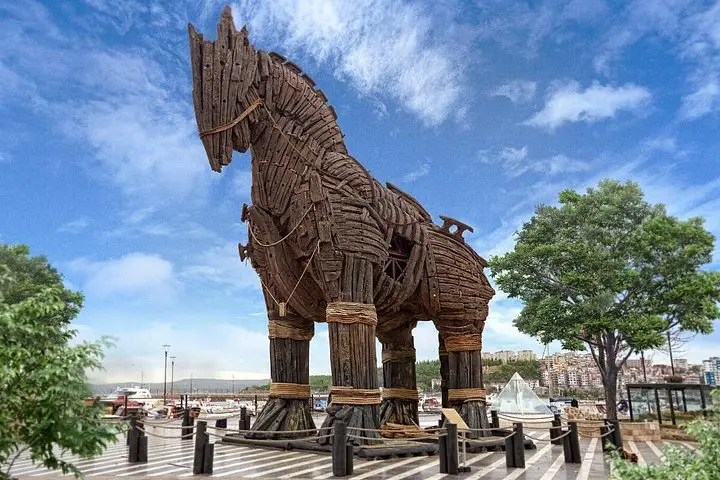
Gallipoli’s ridges and coves bear the marks of 20th-century warfare: trenches, memorials and the poignant sweep of ANZAC Cove. Troy’s tell is older — Bronze Age walls and layers of occupation that archaeology has read like a city-sized palimpsest. Pergamum’s steep acropolis and Ephesus’s marble streets reveal Roman urban life: a 25,000-seat theatre, swept avenues and the Terrace Houses’ frescoed rooms. Pamukkale’s travertines are a geological pageant — calcium-rich hot springs that deposited terraces over millennia, with Hierapolis’ Roman baths beside them.
Culturally expect lively market stalls in Kusadasi, local leather and carpet craftsmanship demonstrated in villages, and small cafes where Turkish tea slows the pace. Nature here alternates between exposed coastal scrub and olive groves, while thermal waters quietly shape the land.
Practical guidance: days are full and include long drives—pack a comfortable daypack, wear sturdy walking shoes for uneven ruins and non-slip soles for Pamukkale’s calcified steps. Carry water, sun protection and your passport (domestic flight booking requires passport details). Plan for moderate walking 2–4 hours daily, early starts and some stairs. Respect protected paths at Pamukkale and timed-entry rules at major sites to minimize wear on fragile heritage features.
Expect 2–4 hours of guided walking daily, mostly on paved or compacted archaeological paths with some uneven steps and short stair climbs.
Yes — the tour includes entrance fees, four nights’ 4-star accommodation, daily breakfasts and some dinners as listed in the itinerary.
Yes — passport details are required for the domestic flight booking; carry your passport and a photocopy while traveling.
The itinerary notes stroller access is possible in some areas, but long travel days and battlefield terrain may be tiring for very young children.
Fez Travel operates guided outdoor trips and adventures with an emphasis on safety, stewardship, and memorable experiences.
Morning light washes the Bosphorus in pale gold as a coach pulls away from Istanbul and the Aegean coast unfolds like chapters of history. Over five days you move from wind-scoured WWI ridgelines at Gallipoli to the layered stones of Troy, then on through Pergamum and Ephesus to the bleached terraces of Pamukkale — each stop a different scale of human story and geological drama.
Morning light washes the Bosphorus in pale gold as a coach pulls away from Istanbul and the Aegean coast unfolds like chapters of history. Over five days you move from wind-scoured WWI ridgelines at Gallipoli to the layered stones of Troy, then on through Pergamum and Ephesus to the bleached terraces of Pamukkale — each stop a different scale of human story and geological drama.
Gallipoli’s ridges and coves bear the marks of 20th-century warfare: trenches, memorials and the poignant sweep of ANZAC Cove. Troy’s tell is older — Bronze Age walls and layers of occupation that archaeology has read like a city-sized palimpsest. Pergamum’s steep acropolis and Ephesus’s marble streets reveal Roman urban life: a 25,000-seat theatre, swept avenues and the Terrace Houses’ frescoed rooms. Pamukkale’s travertines are a geological pageant — calcium-rich hot springs that deposited terraces over millennia, with Hierapolis’ Roman baths beside them.
Culturally expect lively market stalls in Kusadasi, local leather and carpet craftsmanship demonstrated in villages, and small cafes where Turkish tea slows the pace. Nature here alternates between exposed coastal scrub and olive groves, while thermal waters quietly shape the land.
Practical guidance: days are full and include long drives—pack a comfortable daypack, wear sturdy walking shoes for uneven ruins and non-slip soles for Pamukkale’s calcified steps. Carry water, sun protection and your passport (domestic flight booking requires passport details). Plan for moderate walking 2–4 hours daily, early starts and some stairs. Respect protected paths at Pamukkale and timed-entry rules at major sites to minimize wear on fragile heritage features.