THE ADVENTURE COLLECTIVE® · Independent discovery and booking for outdoor travel

Walk Pamukkale’s lunar white terraces, wander marble streets in Ephesus and rise above Cappadocia in a balloon on this compact 5-day circuit. It’s a practical, culture-forward route that blends UNESCO sites, rural crafts and optional aerial thrills.
Walk Pamukkale’s lunar white terraces, wander marble streets in Ephesus and rise above Cappadocia in a balloon on this compact 5-day circuit. It’s a practical, culture-forward route that blends UNESCO sites, rural crafts and optional aerial thrills.
The solstice light strips across white terraces as you step barefoot onto Pamukkale’s travertines; the calcium pools fizzle underfoot like a living map of the land’s mineral memory. For five days the Aegean coast opens like a museum and a playground—ancient marble streets give way to steaming thermal basins, hand-carved theaters drop into olive-shadowed valleys, and at dawn a cluster of hot-air balloons rise above Cappadocia’s alien chimneys.
Verified experiences and guided adventures in the surrounding area.
Operated by Turkey Experiences · Pamukkale, Denizli Province
The solstice light strips across white terraces as you step barefoot onto Pamukkale’s travertines; the calcium pools fizzle underfoot like a living map of the land’s mineral memory. For five days the Aegean coast opens like a museum and a playground—ancient marble streets give way to steaming thermal basins, hand-carved theaters drop into olive-shadowed valleys, and at dawn a cluster of hot-air balloons rise above Cappadocia’s alien chimneys.
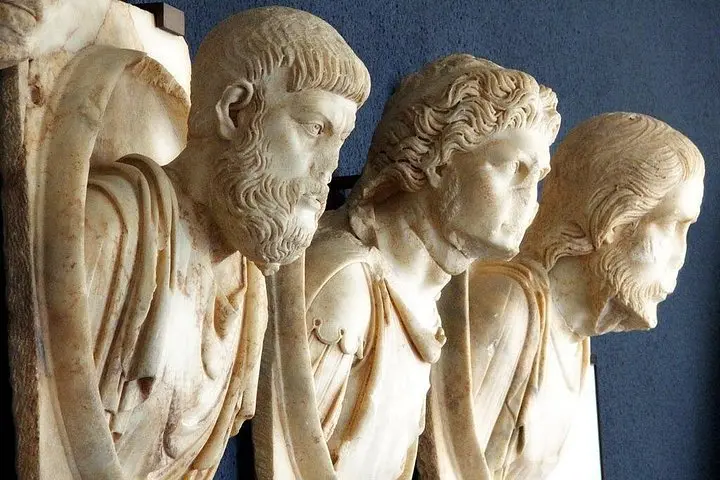
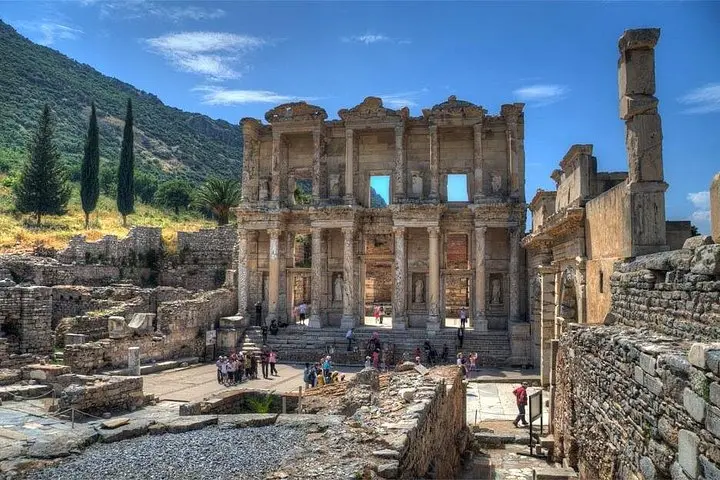
This semi-private circuit stitches together UNESCO-listed Hierapolis-Pamukkale, the marble workshops of Aphrodisias, the harbor city of Ephesus and its Celsus Library, plus coastal Kusadasi and lesser-known Ionian towns such as Miletus, Priene and Didyma. You’ll move by short flights and coach transfers: Denizli’s Cardak airport connects you to Pamukkale, then the route follows rivers and plains west to the Aegean before finishing with an internal flight to the otherworldly highlands of Cappadocia.
Geology here is a study in slow violence and quiet abundance. Pamukkale’s terraces formed as tectonic heat pushed mineral-rich water to the surface; those same travertines supported the Greco-Roman city of Hierapolis. Ephesus was a maritime powerhouse until the Maeander River silting shifted the coastline inland; its stone streets and public baths still broadcast the rhythms of ancient civic life. In Cappadocia, volcanic tuff softened by water and wind was carved into homes and churches, producing the region’s signature fairy chimneys.
Culture is tactile: pottery wheels spin in Avanos, carpet cooperatives display centuries of Anatolian weaving, and small village workshops let you try traditional crafts. Local cuisine is a practical delight—seafood on the coast, testi kebab in Cappadocia—paired with strong Turkish coffee that tastes like conversation.
Practicalities matter. Expect daily walking of 2–4 miles across uneven ruins; Hierapolis and Ephesus have several kilometers of on-foot exploration. Pamukkale enforces barefoot walking on the terraces—bring a towel and quick-dry sandals for between-site travel. The optional paragliding and hot-air balloon segments add aerial perspective: balloons typically ascend 700–1,000 m for 45–60 minutes; paragliding launches from roughly 400 m above the plain. Weather is the deciding factor for air sports; plan flexibility into your schedule.
Timing and logistics: hotels are overnighted in Kusadasi and Cappadocia; internal flights connect Ephesus/Izmir to Cappadocia on day three. Bring layered clothing for cool mornings and hot afternoons, a reliable daypack, and a camera with a wide-angle lens for terraces and theaters. Respect conservation rules—avoid stepping off marked paths on fragile travertines and minimize sunscreen in thermal pools.
This route pairs big-name antiquity with tactile rural experiences and one-of-a-kind landscapes. If you want an Aegean trip that reads like a history book and feels like an adventure, this five-day loop delivers both the facts and the atmosphere.
Yes — parts of the travertine terraces require barefoot access to protect the fragile calcite surfaces; bring a towel and quick-dry sandals for comfort between areas.
Balloon rides are included for some package options but are optional for others; check your booking details and expect a sunrise departure and a 45–60 minute flight when included.
This tour includes breakfasts and several lunches as listed, plus hotel nights in Kusadasi and Cappadocia depending on your package selection.
The itinerary involves uneven terrain, steps and some steep paths; it’s not recommended for travelers with significant mobility limitations.
Plan for 2–4 miles (3–6 km) of walking across ruins each day, with uneven stone surfaces and occasional stair sections.
Operators postpone or cancel aerial activities for safety; if canceled you’ll be offered alternatives or a refund per the supplier’s policy—build flexibility into your schedule.
Turkey Experiences operates guided outdoor trips and adventures with an emphasis on safety, stewardship, and memorable experiences.
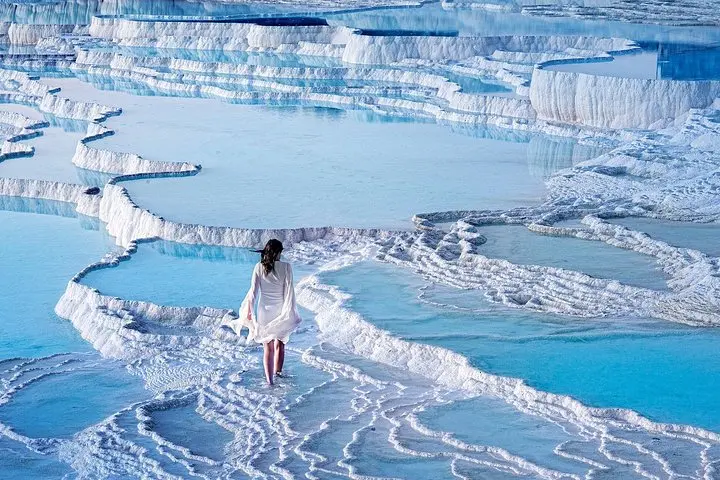
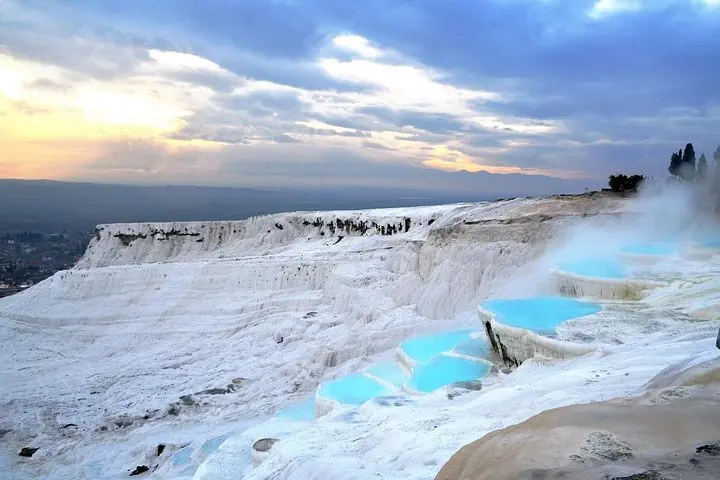
The solstice light strips across white terraces as you step barefoot onto Pamukkale’s travertines; the calcium pools fizzle underfoot like a living map of the land’s mineral memory. For five days the Aegean coast opens like a museum and a playground—ancient marble streets give way to steaming thermal basins, hand-carved theaters drop into olive-shadowed valleys, and at dawn a cluster of hot-air balloons rise above Cappadocia’s alien chimneys.
The solstice light strips across white terraces as you step barefoot onto Pamukkale’s travertines; the calcium pools fizzle underfoot like a living map of the land’s mineral memory. For five days the Aegean coast opens like a museum and a playground—ancient marble streets give way to steaming thermal basins, hand-carved theaters drop into olive-shadowed valleys, and at dawn a cluster of hot-air balloons rise above Cappadocia’s alien chimneys.
This semi-private circuit stitches together UNESCO-listed Hierapolis-Pamukkale, the marble workshops of Aphrodisias, the harbor city of Ephesus and its Celsus Library, plus coastal Kusadasi and lesser-known Ionian towns such as Miletus, Priene and Didyma. You’ll move by short flights and coach transfers: Denizli’s Cardak airport connects you to Pamukkale, then the route follows rivers and plains west to the Aegean before finishing with an internal flight to the otherworldly highlands of Cappadocia.
Geology here is a study in slow violence and quiet abundance. Pamukkale’s terraces formed as tectonic heat pushed mineral-rich water to the surface; those same travertines supported the Greco-Roman city of Hierapolis. Ephesus was a maritime powerhouse until the Maeander River silting shifted the coastline inland; its stone streets and public baths still broadcast the rhythms of ancient civic life. In Cappadocia, volcanic tuff softened by water and wind was carved into homes and churches, producing the region’s signature fairy chimneys.
Culture is tactile: pottery wheels spin in Avanos, carpet cooperatives display centuries of Anatolian weaving, and small village workshops let you try traditional crafts. Local cuisine is a practical delight—seafood on the coast, testi kebab in Cappadocia—paired with strong Turkish coffee that tastes like conversation.
Practicalities matter. Expect daily walking of 2–4 miles across uneven ruins; Hierapolis and Ephesus have several kilometers of on-foot exploration. Pamukkale enforces barefoot walking on the terraces—bring a towel and quick-dry sandals for between-site travel. The optional paragliding and hot-air balloon segments add aerial perspective: balloons typically ascend 700–1,000 m for 45–60 minutes; paragliding launches from roughly 400 m above the plain. Weather is the deciding factor for air sports; plan flexibility into your schedule.
Timing and logistics: hotels are overnighted in Kusadasi and Cappadocia; internal flights connect Ephesus/Izmir to Cappadocia on day three. Bring layered clothing for cool mornings and hot afternoons, a reliable daypack, and a camera with a wide-angle lens for terraces and theaters. Respect conservation rules—avoid stepping off marked paths on fragile travertines and minimize sunscreen in thermal pools.
This route pairs big-name antiquity with tactile rural experiences and one-of-a-kind landscapes. If you want an Aegean trip that reads like a history book and feels like an adventure, this five-day loop delivers both the facts and the atmosphere.