THE ADVENTURE COLLECTIVE® · Independent discovery and booking for outdoor travel

A compact, guide-led ascent of Kilimanjaro via the Marangu Route that moves from rainforest to alpine desert in six days. This itinerary balances acclimatization with efficient summit timing—ideal for travelers who want a structured, hut-based climb to Uhuru Peak.
A compact, guide-led ascent of Kilimanjaro via the Marangu Route that moves from rainforest to alpine desert in six days. This itinerary balances acclimatization with efficient summit timing—ideal for travelers who want a structured, hut-based climb to Uhuru Peak.
The jeep eases through dawn traffic out of Moshi and the silhouette of Kilimanjaro grows like a slow promise on the horizon. By the time the group steps through Marangu Gate at roughly 1,860 meters, the mountain is already asserting itself: rainforest pulling moisture into its ribs, a wind that tastes of ice higher up. The first day’s trail climbs to Mandara Hut at about 2,700 m through dripping forest where colobus monkeys flit like punctuation in the canopy.
Verified experiences and guided adventures in the surrounding area.
Operated by KILIMANJARO CLIMBING TOURS · Moshi, Kilimanjaro Region
The jeep eases through dawn traffic out of Moshi and the silhouette of Kilimanjaro grows like a slow promise on the horizon. By the time the group steps through Marangu Gate at roughly 1,860 meters, the mountain is already asserting itself: rainforest pulling moisture into its ribs, a wind that tastes of ice higher up. The first day’s trail climbs to Mandara Hut at about 2,700 m through dripping forest where colobus monkeys flit like punctuation in the canopy.
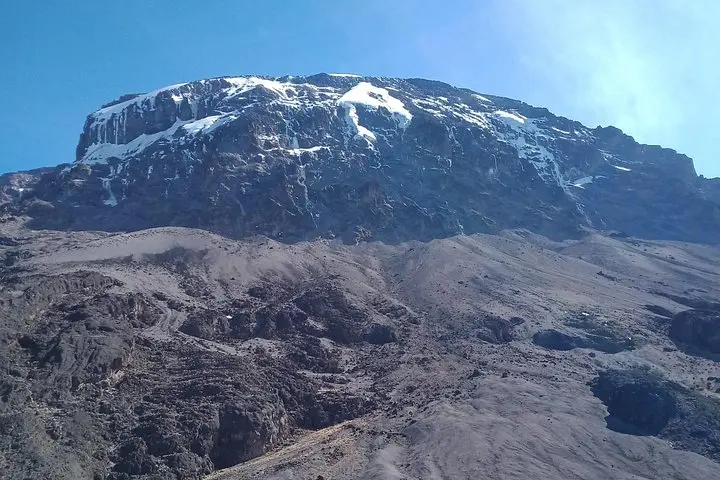
Kilimanjaro is a layered book of geology and culture. Its volcanic core—Kibo and Mawenzi—has been sculpted by eruptions and glaciers into steep ridgelines and broad crater basins. The Chagga people, who farm the mountain’s lower slopes, have long guided visitors and read the weather by cloud patterns that form and dissolve against the peak. On the Marangu Route you travel classic trails that were used by early European mountaineers and local porters; huts at Mandara, Horombo and Kibo preserve the old hut-to-hut rhythm of ascent unique to this side of the mountain.
The climbing itself is a steady negotiation with altitude. Expect roughly these daily gains: Day 1 Marangu Gate (1,860 m) → Mandara Hut (2,700 m), +840 m; Day 2 → Horombo Hut (3,720 m), +1,020 m (with an acclimatization walk); Day 4 → Kibo Hut (4,700 m), +980 m; Summit push from Kibo to Uhuru Peak (5,895 m), +1,195 m, then descent back to Horombo.
Terrain shifts from damp jungle to heathland and rocky alpine desert—the vegetation receding like a tide as the air thins and the sun grows sharp. The summit night is long and deliberate: a 10–12 p.m. departure, a slow, headlamp-led climb that tests pacing, hydration and mental grit. Guides match pairs for monitoring and share advice on Diamox and acclimatization.
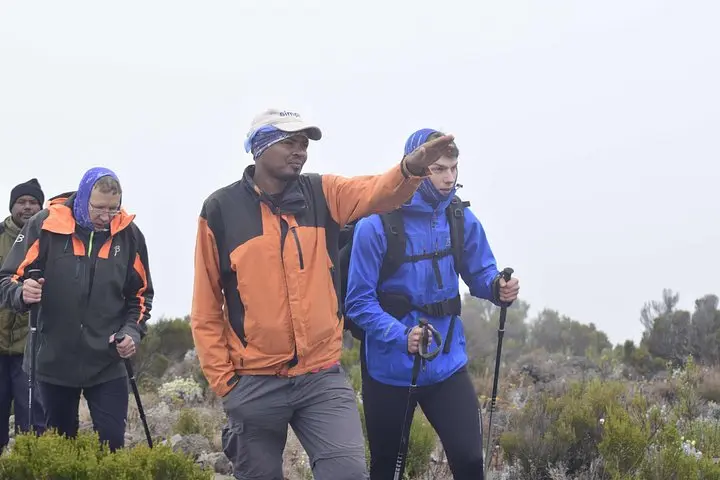
Practical edge: hydrate early and continuously—aim for 3–4 liters daily at altitude—and sit on a conservative pace: pole-assisted steps and short, frequent breaks reduce fatigue. Footwear should be sturdy, ankle-supporting boots with a broken-in sole; layers must include a breathable base, insulated midlayer and a windproof shell for summit conditions. Bring a reliable headlamp, spare batteries, and snacks with quick carbs for the night push.
Logistics are straightforward: hotel pickup from Moshi, hut accommodations along the Marangu line, and professional guides and meals included. Success depends less on raw fitness than on steady pace, respect for altitude, and listening to your guide. For travelers who want an efficient route to Uhuru Peak without technical climbing, this six-day Marangu itinerary offers direct access to one of Africa’s most iconic summits, framed by volcanic skyline and a landscape that keeps changing until you stand above the clouds.
The tour includes park fees, hut accommodations, meals as listed, professional guides, transfers to/from Moshi, and certificates; confirm specifics with the operator at booking.
The summit push is physically demanding due to altitude and sleep disruption; it requires steady pacing and a strong mental focus rather than technical climbing skills.
Altitude sickness is common at these elevations; acclimatization hikes, hydration, and monitoring by guides reduce risk—consult a physician about Diamox before travel.
Park permits are handled by the operator; standard travel vaccinations and a yellow fever certificate may be recommended depending on origin—check with your travel clinic.
No technical mountaineering skills are required, but prior multi-day hiking and good cardiovascular conditioning improve your chances of success.
Guides will prioritize health; if you cannot continue, staff and porters assist descent and you'll be escorted back to a lower hut or into park exit procedures as needed.
KILIMANJARO CLIMBING TOURS operates guided outdoor trips and adventures with an emphasis on safety, stewardship, and memorable experiences.
The jeep eases through dawn traffic out of Moshi and the silhouette of Kilimanjaro grows like a slow promise on the horizon. By the time the group steps through Marangu Gate at roughly 1,860 meters, the mountain is already asserting itself: rainforest pulling moisture into its ribs, a wind that tastes of ice higher up. The first day’s trail climbs to Mandara Hut at about 2,700 m through dripping forest where colobus monkeys flit like punctuation in the canopy.
The jeep eases through dawn traffic out of Moshi and the silhouette of Kilimanjaro grows like a slow promise on the horizon. By the time the group steps through Marangu Gate at roughly 1,860 meters, the mountain is already asserting itself: rainforest pulling moisture into its ribs, a wind that tastes of ice higher up. The first day’s trail climbs to Mandara Hut at about 2,700 m through dripping forest where colobus monkeys flit like punctuation in the canopy.
Kilimanjaro is a layered book of geology and culture. Its volcanic core—Kibo and Mawenzi—has been sculpted by eruptions and glaciers into steep ridgelines and broad crater basins. The Chagga people, who farm the mountain’s lower slopes, have long guided visitors and read the weather by cloud patterns that form and dissolve against the peak. On the Marangu Route you travel classic trails that were used by early European mountaineers and local porters; huts at Mandara, Horombo and Kibo preserve the old hut-to-hut rhythm of ascent unique to this side of the mountain.
The climbing itself is a steady negotiation with altitude. Expect roughly these daily gains: Day 1 Marangu Gate (1,860 m) → Mandara Hut (2,700 m), +840 m; Day 2 → Horombo Hut (3,720 m), +1,020 m (with an acclimatization walk); Day 4 → Kibo Hut (4,700 m), +980 m; Summit push from Kibo to Uhuru Peak (5,895 m), +1,195 m, then descent back to Horombo.
Terrain shifts from damp jungle to heathland and rocky alpine desert—the vegetation receding like a tide as the air thins and the sun grows sharp. The summit night is long and deliberate: a 10–12 p.m. departure, a slow, headlamp-led climb that tests pacing, hydration and mental grit. Guides match pairs for monitoring and share advice on Diamox and acclimatization.
Practical edge: hydrate early and continuously—aim for 3–4 liters daily at altitude—and sit on a conservative pace: pole-assisted steps and short, frequent breaks reduce fatigue. Footwear should be sturdy, ankle-supporting boots with a broken-in sole; layers must include a breathable base, insulated midlayer and a windproof shell for summit conditions. Bring a reliable headlamp, spare batteries, and snacks with quick carbs for the night push.
Logistics are straightforward: hotel pickup from Moshi, hut accommodations along the Marangu line, and professional guides and meals included. Success depends less on raw fitness than on steady pace, respect for altitude, and listening to your guide. For travelers who want an efficient route to Uhuru Peak without technical climbing, this six-day Marangu itinerary offers direct access to one of Africa’s most iconic summits, framed by volcanic skyline and a landscape that keeps changing until you stand above the clouds.