THE ADVENTURE COLLECTIVE® · Independent discovery and booking for outdoor travel

Walk the torii after dark with an English-speaking guide and avoid daytime crowds. This one-hour night tour explores Fushimi Inari’s illuminated gates, shrine customs, and quiet viewpoints above Kyoto.
Walk the torii after dark with an English-speaking guide and avoid daytime crowds. This one-hour night tour explores Fushimi Inari’s illuminated gates, shrine customs, and quiet viewpoints above Kyoto.
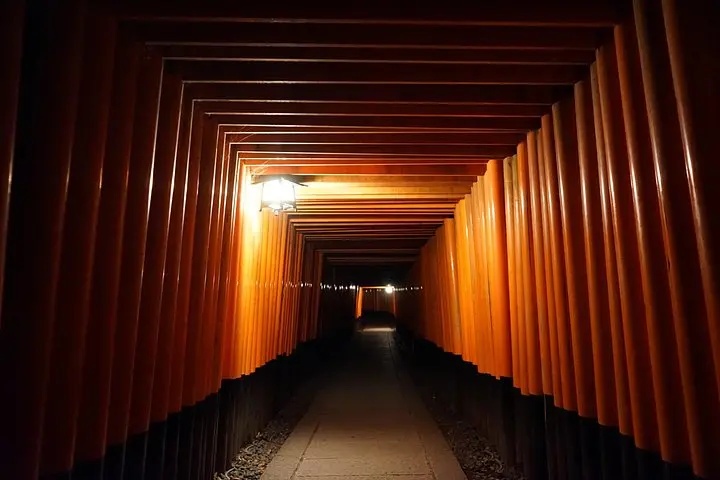
Dusk slips over Kyoto and the long red torii begin to darken into a corridor of shadow and soft lamplight. On a one‑hour night walk at Fushimi Inari Taisha, a guide leads a small group from the fox statue by the front gate, threading under rows of donated gates while the city hum recedes. The wood and vermilion seem to take on their own breath; wind through bamboo and the river of torii gently urge you forward.
Verified experiences and guided adventures in the surrounding area.
Operated by Kyoto Personal Tours · Kyoto, Kyoto Prefecture
Dusk slips over Kyoto and the long red torii begin to darken into a corridor of shadow and soft lamplight. On a one‑hour night walk at Fushimi Inari Taisha, a guide leads a small group from the fox statue by the front gate, threading under rows of donated gates while the city hum recedes. The wood and vermilion seem to take on their own breath; wind through bamboo and the river of torii gently urge you forward.
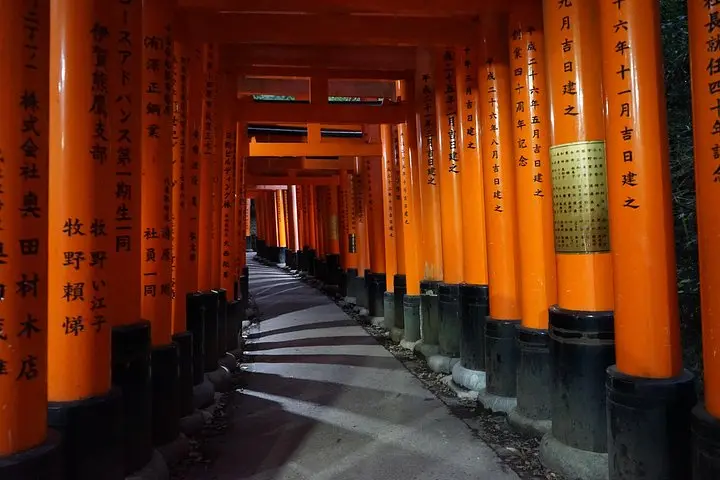
Fushimi Inari dates to 711 AD and stands as the head shrine to thousands of Inari branches across Japan. The packed gates — each donated by merchants and companies — chart a living ledger of commerce and devotion. The site sits at the base of Mount Inari, a low volcanic outcrop whose gravel paths and granite steps have been walked for centuries by pilgrims seeking prosperity.
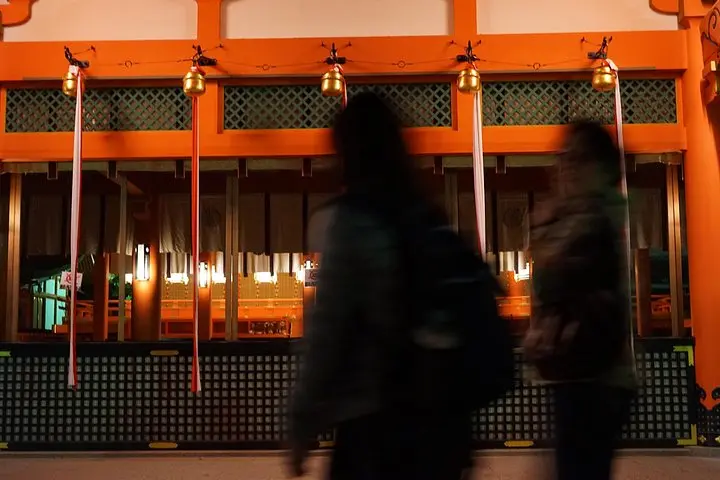
Culturally the guide distinguishes Shinto practice from Buddhism, explains fox iconography, and points out lesser shrines and carved plaques tucked under eaves. Locals favor night hours to avoid daytime crowds; the experience is both quieter and more intimate.
Practical guidance: wear stable shoes for uneven stone and steps, bring a light layer (temperatures drop after sunset), and carry water. The tour meets across from JR Inari station and lasts about 60 minutes with a maximum of ten guests. Photography is welcome but be respectful during quiet sections. This route is accessible for most fitness levels but not recommended for travelers with serious spinal issues. Time your visit outside peak festival nights to keep the path calm and the torii to yourself.
Yes — the listing specifies an English-speaking guide who explains shrine history, fox iconography, and differences between Shinto and Buddhism.
Meet at the fox statue next to the front gate of Fushimi Inari Shrine, which is directly across from JR Inari station.
The tour is rated easy and suitable for most ages, though it includes stone steps and uneven ground, so supervise young children and those with limited mobility.
Photography is allowed; be mindful to avoid bright flash during quiet moments and follow the guide’s instructions during rituals.
Kyoto Personal Tours operates guided outdoor trips and adventures with an emphasis on safety, stewardship, and memorable experiences.

Dusk slips over Kyoto and the long red torii begin to darken into a corridor of shadow and soft lamplight. On a one‑hour night walk at Fushimi Inari Taisha, a guide leads a small group from the fox statue by the front gate, threading under rows of donated gates while the city hum recedes. The wood and vermilion seem to take on their own breath; wind through bamboo and the river of torii gently urge you forward.
Dusk slips over Kyoto and the long red torii begin to darken into a corridor of shadow and soft lamplight. On a one‑hour night walk at Fushimi Inari Taisha, a guide leads a small group from the fox statue by the front gate, threading under rows of donated gates while the city hum recedes. The wood and vermilion seem to take on their own breath; wind through bamboo and the river of torii gently urge you forward.
Fushimi Inari dates to 711 AD and stands as the head shrine to thousands of Inari branches across Japan. The packed gates — each donated by merchants and companies — chart a living ledger of commerce and devotion. The site sits at the base of Mount Inari, a low volcanic outcrop whose gravel paths and granite steps have been walked for centuries by pilgrims seeking prosperity.
Culturally the guide distinguishes Shinto practice from Buddhism, explains fox iconography, and points out lesser shrines and carved plaques tucked under eaves. Locals favor night hours to avoid daytime crowds; the experience is both quieter and more intimate.
Practical guidance: wear stable shoes for uneven stone and steps, bring a light layer (temperatures drop after sunset), and carry water. The tour meets across from JR Inari station and lasts about 60 minutes with a maximum of ten guests. Photography is welcome but be respectful during quiet sections. This route is accessible for most fitness levels but not recommended for travelers with serious spinal issues. Time your visit outside peak festival nights to keep the path calm and the torii to yourself.