THE ADVENTURE COLLECTIVE® · Independent discovery and booking for outdoor travel

Experience a concentrated, late-day game drive at Udawalawe National Park where elephants often gather at the reservoir. This practical afternoon safari offers high odds for large-mammal sightings and a compact window for travelers based in Udawalawe.
Experience a concentrated, late-day game drive at Udawalawe National Park where elephants often gather at the reservoir. This practical afternoon safari offers high odds for large-mammal sightings and a compact window for travelers based in Udawalawe.
The jeep crunches across sun-baked earth as the reservoir glints to the west and a line of distant palms marks the park boundary. In the late afternoon the light flattens and animals move toward the water—elephants wade, buffaloes graze, and birds angle for the last thermal lifts. This is an afternoon game drive at Udawalawe National Park: focused, accessible, and timed for active wildlife viewing.
Verified experiences and guided adventures in the surrounding area.
Operated by The Mice Team · Udawalawe, Sabaragamuwa Province
The jeep crunches across sun-baked earth as the reservoir glints to the west and a line of distant palms marks the park boundary. In the late afternoon the light flattens and animals move toward the water—elephants wade, buffaloes graze, and birds angle for the last thermal lifts. This is an afternoon game drive at Udawalawe National Park: focused, accessible, and timed for active wildlife viewing.
Udawalawe was established in the 1970s after the reservoir displaced animals; the park now sits on the edge of Sri Lanka’s wet and dry ecological zones, creating a mix of scrub, grasslands, and pools that concentrate wildlife. The geology is simple—rolling lowlands and the man-made reservoir—yet the park’s ecological role is large: it’s a refuge for the island’s elephant population and a reliable spot for mixed-species sightings. Local communities around the park are predominantly rural and agrarian; tourism here plugs directly into village economies and conservation work such as the nearby Elephant Transit Home.
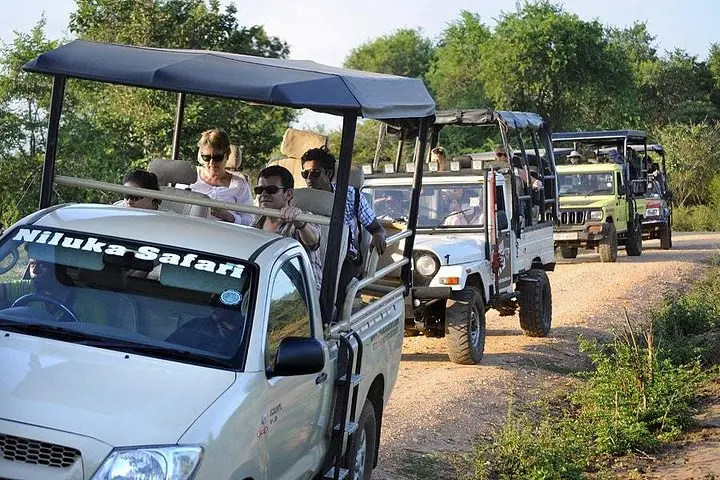
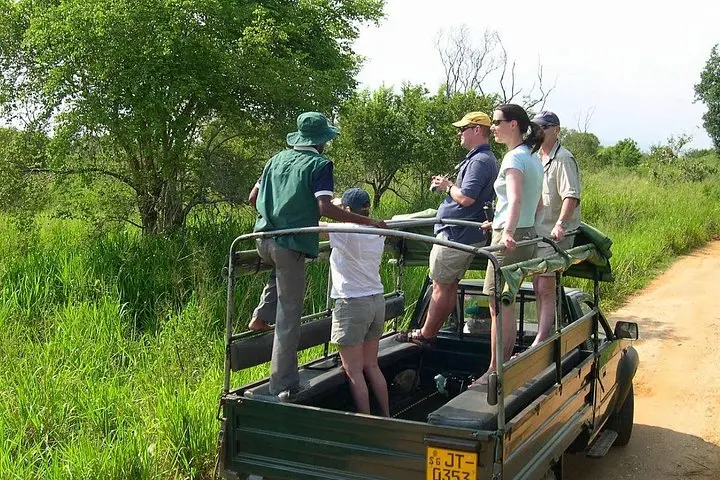
Practically, this is a short, vehicle-based safari: expect about three hours in the park within a four-hour door-to-door window. Wear neutral clothing, bring binoculars and a telephoto lens, and prepare for dust and sun. Guides know likely watering spots and will time the circuit to maximize sightings; keep windows partially closed if dust rises. Respect distance rules—elephants and other large mammals set the pace. Afternoon drives are efficient for travelers based in Udawalawe or nearby towns seeking a concentrated wildlife encounter without an overnight commitment.
The total experience is about four hours from hotel pickup to drop-off, with roughly three hours inside the park for the game drive.
Udawalawe is best known for Sri Lankan elephants; you may also see water buffalo, sambar deer, water monitor lizards, monkeys, and a variety of waterbirds.
Yes — the drive is vehicle-based and suitable for most ages, but it’s not recommended for those with serious spinal, heart, or pregnancy concerns per operator guidance.
Yes; phones and cameras are fine—bring a telephoto lens or binoculars for better close-up shots. Avoid sudden movements or shouting that could startle animals.
The Mice Team operates guided outdoor trips and adventures with an emphasis on safety, stewardship, and memorable experiences.
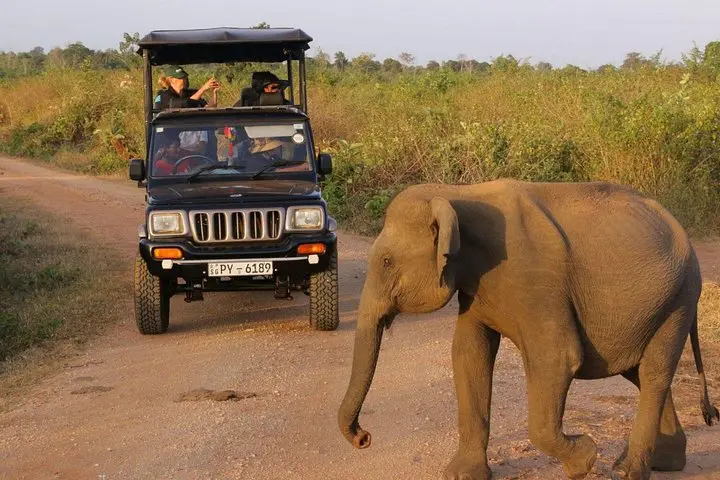
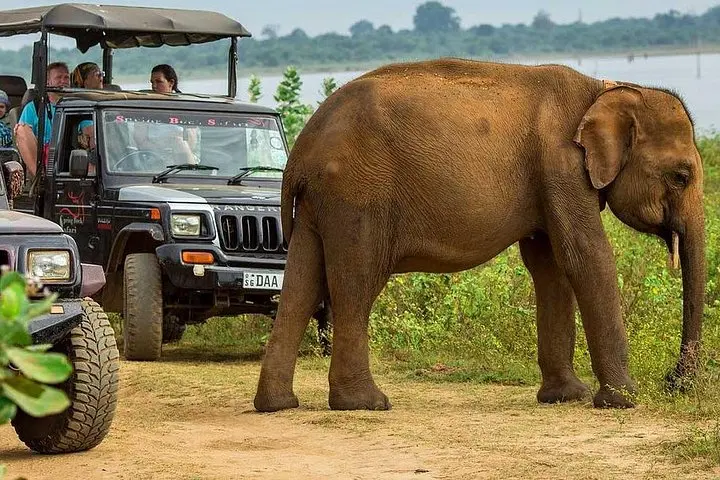
The jeep crunches across sun-baked earth as the reservoir glints to the west and a line of distant palms marks the park boundary. In the late afternoon the light flattens and animals move toward the water—elephants wade, buffaloes graze, and birds angle for the last thermal lifts. This is an afternoon game drive at Udawalawe National Park: focused, accessible, and timed for active wildlife viewing.
The jeep crunches across sun-baked earth as the reservoir glints to the west and a line of distant palms marks the park boundary. In the late afternoon the light flattens and animals move toward the water—elephants wade, buffaloes graze, and birds angle for the last thermal lifts. This is an afternoon game drive at Udawalawe National Park: focused, accessible, and timed for active wildlife viewing.
Udawalawe was established in the 1970s after the reservoir displaced animals; the park now sits on the edge of Sri Lanka’s wet and dry ecological zones, creating a mix of scrub, grasslands, and pools that concentrate wildlife. The geology is simple—rolling lowlands and the man-made reservoir—yet the park’s ecological role is large: it’s a refuge for the island’s elephant population and a reliable spot for mixed-species sightings. Local communities around the park are predominantly rural and agrarian; tourism here plugs directly into village economies and conservation work such as the nearby Elephant Transit Home.
Practically, this is a short, vehicle-based safari: expect about three hours in the park within a four-hour door-to-door window. Wear neutral clothing, bring binoculars and a telephoto lens, and prepare for dust and sun. Guides know likely watering spots and will time the circuit to maximize sightings; keep windows partially closed if dust rises. Respect distance rules—elephants and other large mammals set the pace. Afternoon drives are efficient for travelers based in Udawalawe or nearby towns seeking a concentrated wildlife encounter without an overnight commitment.