THE ADVENTURE COLLECTIVE® · Independent discovery and booking for outdoor travel

Ride a slow-moving caravan through Souss Massa’s dunes and eucalyptus corridors, ending with mint tea and Moroccan cakes by the flamingo-streaked estuary. This two-hour, family-friendly excursion pairs easy camel handling with birdwatching and local hospitality.
Ride a slow-moving caravan through Souss Massa’s dunes and eucalyptus corridors, ending with mint tea and Moroccan cakes by the flamingo-streaked estuary. This two-hour, family-friendly excursion pairs easy camel handling with birdwatching and local hospitality.
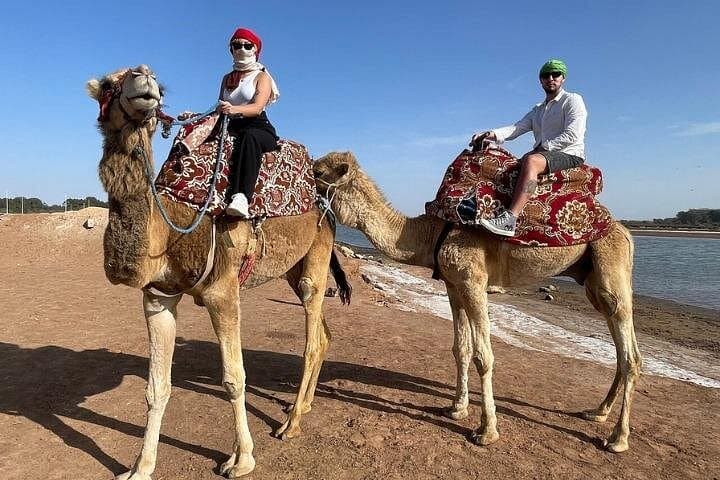
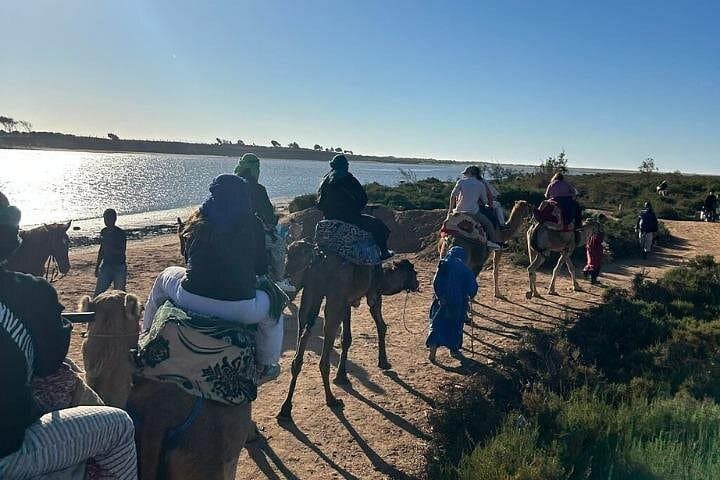
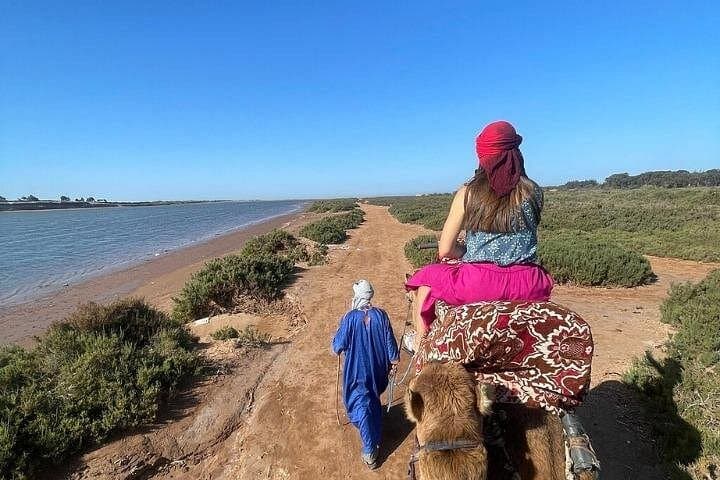
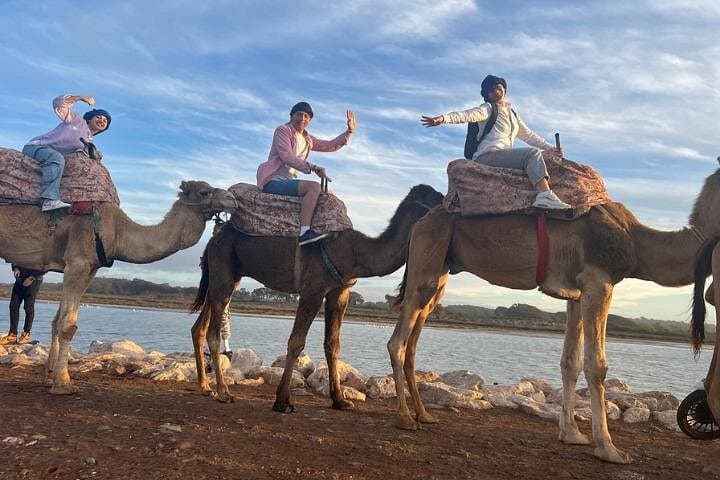
Morning light strips the salt from the air as your caravan steps off the ranch and into Souss Massa's flat, sun-warmed dunes. Camels walk with deliberate patience, hooves whispering over sand and the dry rustle of eucalyptus leaves above; inland the band of the flamingo river glints and invites a closer look.
Verified experiences and guided adventures in the surrounding area.
Operated by Atwa Tours · Agadir, Souss-Massa
Morning light strips the salt from the air as your caravan steps off the ranch and into Souss Massa's flat, sun-warmed dunes. Camels walk with deliberate patience, hooves whispering over sand and the dry rustle of eucalyptus leaves above; inland the band of the flamingo river glints and invites a closer look.
Souss Massa National Park was established to protect coastal dunes, wetlands and colonies of threatened birds—most famously the northern bald ibis—and its landscape records the meeting of Atlantic currents and Saharan winds. Geology here is forgiving: low dunes, interdunal plains and limestone outcrops shaped by wind and tide. Local Berber and Amazigh fishing and farming villages line the approach, and hosts often end rides with mint tea and small, buttery cakes, a slice of everyday Moroccan hospitality.
Expect a gentle, family-friendly two-hour ride that covers sandy tracks, shaded eucalyptus runs and estuary flats where migratory birds pause. Guides brief riders on camel handling and set a steady pace—this is observational travel more than a workout, but bring balance and patience when mounting and dismounting.
Practical notes: wear closed shoes and long pants for saddle comfort; sun protection and a reusable water bottle are essential. Morning or late-afternoon departures offer cooler temperatures and better bird activity; sunset trips add dramatic light for photos. Respect fenced nesting areas, follow your guide’s route, and leave no trace—these wetlands are fragile and internationally important for birds. Confirm hotel pickup and language preferences when booking to streamline logistics and support local guides easily.
Yes; the tour is described as family-friendly and camels are often shared between two riders—guides assist with mounting and safety.
Transportation and surfaces are listed as wheelchair accessible, but camel mounting requires mobility; check with the operator for specific accessibility support.
Guides commonly speak French and basic English; request language preferences when booking to confirm availability.
Yes—rides traverse estuary areas where flamingos and other migratory birds are often visible, especially during migration seasons.
Atwa Tours operates guided outdoor trips and adventures with an emphasis on safety, stewardship, and memorable experiences.
Morning light strips the salt from the air as your caravan steps off the ranch and into Souss Massa's flat, sun-warmed dunes. Camels walk with deliberate patience, hooves whispering over sand and the dry rustle of eucalyptus leaves above; inland the band of the flamingo river glints and invites a closer look.
Morning light strips the salt from the air as your caravan steps off the ranch and into Souss Massa's flat, sun-warmed dunes. Camels walk with deliberate patience, hooves whispering over sand and the dry rustle of eucalyptus leaves above; inland the band of the flamingo river glints and invites a closer look.
Souss Massa National Park was established to protect coastal dunes, wetlands and colonies of threatened birds—most famously the northern bald ibis—and its landscape records the meeting of Atlantic currents and Saharan winds. Geology here is forgiving: low dunes, interdunal plains and limestone outcrops shaped by wind and tide. Local Berber and Amazigh fishing and farming villages line the approach, and hosts often end rides with mint tea and small, buttery cakes, a slice of everyday Moroccan hospitality.
Expect a gentle, family-friendly two-hour ride that covers sandy tracks, shaded eucalyptus runs and estuary flats where migratory birds pause. Guides brief riders on camel handling and set a steady pace—this is observational travel more than a workout, but bring balance and patience when mounting and dismounting.
Practical notes: wear closed shoes and long pants for saddle comfort; sun protection and a reusable water bottle are essential. Morning or late-afternoon departures offer cooler temperatures and better bird activity; sunset trips add dramatic light for photos. Respect fenced nesting areas, follow your guide’s route, and leave no trace—these wetlands are fragile and internationally important for birds. Confirm hotel pickup and language preferences when booking to streamline logistics and support local guides easily.