THE ADVENTURE COLLECTIVE® · Independent discovery and booking for outdoor travel

See Agadir from the Kasbah’s wind-swept overlook, bargain through Souk El Had’s packed lanes, and visit a women-run argan cooperative — all on a private 3.5-hour drive-and-walk tour. Practical advice on timing, terrain, and what to bring helps you make the most of a short city adventure.
See Agadir from the Kasbah’s wind-swept overlook, bargain through Souk El Had’s packed lanes, and visit a women-run argan cooperative — all on a private 3.5-hour drive-and-walk tour. Practical advice on timing, terrain, and what to bring helps you make the most of a short city adventure.
You arrive at the foot of the Kasbah as gulls wheel over the Atlantic and the city spreads out beneath — a low ribbon of sand, white roofs, and the glitter of the marina. The ruined ramparts of Agadir Oufella give a raw, wind-scoured panorama; waves seem to dare the shore while the port hums quietly below.
Verified experiences and guided adventures in the surrounding area.
Operated by Dosah Tours · Agadir, Souss-Massa
You arrive at the foot of the Kasbah as gulls wheel over the Atlantic and the city spreads out beneath — a low ribbon of sand, white roofs, and the glitter of the marina. The ruined ramparts of Agadir Oufella give a raw, wind-scoured panorama; waves seem to dare the shore while the port hums quietly below.
Agadir’s modern face was rebuilt after the devastating 1960 earthquake, leaving the Kasbah as a solitary ruin that frames the city’s story. Geologically the bay sits on the Souss plain where river sediments meet Atlantic currents; inland the argan tree dominates a dry, erosion-prone landscape valued for its oil. Culturally the region blends Amazigh (Berber) traditions with coastal fishing life — Souk El Had remains the commercial heart, and women-run argan cooperatives are important community enterprises.
On this private 3.5-hour tour expect short, guided walks: a brief uphill climb to the Kasbah with uneven stone steps and roughly 80–120 m of elevation gain from the main promenade, a 15–25 minute stroll around the marina, and time to browse the souk’s tight aisles. Terrain is urban and paved, but pack for sand, sun, and crowds. Practical notes: start in the morning or late afternoon to avoid mid-day heat, carry cash for small purchases, and respect mosque boundaries when passing by. The tour’s private transport reduces walking strain and lets you tailor stops at viewpoints, craft workshops, and the argan cooperative — a compact introduction to Agadir that balances seaside ease with cultural depth.
The private tour runs about 3 to 3.5 hours with short, guided walks at each stop and private transport between locations.
The Kasbah ruins include uneven stone steps and short steep sections; it’s not ideal for strollers or full mobility aids, though the driver can remain nearby and other stops are more accessible.
Yes — the visit to a women-run argan cooperative includes demonstrations and opportunities to purchase oil and handmade products; bring cash or card depending on the vendor.
Tipping is customary but discretionary; a modest tip for good service is appreciated and typical in Morocco.
Dosah Tours operates guided outdoor trips and adventures with an emphasis on safety, stewardship, and memorable experiences.
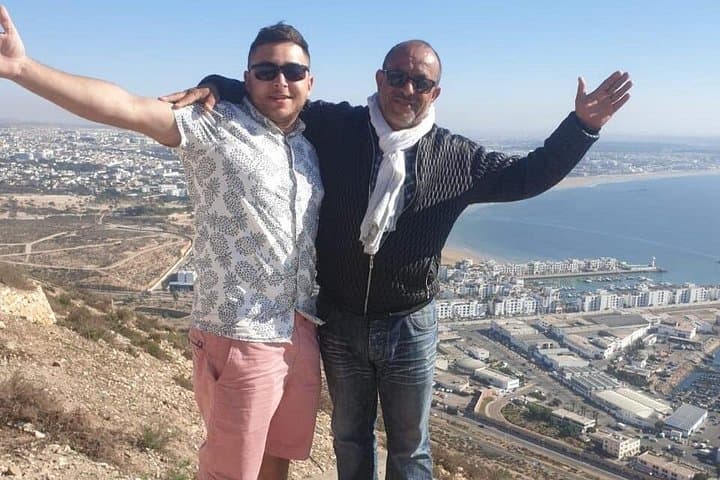

You arrive at the foot of the Kasbah as gulls wheel over the Atlantic and the city spreads out beneath — a low ribbon of sand, white roofs, and the glitter of the marina. The ruined ramparts of Agadir Oufella give a raw, wind-scoured panorama; waves seem to dare the shore while the port hums quietly below.
You arrive at the foot of the Kasbah as gulls wheel over the Atlantic and the city spreads out beneath — a low ribbon of sand, white roofs, and the glitter of the marina. The ruined ramparts of Agadir Oufella give a raw, wind-scoured panorama; waves seem to dare the shore while the port hums quietly below.
Agadir’s modern face was rebuilt after the devastating 1960 earthquake, leaving the Kasbah as a solitary ruin that frames the city’s story. Geologically the bay sits on the Souss plain where river sediments meet Atlantic currents; inland the argan tree dominates a dry, erosion-prone landscape valued for its oil. Culturally the region blends Amazigh (Berber) traditions with coastal fishing life — Souk El Had remains the commercial heart, and women-run argan cooperatives are important community enterprises.
On this private 3.5-hour tour expect short, guided walks: a brief uphill climb to the Kasbah with uneven stone steps and roughly 80–120 m of elevation gain from the main promenade, a 15–25 minute stroll around the marina, and time to browse the souk’s tight aisles. Terrain is urban and paved, but pack for sand, sun, and crowds. Practical notes: start in the morning or late afternoon to avoid mid-day heat, carry cash for small purchases, and respect mosque boundaries when passing by. The tour’s private transport reduces walking strain and lets you tailor stops at viewpoints, craft workshops, and the argan cooperative — a compact introduction to Agadir that balances seaside ease with cultural depth.