THE ADVENTURE COLLECTIVE® · Independent discovery and booking for outdoor travel

Explore Agadir’s busiest market streets, visit a women’s argan cooperative, and take in sweeping bay views from the Kasbah on this four-hour private shopping tour. Learn bargaining techniques from a local guide and enjoy a traditional lunch while navigating Souk Lhad’s vibrant stalls.
Explore Agadir’s busiest market streets, visit a women’s argan cooperative, and take in sweeping bay views from the Kasbah on this four-hour private shopping tour. Learn bargaining techniques from a local guide and enjoy a traditional lunch while navigating Souk Lhad’s vibrant stalls.
You step off the quay and the Atlantic air pulls at your jacket as your driver guides you inland toward the low-rise city. Stalls appear like a town within the town — wooden tables of spices, braided leather, and piles of woven rugs — while voices call out prices and invites. The day moves at a purposeful local tempo: a visit to an argan women’s cooperative, a climb to the Kasbah ruins for a sweep of the bay, then into Souk Lhad where bargaining becomes part of the landscape.
Verified experiences and guided adventures in the surrounding area.
Operated by Tangier Private Tours&Activeties _Day Trips · Agadir, Souss-Massa
You step off the quay and the Atlantic air pulls at your jacket as your driver guides you inland toward the low-rise city. Stalls appear like a town within the town — wooden tables of spices, braided leather, and piles of woven rugs — while voices call out prices and invites. The day moves at a purposeful local tempo: a visit to an argan women’s cooperative, a climb to the Kasbah ruins for a sweep of the bay, then into Souk Lhad where bargaining becomes part of the landscape.
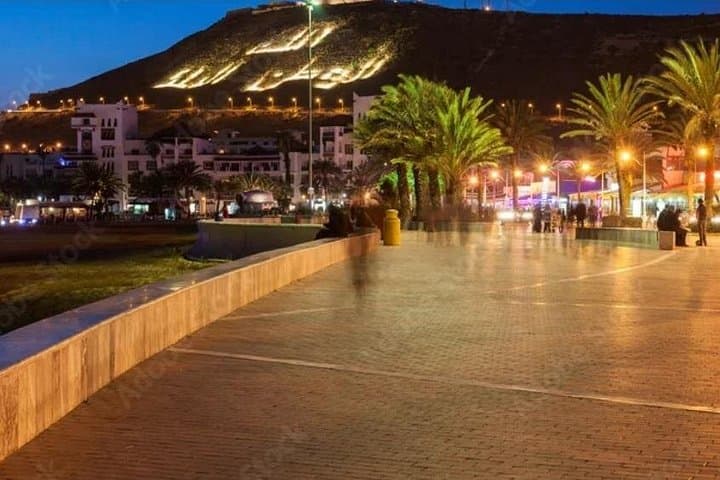
Agadir’s modern skyline owes itself to the great 1960 earthquake; what remains are purpose-built neighborhoods around the older medina sites and the Kasbah that crowns the hill. The argan tree, endemic to the Souss-Massa region, shapes livelihoods here — cooperative presses teach traditional oil extraction and crafts. The city’s marina and beaches reflect Morocco’s Atlantic edge; the souks reflect centuries of Berber trade routes and coastal commerce.
Practical guidance: the tour runs about four hours, with hotel or port pickup and a local guide who demonstrates bargaining, ingredient origins, and handcraft techniques. Expect paved and cobbled walking, short stair climbs at the Kasbah, and stalls with limited shade — sunscreen and a water bottle matter. Cash in small denominations helps transactions; photos are generally welcomed but ask before shooting vendors. Lunch at a traditional spot introduces local dishes like metmora (Berber-style flatbread) and gives time to rest. Wheelchair-accessible options are noted by the operator, but some market aisles can be narrow. Plan mornings for cooler air and smaller crowds, and bring comfortable walking shoes — Agadir’s market maze rewards patient feet and a readiness to haggle.
Yes — the tour includes pickup from the port or most hotels in Agadir; confirm your exact pickup point when booking.
Yes — the itinerary includes a visit to a women’s argan cooperative with tasting and a traditional lunch option on most departures.
The operator lists wheelchair-accessible options, but some market aisles and the Kasbah area have uneven surfaces and narrow passages; contact the supplier to discuss needs.
Bargaining is customary; begin by offering roughly half the asking price and settle on a middle ground while remaining respectful — your guide can demonstrate local norms.
Tangier Private Tours&Activeties _Day Trips operates guided outdoor trips and adventures with an emphasis on safety, stewardship, and memorable experiences.
You step off the quay and the Atlantic air pulls at your jacket as your driver guides you inland toward the low-rise city. Stalls appear like a town within the town — wooden tables of spices, braided leather, and piles of woven rugs — while voices call out prices and invites. The day moves at a purposeful local tempo: a visit to an argan women’s cooperative, a climb to the Kasbah ruins for a sweep of the bay, then into Souk Lhad where bargaining becomes part of the landscape.
You step off the quay and the Atlantic air pulls at your jacket as your driver guides you inland toward the low-rise city. Stalls appear like a town within the town — wooden tables of spices, braided leather, and piles of woven rugs — while voices call out prices and invites. The day moves at a purposeful local tempo: a visit to an argan women’s cooperative, a climb to the Kasbah ruins for a sweep of the bay, then into Souk Lhad where bargaining becomes part of the landscape.
Agadir’s modern skyline owes itself to the great 1960 earthquake; what remains are purpose-built neighborhoods around the older medina sites and the Kasbah that crowns the hill. The argan tree, endemic to the Souss-Massa region, shapes livelihoods here — cooperative presses teach traditional oil extraction and crafts. The city’s marina and beaches reflect Morocco’s Atlantic edge; the souks reflect centuries of Berber trade routes and coastal commerce.
Practical guidance: the tour runs about four hours, with hotel or port pickup and a local guide who demonstrates bargaining, ingredient origins, and handcraft techniques. Expect paved and cobbled walking, short stair climbs at the Kasbah, and stalls with limited shade — sunscreen and a water bottle matter. Cash in small denominations helps transactions; photos are generally welcomed but ask before shooting vendors. Lunch at a traditional spot introduces local dishes like metmora (Berber-style flatbread) and gives time to rest. Wheelchair-accessible options are noted by the operator, but some market aisles can be narrow. Plan mornings for cooler air and smaller crowds, and bring comfortable walking shoes — Agadir’s market maze rewards patient feet and a readiness to haggle.