THE ADVENTURE COLLECTIVE® · Independent discovery and booking for outdoor travel

Race across rocky plains on a 2-hour quad, spot goats clambering in argan trees, sip mint tea with nomadic hosts and haggle for spices at Souk El Had. This 4-hour loop blends off-road adrenaline with local culture around Agadir.
Race across rocky plains on a 2-hour quad, spot goats clambering in argan trees, sip mint tea with nomadic hosts and haggle for spices at Souk El Had. This 4-hour loop blends off-road adrenaline with local culture around Agadir.
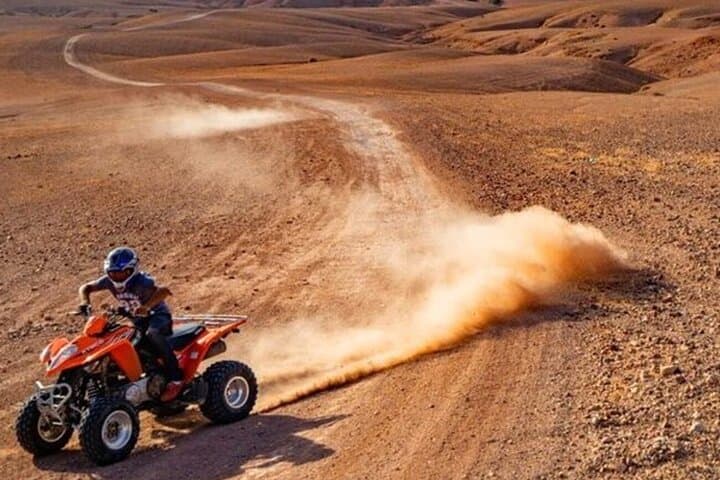
You kick gravel and dust as the quad answers under your hands — a low, steady rumble that seems to tune you to the landscape. The horizon is a patchwork of low, stony ridges and clumps of argan trees; wind pushes across the plain and dares you to open the throttle. Two hours on a quad through this semi-desert terrain delivers sudden bursts of speed and long stretches to breathe the Atlantic-cooled air near Agadir.
Verified experiences and guided adventures in the surrounding area.
Operated by MorroccoAttractions.com · Agadir, Souss-Massa
You kick gravel and dust as the quad answers under your hands — a low, steady rumble that seems to tune you to the landscape. The horizon is a patchwork of low, stony ridges and clumps of argan trees; wind pushes across the plain and dares you to open the throttle. Two hours on a quad through this semi-desert terrain delivers sudden bursts of speed and long stretches to breathe the Atlantic-cooled air near Agadir.
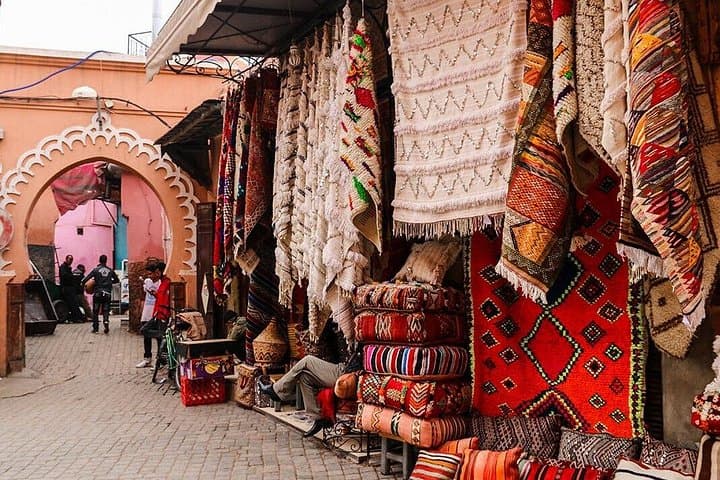
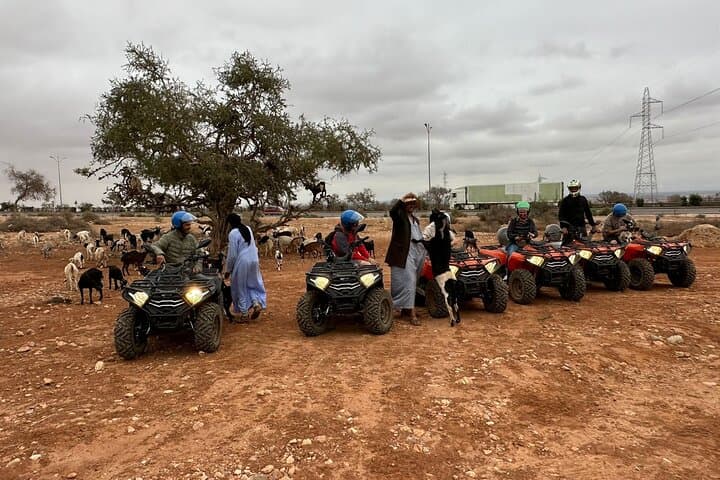
This route runs through the argan zone of southwestern Morocco, where hardy Argania spinosa cling to shallow soils and produce the small, nutty fruit goats covet. The sight of goats perched in trees is a locally famous behavior tied to centuries of pastoral life and the argan-oil economy. Nearby Souk El Had in Agadir is the city’s main trading market — a place rebuilt and reshaped since the 1960 earthquake and now a lively center for spices, leather and handicrafts.
Geologically the plain is a reg — a hard, rocky plateau shaped by Atlas foothill erosion — more compact and dusty than Sahara sand dunes, which affects traction and the feel of the ride. Culturally, expect warm, practical hospitality: a short mint-tea break with nomadic hosts is standard and offers a direct look at Berber daily rituals.
Practical notes: arrive with closed-toe shoes, sun protection and a small daypack for essentials; helmets are provided. Bring cash for the souk, keep a buffer of time for traffic returning to Agadir, and photograph goats from a respectful distance. Hydrate often — two hours of riding plus market time adds up fast.
Yes — adult and child helmets are included and must be worn for safety.
Yes — no advanced skills are required; guides give a short safety briefing and the route suits first-time riders.
Goats in argan trees are common in this region but sightings depend on season and herd movement; guides know the best viewing spots.
Souk El Had has busy, uneven aisles; parts are wheelchair and stroller accessible, but expect crowds and narrow paths.
MorroccoAttractions.com operates guided outdoor trips and adventures with an emphasis on safety, stewardship, and memorable experiences.
You kick gravel and dust as the quad answers under your hands — a low, steady rumble that seems to tune you to the landscape. The horizon is a patchwork of low, stony ridges and clumps of argan trees; wind pushes across the plain and dares you to open the throttle. Two hours on a quad through this semi-desert terrain delivers sudden bursts of speed and long stretches to breathe the Atlantic-cooled air near Agadir.
You kick gravel and dust as the quad answers under your hands — a low, steady rumble that seems to tune you to the landscape. The horizon is a patchwork of low, stony ridges and clumps of argan trees; wind pushes across the plain and dares you to open the throttle. Two hours on a quad through this semi-desert terrain delivers sudden bursts of speed and long stretches to breathe the Atlantic-cooled air near Agadir.
This route runs through the argan zone of southwestern Morocco, where hardy Argania spinosa cling to shallow soils and produce the small, nutty fruit goats covet. The sight of goats perched in trees is a locally famous behavior tied to centuries of pastoral life and the argan-oil economy. Nearby Souk El Had in Agadir is the city’s main trading market — a place rebuilt and reshaped since the 1960 earthquake and now a lively center for spices, leather and handicrafts.
Geologically the plain is a reg — a hard, rocky plateau shaped by Atlas foothill erosion — more compact and dusty than Sahara sand dunes, which affects traction and the feel of the ride. Culturally, expect warm, practical hospitality: a short mint-tea break with nomadic hosts is standard and offers a direct look at Berber daily rituals.
Practical notes: arrive with closed-toe shoes, sun protection and a small daypack for essentials; helmets are provided. Bring cash for the souk, keep a buffer of time for traffic returning to Agadir, and photograph goats from a respectful distance. Hydrate often — two hours of riding plus market time adds up fast.