THE ADVENTURE COLLECTIVE® · Independent discovery and booking for outdoor travel

Cross the High Atlas from Agadir for a full‑day, private tour of Marrakech’s medina, palaces, and markets. Expect mountain views on the drive, lively souks at Jamaa el Fna, and a long but richly rewarding day of walking and discovery.
Cross the High Atlas from Agadir for a full‑day, private tour of Marrakech’s medina, palaces, and markets. Expect mountain views on the drive, lively souks at Jamaa el Fna, and a long but richly rewarding day of walking and discovery.
Morning light from the Atlantic still clinging to Agadir when the driver eases the air‑conditioned van onto the road and the High Atlas rises ahead—rock folded like an open hand, daring you to look back. The pass at Tizi n’Tichka climbs to about 2,260 m, giving brief alpine air before the city heat of Marrakech settles in the palm‑lined avenues.
Verified experiences and guided adventures in the surrounding area.
Operated by Cross Morocco Tours · Marrakech, Marrakech-Safi
Morning light from the Atlantic still clinging to Agadir when the driver eases the air‑conditioned van onto the road and the High Atlas rises ahead—rock folded like an open hand, daring you to look back. The pass at Tizi n’Tichka climbs to about 2,260 m, giving brief alpine air before the city heat of Marrakech settles in the palm‑lined avenues.
Marrakech grew from an 11th‑century Almoravid foundation into one of Morocco’s imperial centers; its ochre ramparts, Koutoubia minaret, and riad courtyards reflect successive dynasties and trade routes across the Sahara. Geologically, the High Atlas is young and jagged—granite and sandstone—so the drive brings alternating views of terraces, olive groves, and whitewashed mountain villages.
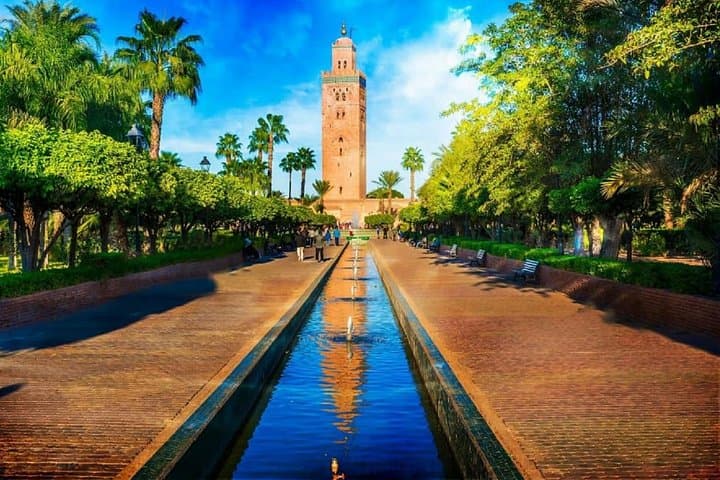
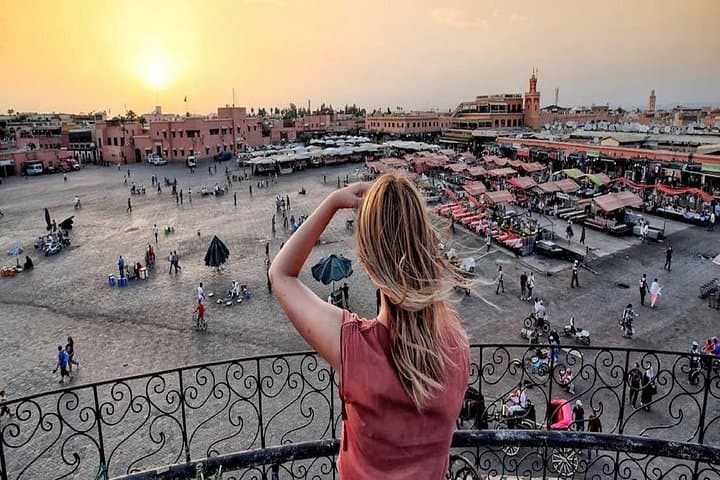
On arrival the itinerary drops you in Jamaa el Fna, where storytellers and stalls shape the pulse of the city. The Koutoubia’s silhouette, the ornate courtyards of Bahia Palace, the quiet Saadian Tombs, and the Menara’s reflecting pool each show different facets: religious life, elite architecture, funerary art, and agricultural history.
Practical guidance: expect a long day—plan for 12–13 hours from hotel pickup and return. Wear sturdy walking shoes for cobbles and palace steps; carry cash for souk purchases and street food. Hydrate frequently—Marrakech sits near 466 m elevation and can be hot, especially in summer. Time in each site is brief on a day trip, so prioritize what you want to explore further and consider returning to the medina for an overnight stay to slow the pace and sample rooftop views after sunset.
Driving time typically ranges 3–4 hours each way depending on route and traffic; the trip includes mountain passages that can slow progress.
This tour description notes admission is not included—budget for tickets at sites like Bahia Palace and Saadian Tombs.
Street food and meals are not usually included; you’ll have free time to eat in the medina and should budget for lunch.
The tour is family‑friendly and classified as physically easy, but the medina’s cobbles and palace steps can be challenging for limited mobility—check pickup accessibility and discuss needs with the operator.
Cross Morocco Tours operates guided outdoor trips and adventures with an emphasis on safety, stewardship, and memorable experiences.


Morning light from the Atlantic still clinging to Agadir when the driver eases the air‑conditioned van onto the road and the High Atlas rises ahead—rock folded like an open hand, daring you to look back. The pass at Tizi n’Tichka climbs to about 2,260 m, giving brief alpine air before the city heat of Marrakech settles in the palm‑lined avenues.
Morning light from the Atlantic still clinging to Agadir when the driver eases the air‑conditioned van onto the road and the High Atlas rises ahead—rock folded like an open hand, daring you to look back. The pass at Tizi n’Tichka climbs to about 2,260 m, giving brief alpine air before the city heat of Marrakech settles in the palm‑lined avenues.
Marrakech grew from an 11th‑century Almoravid foundation into one of Morocco’s imperial centers; its ochre ramparts, Koutoubia minaret, and riad courtyards reflect successive dynasties and trade routes across the Sahara. Geologically, the High Atlas is young and jagged—granite and sandstone—so the drive brings alternating views of terraces, olive groves, and whitewashed mountain villages.
On arrival the itinerary drops you in Jamaa el Fna, where storytellers and stalls shape the pulse of the city. The Koutoubia’s silhouette, the ornate courtyards of Bahia Palace, the quiet Saadian Tombs, and the Menara’s reflecting pool each show different facets: religious life, elite architecture, funerary art, and agricultural history.
Practical guidance: expect a long day—plan for 12–13 hours from hotel pickup and return. Wear sturdy walking shoes for cobbles and palace steps; carry cash for souk purchases and street food. Hydrate frequently—Marrakech sits near 466 m elevation and can be hot, especially in summer. Time in each site is brief on a day trip, so prioritize what you want to explore further and consider returning to the medina for an overnight stay to slow the pace and sample rooftop views after sunset.