THE ADVENTURE COLLECTIVE® · Independent discovery and booking for outdoor travel

Drive from Agadir into the southern Moroccan desert across Ouarzazate and the palm-lined Draa Valley to Zagora. This two-day private 4x4 tour combines roadside kasbahs, desert tracks and an overnight desert stay.
Drive from Agadir into the southern Moroccan desert across Ouarzazate and the palm-lined Draa Valley to Zagora. This two-day private 4x4 tour combines roadside kasbahs, desert tracks and an overnight desert stay.
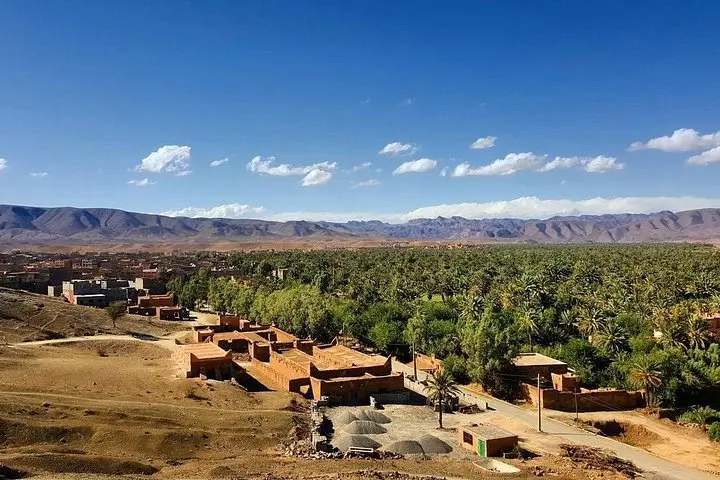
Dust lifts off the road as your 4x4 rolls away from Agadir’s Atlantic coolness and into sun-baked plains. By midmorning the city’s palm groves shrink behind a low ridge and the landscape pushes you toward ochre plateaus and the high clay roofs of Berber villages. On day one the vehicle climbs toward Ouarzazate, slipping through scrub and red earth; on day two the road unspools into the Draa Valley and the first dunes of the Sahara appear like a horizon daring you to cross it.
Verified experiences and guided adventures in the surrounding area.
Operated by Marvels Tours · Zagora, Drâa-Tafilalet
Dust lifts off the road as your 4x4 rolls away from Agadir’s Atlantic coolness and into sun-baked plains. By midmorning the city’s palm groves shrink behind a low ridge and the landscape pushes you toward ochre plateaus and the high clay roofs of Berber villages. On day one the vehicle climbs toward Ouarzazate, slipping through scrub and red earth; on day two the road unspools into the Draa Valley and the first dunes of the Sahara appear like a horizon daring you to cross it.
This corridor of southern Morocco follows ancient trans-Saharan routes where caravans once threaded dates and salt between market towns. Geologically the region shifts from Atlantic-influenced foothills to Mesozoic limestone and laterite, then to the wind-formed sands of the Erg Chigaga and smaller dune fields around Zagora. Culturally the route is dominated by Amazigh (Berber) villages, kasbah architecture, artisan carpet workshops and palm-lined irrigation systems that have sustained oasis life for centuries.
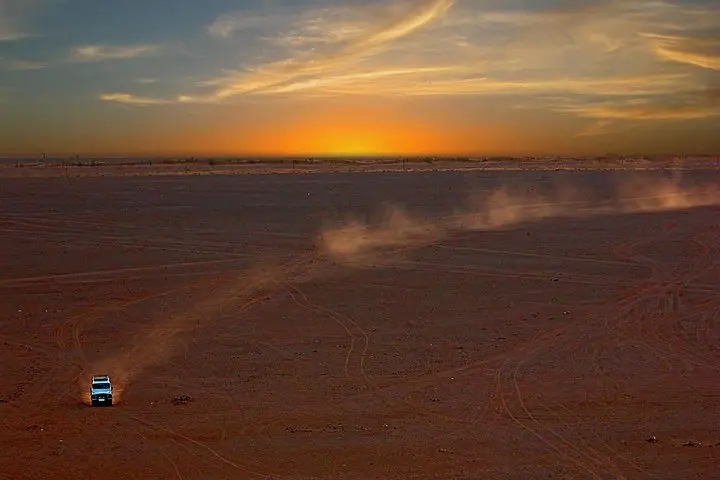
What to expect practically: plan for roughly 450–550 km of driving spread over two days with long stretches on paved roads and shorter sand tracks near Zagora; elevations range from near sea level to ~1,100 m at Ouarzazate, settling around 500 m in Zagora. The tour typically includes a private air-conditioned 4x4, one night’s desert accommodation, dinner and breakfast.
Bring sun protection, layered clothing for cool desert nights, and cash for small purchases in villages. Start early to avoid midday heat and keep water close—the landscape looks passive but the desert’s light and wind can change fast.
Expect 5–8 hours of driving total each day including stops; the itinerary breaks travel into manageable segments with viewpoint and village stops.
The operator notes accessibility for infants and wheelchair users for transport and many surfaces, but confirm specific mobility needs before booking.
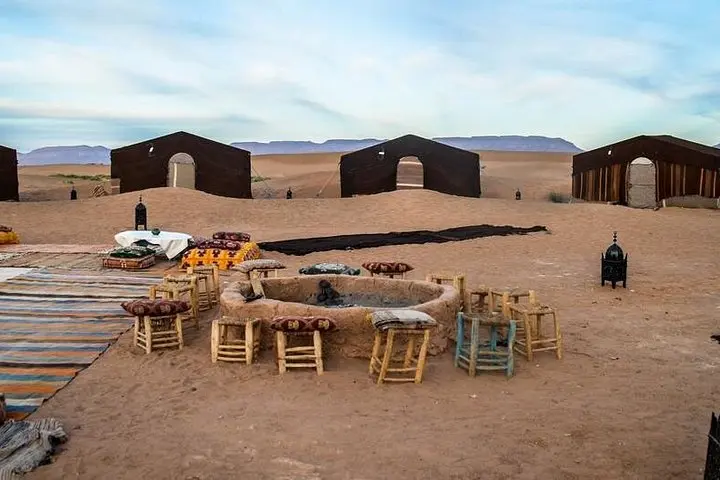
The trip includes one night’s accommodation—options vary from simple desert camps to basic guesthouses; check the specific booking for camp type and facilities.
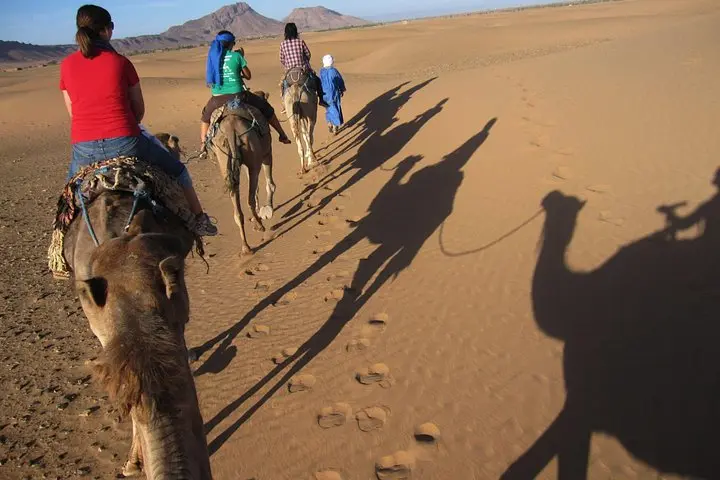
Most itineraries allow short walks on the dunes and optional camel rides; these are typically offered at extra cost and depend on time and local conditions.
Marvels Tours operates guided outdoor trips and adventures with an emphasis on safety, stewardship, and memorable experiences.
Dust lifts off the road as your 4x4 rolls away from Agadir’s Atlantic coolness and into sun-baked plains. By midmorning the city’s palm groves shrink behind a low ridge and the landscape pushes you toward ochre plateaus and the high clay roofs of Berber villages. On day one the vehicle climbs toward Ouarzazate, slipping through scrub and red earth; on day two the road unspools into the Draa Valley and the first dunes of the Sahara appear like a horizon daring you to cross it.
Dust lifts off the road as your 4x4 rolls away from Agadir’s Atlantic coolness and into sun-baked plains. By midmorning the city’s palm groves shrink behind a low ridge and the landscape pushes you toward ochre plateaus and the high clay roofs of Berber villages. On day one the vehicle climbs toward Ouarzazate, slipping through scrub and red earth; on day two the road unspools into the Draa Valley and the first dunes of the Sahara appear like a horizon daring you to cross it.
This corridor of southern Morocco follows ancient trans-Saharan routes where caravans once threaded dates and salt between market towns. Geologically the region shifts from Atlantic-influenced foothills to Mesozoic limestone and laterite, then to the wind-formed sands of the Erg Chigaga and smaller dune fields around Zagora. Culturally the route is dominated by Amazigh (Berber) villages, kasbah architecture, artisan carpet workshops and palm-lined irrigation systems that have sustained oasis life for centuries.
What to expect practically: plan for roughly 450–550 km of driving spread over two days with long stretches on paved roads and shorter sand tracks near Zagora; elevations range from near sea level to ~1,100 m at Ouarzazate, settling around 500 m in Zagora. The tour typically includes a private air-conditioned 4x4, one night’s desert accommodation, dinner and breakfast.
Bring sun protection, layered clothing for cool desert nights, and cash for small purchases in villages. Start early to avoid midday heat and keep water close—the landscape looks passive but the desert’s light and wind can change fast.