THE ADVENTURE COLLECTIVE® · Independent discovery and booking for outdoor travel

Leave Marrakech for a day on the stony Agafay plateau where short hikes, a camel ride, and visits to Berber villages meet views of the High Atlas. Expect village markets, terraced orchards near Imlil, and practical, all-day travel across mixed terrain.
Leave Marrakech for a day on the stony Agafay plateau where short hikes, a camel ride, and visits to Berber villages meet views of the High Atlas. Expect village markets, terraced orchards near Imlil, and practical, all-day travel across mixed terrain.
At first light the road out of Marrakech loosens the city’s heat and the land opens into a hard, stone plain that dares you to step across it. The Agafay plateau spreads low and stony under the Atlas foothills; camels pick their way, wind pulls dust into slow ribbons, and the outline of snow-bright Toubkal sits distant and certain on the horizon.
Verified experiences and guided adventures in the surrounding area.
Operated by Trips From Marrakech · Marrakech, Marrakesh-Safi
At first light the road out of Marrakech loosens the city’s heat and the land opens into a hard, stone plain that dares you to step across it. The Agafay plateau spreads low and stony under the Atlas foothills; camels pick their way, wind pulls dust into slow ribbons, and the outline of snow-bright Toubkal sits distant and certain on the horizon.
Geology here is compacted schist and limestone weathered into a stony “desert” rather than shifting dunes—an accessible stand-in for the Sahara closer to the city. Human history is visible in terraces and dry-stone walls: Berber villages like Ait Souka and Armed grew where water and routes allowed, and markets in Asni and Tahnaouet still act as weekly lifelines of trade and culture.
The day combines short hikes (expect 3–6 km of walking across mixed terrain), a 30–40 minute camel ride, village visits, and a family lunch beneath views of Jebel Toubkal (4,167 m). Parts of the route reach Imlil at about 1,740 m, so you’ll notice cooler air and terraced orchards compared with the plains.
Practical guidance: start early to avoid midday heat, carry 2–3 liters of water, and wear sturdy shoes for rock and loose scree. Lightweight layers work best—mornings can be cool, afternoons hot. Respect private property and ask before photographing people; tipping and buying local handicrafts supports small households. Time your visit around market days (Asni Saturday, Tahnaouet Tuesday) for fuller village life.
Yes—most full-day tours include hotel pickup and drop-off in Marrakech using an air-conditioned minivan.
Camel rides on this itinerary are typically 30–40 minutes and occur on the Agafay plateau rather than sandy dunes.
Families do it frequently; children should be comfortable on camels and able to walk short distances—infant seats may be available for the transfer vehicle.
Imlil sits around 1,740 m; most travelers experience no issues, but those with serious cardiovascular conditions should consult a physician and consider the moderate exertion.
Trips From Marrakech operates guided outdoor trips and adventures with an emphasis on safety, stewardship, and memorable experiences.
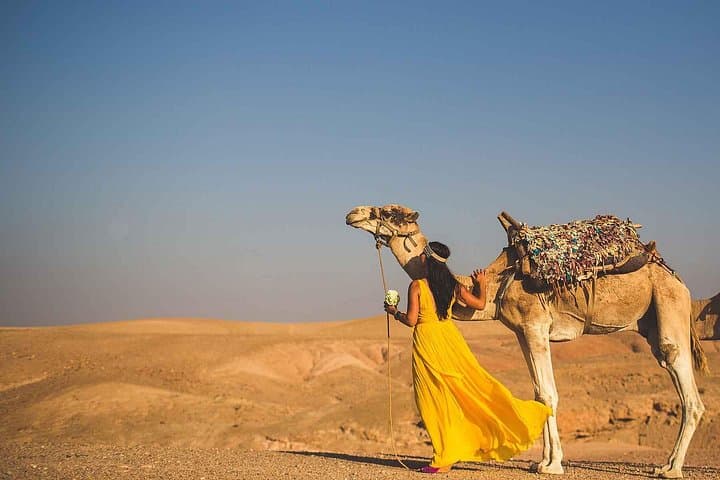


At first light the road out of Marrakech loosens the city’s heat and the land opens into a hard, stone plain that dares you to step across it. The Agafay plateau spreads low and stony under the Atlas foothills; camels pick their way, wind pulls dust into slow ribbons, and the outline of snow-bright Toubkal sits distant and certain on the horizon.
At first light the road out of Marrakech loosens the city’s heat and the land opens into a hard, stone plain that dares you to step across it. The Agafay plateau spreads low and stony under the Atlas foothills; camels pick their way, wind pulls dust into slow ribbons, and the outline of snow-bright Toubkal sits distant and certain on the horizon.
Geology here is compacted schist and limestone weathered into a stony “desert” rather than shifting dunes—an accessible stand-in for the Sahara closer to the city. Human history is visible in terraces and dry-stone walls: Berber villages like Ait Souka and Armed grew where water and routes allowed, and markets in Asni and Tahnaouet still act as weekly lifelines of trade and culture.
The day combines short hikes (expect 3–6 km of walking across mixed terrain), a 30–40 minute camel ride, village visits, and a family lunch beneath views of Jebel Toubkal (4,167 m). Parts of the route reach Imlil at about 1,740 m, so you’ll notice cooler air and terraced orchards compared with the plains.
Practical guidance: start early to avoid midday heat, carry 2–3 liters of water, and wear sturdy shoes for rock and loose scree. Lightweight layers work best—mornings can be cool, afternoons hot. Respect private property and ask before photographing people; tipping and buying local handicrafts supports small households. Time your visit around market days (Asni Saturday, Tahnaouet Tuesday) for fuller village life.