THE ADVENTURE COLLECTIVE® · Independent discovery and booking for outdoor travel

Spend a day moving from Marrakech into the stony Agafay Desert and foothills of the High Atlas—camel rides, village visits and a home-cooked Berber lunch offer an immersive, accessible slice of Moroccan landscape and life.
Spend a day moving from Marrakech into the stony Agafay Desert and foothills of the High Atlas—camel rides, village visits and a home-cooked Berber lunch offer an immersive, accessible slice of Moroccan landscape and life.
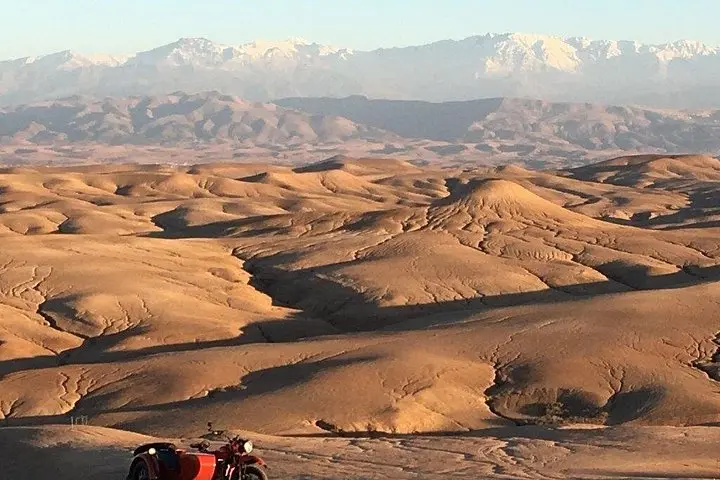
A low sun slants across the stony Agafay plain as the minivan leaves Marrakech; olive groves shrink behind you and the High Atlas rises like a distant, watchful ridge. The landscape changes in stages—fields and hamlets give way to the Kik Plateau and the scattered huts of Berber villages—each turn a new frame for the day’s steps and camera shots.
Verified experiences and guided adventures in the surrounding area.
Operated by Atlas Mountains Guided Tour · Marrakech, Marrakech-Safi
A low sun slants across the stony Agafay plain as the minivan leaves Marrakech; olive groves shrink behind you and the High Atlas rises like a distant, watchful ridge. The landscape changes in stages—fields and hamlets give way to the Kik Plateau and the scattered huts of Berber villages—each turn a new frame for the day’s steps and camera shots.
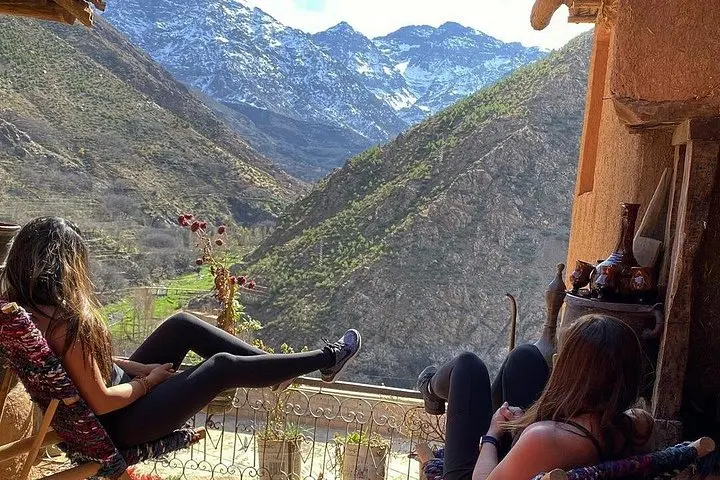
This route threads together geology and culture: the Haouz plain’s alluvial soils, the wind-sculpted volcanic stones of Agafay, and the foothills that feed the Atlas’ rushing seasonal streams. Imlil and nearby mountain hamlets have long been mountain-farming centers in a Berber-speaking region; visiting a family home offers direct insight into local food, craft and daily rhythms shaped by altitude and seasons.
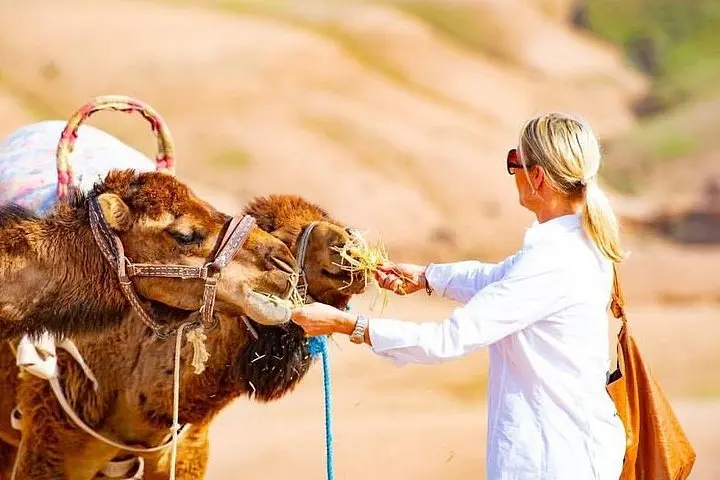
Expect a mix of short guided walks, a roughly 30-minute camel ride over hard-packed desert, and a shared lunch in a Tinirt village house. The day emphasizes approachable activity—uneven terrain, sun exposure and simple facilities—rather than technical challenge.
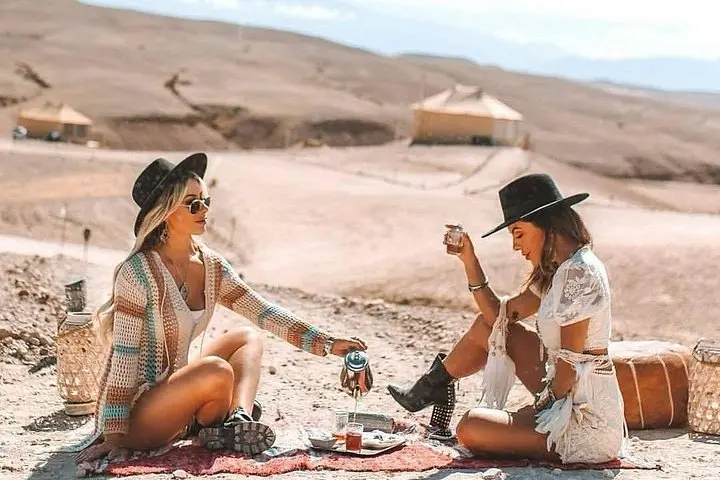
Practical takeaways: go early to avoid midday heat, carry at least 1–2 liters of water, and wear sturdy shoes for rocky tracks. Bring sun protection and a light layer for the evening when desert wind can bite. Respect local customs—ask before photographing people, accept tea as an invitation to conversation, and tip guides and hosts for hospitality.
This is a travel day that pairs easy outdoor movement with cultural context—ideal for travelers who want a tactile taste of Morocco’s mountain‑to‑desert transition without multi-day trekking.
Tipping is customary; small cash tips for the guide, driver and the Berber family who hosts lunch are appreciated.
Yes—camel rides are short and guided; inform staff if you have mobility issues so they can assist mounting and dismounting.
Basic restroom facilities are available at some stops and family homes; expect limited amenities in the desert sections.
Most operators provide hotel pickup and drop-off—confirm your pickup point when booking and give any special requirements in advance.
Atlas Mountains Guided Tour operates guided outdoor trips and adventures with an emphasis on safety, stewardship, and memorable experiences.
A low sun slants across the stony Agafay plain as the minivan leaves Marrakech; olive groves shrink behind you and the High Atlas rises like a distant, watchful ridge. The landscape changes in stages—fields and hamlets give way to the Kik Plateau and the scattered huts of Berber villages—each turn a new frame for the day’s steps and camera shots.
A low sun slants across the stony Agafay plain as the minivan leaves Marrakech; olive groves shrink behind you and the High Atlas rises like a distant, watchful ridge. The landscape changes in stages—fields and hamlets give way to the Kik Plateau and the scattered huts of Berber villages—each turn a new frame for the day’s steps and camera shots.
This route threads together geology and culture: the Haouz plain’s alluvial soils, the wind-sculpted volcanic stones of Agafay, and the foothills that feed the Atlas’ rushing seasonal streams. Imlil and nearby mountain hamlets have long been mountain-farming centers in a Berber-speaking region; visiting a family home offers direct insight into local food, craft and daily rhythms shaped by altitude and seasons.
Expect a mix of short guided walks, a roughly 30-minute camel ride over hard-packed desert, and a shared lunch in a Tinirt village house. The day emphasizes approachable activity—uneven terrain, sun exposure and simple facilities—rather than technical challenge.
Practical takeaways: go early to avoid midday heat, carry at least 1–2 liters of water, and wear sturdy shoes for rocky tracks. Bring sun protection and a light layer for the evening when desert wind can bite. Respect local customs—ask before photographing people, accept tea as an invitation to conversation, and tip guides and hosts for hospitality.
This is a travel day that pairs easy outdoor movement with cultural context—ideal for travelers who want a tactile taste of Morocco’s mountain‑to‑desert transition without multi-day trekking.