THE ADVENTURE COLLECTIVE® · Independent discovery and booking for outdoor travel

Drive from Marrakech to the lunar-stone Agafay Desert, ride a camel caravan across pastel ridges and finish with a traditional Berber lunch in a tented camp. This half-day trip mixes easy activity with wide Atlas views and local hospitality.
Drive from Marrakech to the lunar-stone Agafay Desert, ride a camel caravan across pastel ridges and finish with a traditional Berber lunch in a tented camp. This half-day trip mixes easy activity with wide Atlas views and local hospitality.
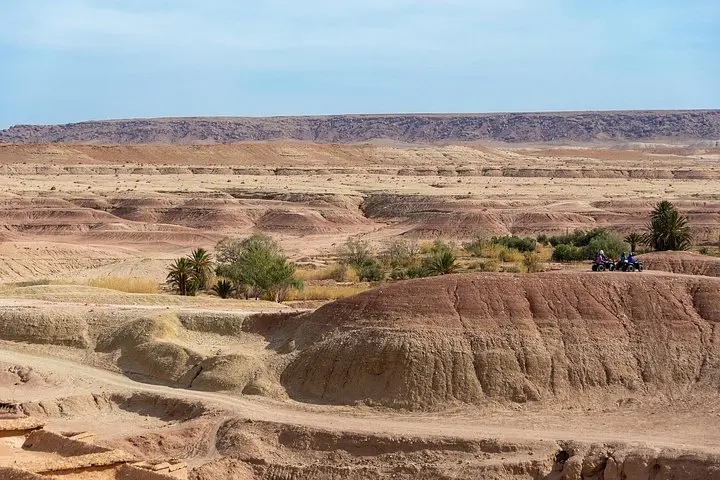
Morning light off the Atlas throws the Agafay's stony plains into sharp relief as your vehicle slips away from Marrakech. The road first skirts Lake Takerkoust — locals boating on pale water — then climbs into the wind-sculpted, rock-strewn desert where the hills look and behave like dunes made of stone.
Verified experiences and guided adventures in the surrounding area.
Operated by Toubkal Guide · Marrakech, Marrakesh-Safi
Morning light off the Atlas throws the Agafay's stony plains into sharp relief as your vehicle slips away from Marrakech. The road first skirts Lake Takerkoust — locals boating on pale water — then climbs into the wind-sculpted, rock-strewn desert where the hills look and behave like dunes made of stone.
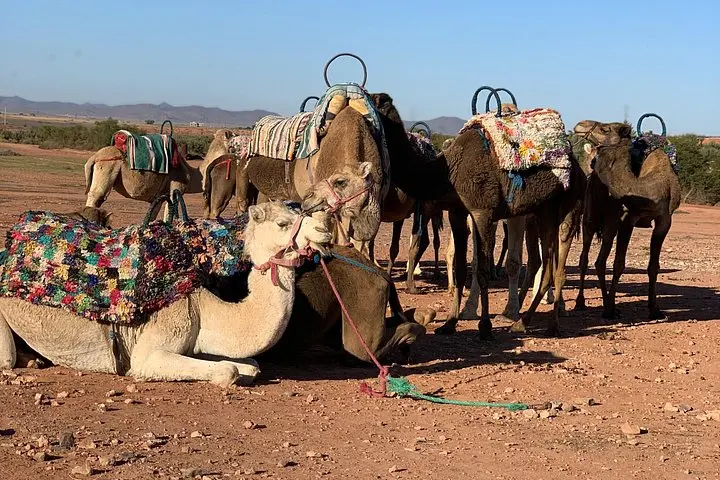
Geologically the Agafay is a rocky, non-sandy desert formed by erosion and alluvial deposits at the southern foot of the High Atlas. Human history here is short on grand monuments and long on nomadic adaptation: Berber routes and seasonal camps have shaped the landscape and the hospitality you’ll meet in tented lunch sites. Culture is felt in small things—hand-braided camel saddles, mint tea poured with practiced hands, and guides who read the land the way a navigator reads charts.
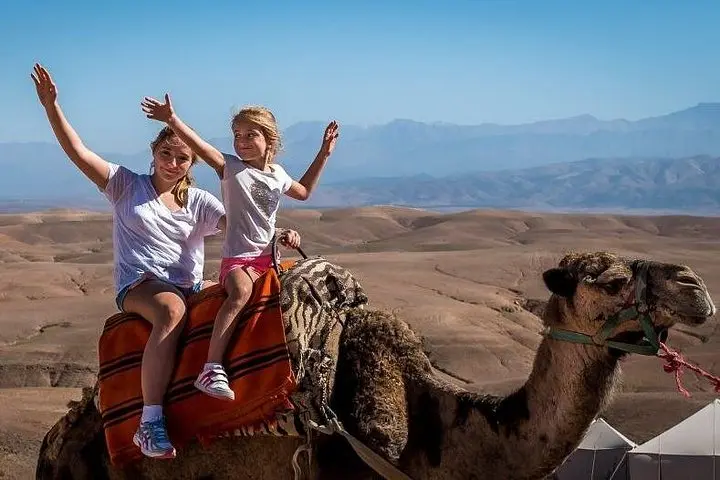
Expect a 45-minute camel caravan across low, pastel ridges with wide views to the Atlas peaks. The pace is deliberate; the animals set the rhythm, and the camp at ride’s end offers a traditional Berber lunch in fabric-walled comfort. Photography is generous—sun and shadow carve depth into every frame.
Practical notes: departures typically begin mid-morning and finish around four hours; hotel pickup in Marrakech is usual. Bring layered sun protection, a brimmed hat, and closed-toe shoes for rocky approaches. Hydrate before you ride and follow your guide’s instructions mounting and dismounting camels. If you want quieter photo windows, aim for weekdays and shoulder seasons when heat and crowds are lower.
The advertised camel portion is about 45 minutes; total trip time including transfers and lunch is roughly four hours.
Yes—pick up and drop off in Marrakech are typically included; confirm exact pickup location when you book.
Yes; the tour notes it’s suitable for all fitness levels, though participants must be able to mount/dismount a camel with assistance.
Casual, comfortable clothing is fine; bring sun protection and a light layer for cooler mornings.
Toubkal Guide operates guided outdoor trips and adventures with an emphasis on safety, stewardship, and memorable experiences.
Morning light off the Atlas throws the Agafay's stony plains into sharp relief as your vehicle slips away from Marrakech. The road first skirts Lake Takerkoust — locals boating on pale water — then climbs into the wind-sculpted, rock-strewn desert where the hills look and behave like dunes made of stone.
Morning light off the Atlas throws the Agafay's stony plains into sharp relief as your vehicle slips away from Marrakech. The road first skirts Lake Takerkoust — locals boating on pale water — then climbs into the wind-sculpted, rock-strewn desert where the hills look and behave like dunes made of stone.
Geologically the Agafay is a rocky, non-sandy desert formed by erosion and alluvial deposits at the southern foot of the High Atlas. Human history here is short on grand monuments and long on nomadic adaptation: Berber routes and seasonal camps have shaped the landscape and the hospitality you’ll meet in tented lunch sites. Culture is felt in small things—hand-braided camel saddles, mint tea poured with practiced hands, and guides who read the land the way a navigator reads charts.
Expect a 45-minute camel caravan across low, pastel ridges with wide views to the Atlas peaks. The pace is deliberate; the animals set the rhythm, and the camp at ride’s end offers a traditional Berber lunch in fabric-walled comfort. Photography is generous—sun and shadow carve depth into every frame.
Practical notes: departures typically begin mid-morning and finish around four hours; hotel pickup in Marrakech is usual. Bring layered sun protection, a brimmed hat, and closed-toe shoes for rocky approaches. Hydrate before you ride and follow your guide’s instructions mounting and dismounting camels. If you want quieter photo windows, aim for weekdays and shoulder seasons when heat and crowds are lower.