THE ADVENTURE COLLECTIVE® · Independent discovery and booking for outdoor travel

Trade Marrakech’s narrow lanes for the Agafay’s wide, rocky plains on a guided quad (ATV) tour. This half-day ride combines short technical sections, panoramic viewpoints over Lalla Takerkoust, and a chance to sip mint tea with local hosts.
Trade Marrakech’s narrow lanes for the Agafay’s wide, rocky plains on a guided quad (ATV) tour. This half-day ride combines short technical sections, panoramic viewpoints over Lalla Takerkoust, and a chance to sip mint tea with local hosts.
Dust rises like a promise as you push off from Marrakech toward the Agafay’s stony plains. Within 45 minutes the palms fall away and the landscape opens: low, ochre ridges, dry riverbeds that dare you to cross them, and broad vistas back to the High Atlas. The guide checks helmets and throttle, then the quiet of the desert is punctuated by the machines’ steady hum.
Verified experiences and guided adventures in the surrounding area.
Operated by Morocco Transfer · Marrakech, Marrakech-Safi
Dust rises like a promise as you push off from Marrakech toward the Agafay’s stony plains. Within 45 minutes the palms fall away and the landscape opens: low, ochre ridges, dry riverbeds that dare you to cross them, and broad vistas back to the High Atlas. The guide checks helmets and throttle, then the quiet of the desert is punctuated by the machines’ steady hum.
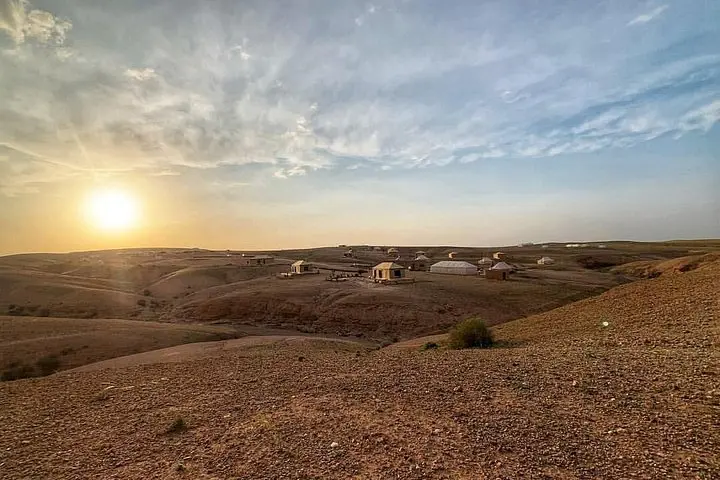
The Agafay is not a sand sea but a rocky, weathered plateau formed from ancient sedimentary deposits and erosion—more moonlike than Saharan dunes. Historically the area served as a caravan corridor on routes radiating from Marrakech; today Berber families still herd goats and offer mint tea at roadside camps, a brief cultural exchange on many tours.
Expect varied terrain: compacted gravel tracks, shale-strewn slopes, and shallow wadi crossings. Typical half-day routes cover roughly 20–35 km with modest elevation shifts (roughly 450–650 m above sea level), punctuated by viewpoints over Lalla Takerkoust and stretches of open plateaus that tempt you to accelerate. Guides provide a safety briefing and helmets, goggles, and hoods; basic ATV handling is required but the route is suitable for most fitness levels.
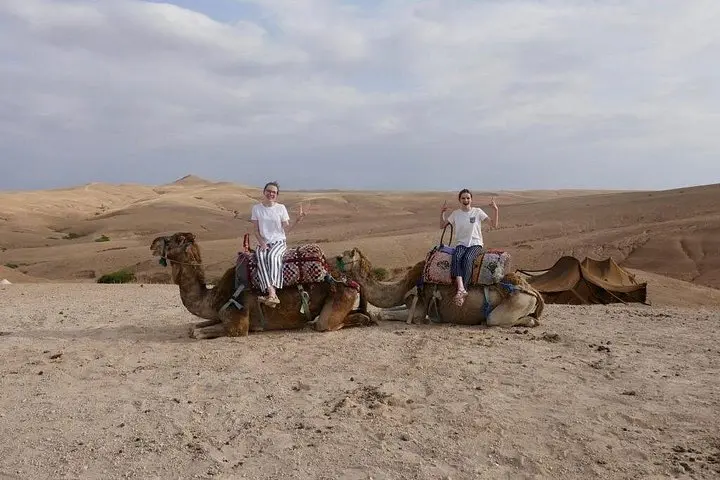
Practical notes: wear closed-toe shoes with good tread, bring UV protection and at least 1–2 liters of water, and plan for dust—bandanas or buffs help. Tours often include hotel pickup, bottled water, mint tea and crepes, and an optional short camel ride. Mid-afternoon light delivers the most dramatic photos; mornings are cooler and winds usually pick up later in the day.
The full experience runs about 4–5 hours from hotel pickup; on-bike time is typically 2–3 hours covering 20–35 km.
No—guides offer a safety briefing and basic instruction, but riders should be comfortable with throttle and braking controls.
Yes; standard tours supply helmets, goggles and hoods as part of safety gear.
Policies vary—many operators require each adult to have their own quad and set age minimums; confirm during booking.
Morocco Transfer operates guided outdoor trips and adventures with an emphasis on safety, stewardship, and memorable experiences.
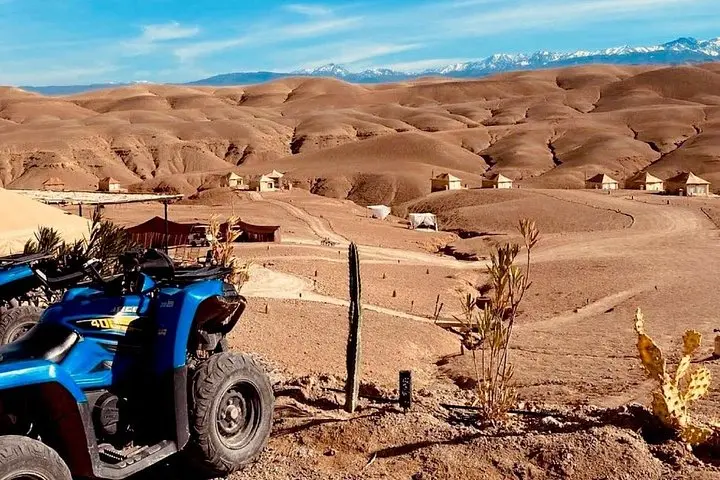
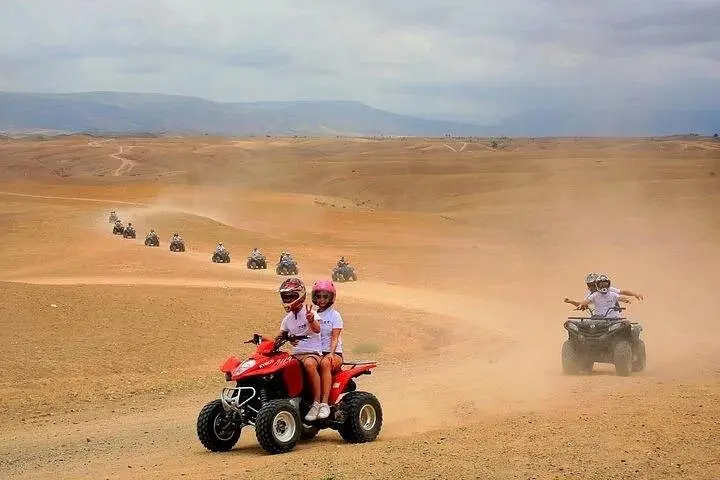
Dust rises like a promise as you push off from Marrakech toward the Agafay’s stony plains. Within 45 minutes the palms fall away and the landscape opens: low, ochre ridges, dry riverbeds that dare you to cross them, and broad vistas back to the High Atlas. The guide checks helmets and throttle, then the quiet of the desert is punctuated by the machines’ steady hum.
Dust rises like a promise as you push off from Marrakech toward the Agafay’s stony plains. Within 45 minutes the palms fall away and the landscape opens: low, ochre ridges, dry riverbeds that dare you to cross them, and broad vistas back to the High Atlas. The guide checks helmets and throttle, then the quiet of the desert is punctuated by the machines’ steady hum.
The Agafay is not a sand sea but a rocky, weathered plateau formed from ancient sedimentary deposits and erosion—more moonlike than Saharan dunes. Historically the area served as a caravan corridor on routes radiating from Marrakech; today Berber families still herd goats and offer mint tea at roadside camps, a brief cultural exchange on many tours.
Expect varied terrain: compacted gravel tracks, shale-strewn slopes, and shallow wadi crossings. Typical half-day routes cover roughly 20–35 km with modest elevation shifts (roughly 450–650 m above sea level), punctuated by viewpoints over Lalla Takerkoust and stretches of open plateaus that tempt you to accelerate. Guides provide a safety briefing and helmets, goggles, and hoods; basic ATV handling is required but the route is suitable for most fitness levels.
Practical notes: wear closed-toe shoes with good tread, bring UV protection and at least 1–2 liters of water, and plan for dust—bandanas or buffs help. Tours often include hotel pickup, bottled water, mint tea and crepes, and an optional short camel ride. Mid-afternoon light delivers the most dramatic photos; mornings are cooler and winds usually pick up later in the day.