THE ADVENTURE COLLECTIVE® · Independent discovery and booking for outdoor travel

A compact limestone canyon on Crete’s western White Mountains, Agia Irini offers shaded riverbed walks, raptor sightings and a post-hike swim in the Libyan Sea. This family-friendly full-day hike pairs wildlife viewing with local food and private transport.
A compact limestone canyon on Crete’s western White Mountains, Agia Irini offers shaded riverbed walks, raptor sightings and a post-hike swim in the Libyan Sea. This family-friendly full-day hike pairs wildlife viewing with local food and private transport.
You step from the scrubby slope into a cool cleft of stone. Sunlight skitters across a shallow stream, and the gorge narrows into walls scored by water and wind — the air smells of pine resin and sea salt drifting up from the Libyan shore below.
Verified experiences and guided adventures in the surrounding area.
Operated by Wonderers · Sougia, Chania
You step from the scrubby slope into a cool cleft of stone. Sunlight skitters across a shallow stream, and the gorge narrows into walls scored by water and wind — the air smells of pine resin and sea salt drifting up from the Libyan shore below.
Agia Irini sits on the western flank of Crete’s White Mountains, declared a wildlife refuge for its endemic plants and rare fauna. Geologically it’s a compact limestone canyon carved by seasonal runoff; its terraces and sculpted boulders show the slow work of water against brittle rock. The area carries traces of rural Cretan life — shepherd trails, dry stone walls, and tiny chapels — and the village tavernas preserve recipes built around olive oil, goat cheese and freshly caught fish.
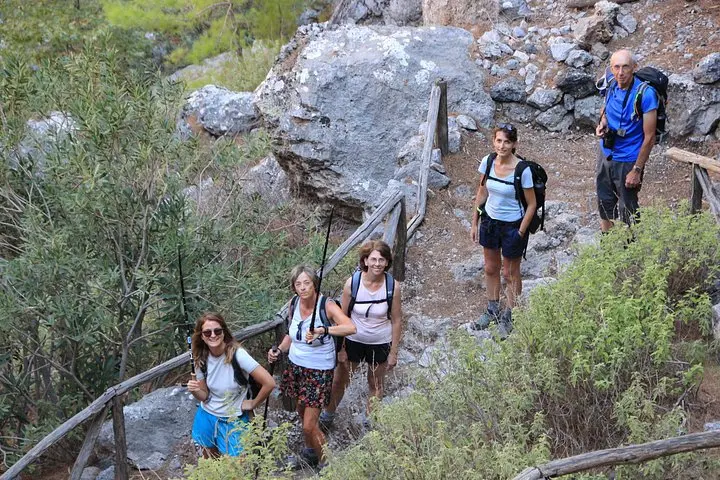
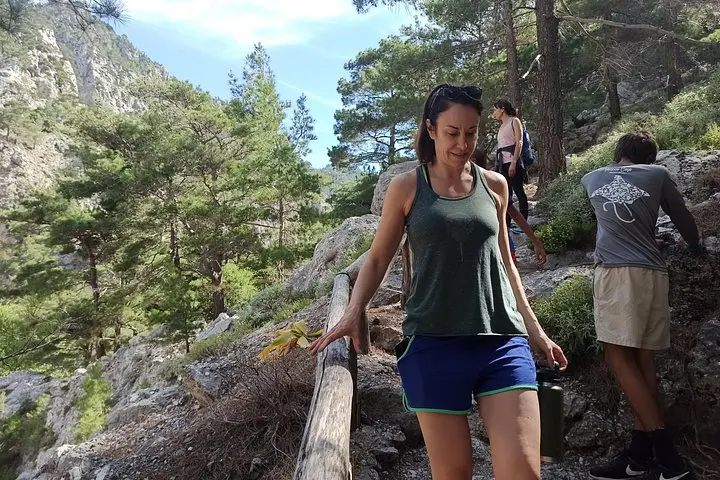
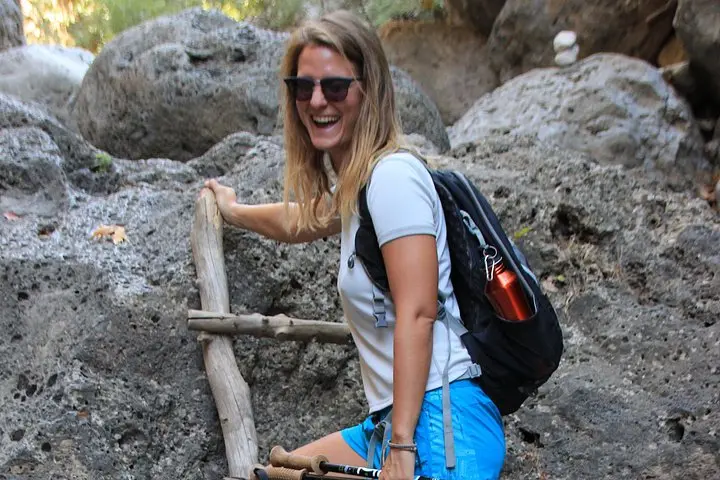
Expect a route that alternates shaded riverbed walking, short rocky scrambles and open sections with panoramic views toward the Libyan Sea. The terrain is uneven but not highly technical; you’re more likely to be tested by loose scree and sun exposure than by vertical cliffs. Wildlife encounters are possible: keep watch for kri-kri (wild Cretan goats) on the slopes and raptors overhead.
Practical tips: start early to avoid midday heat, wear sturdy trail shoes with good tread, and carry 2–3 liters of water. The tour commonly includes private transport and a post-hike swim at a pebble beach, followed by a tavern meal — ideal for families who want a full-day, low-stress introduction to Crete’s wild side. Respect trail markers and pack out waste to help preserve this quieter alternative to Samaria Gorge.
The full-day tour typically runs 6–10 hours including transport and meal; the hike itself covers several kilometers with modest cumulative elevation gain (several hundred meters of up-and-down), mostly on uneven ground rather than steep climbs.
Yes — it’s marketed as family-friendly, but children should be comfortable on rocky trails; supervision is required and a moderate fitness level helps for the full-day format.
Most operators include a stop for a swim at a pebble beach after the hike; sea swimming is generally safe but check local conditions and currents on the day.
Private transportation is typically included in tour packages; pick-up points often cover nearby towns like Sougia or Paleochora and larger departure points such as Chania on request.
Wonderers operates guided outdoor trips and adventures with an emphasis on safety, stewardship, and memorable experiences.
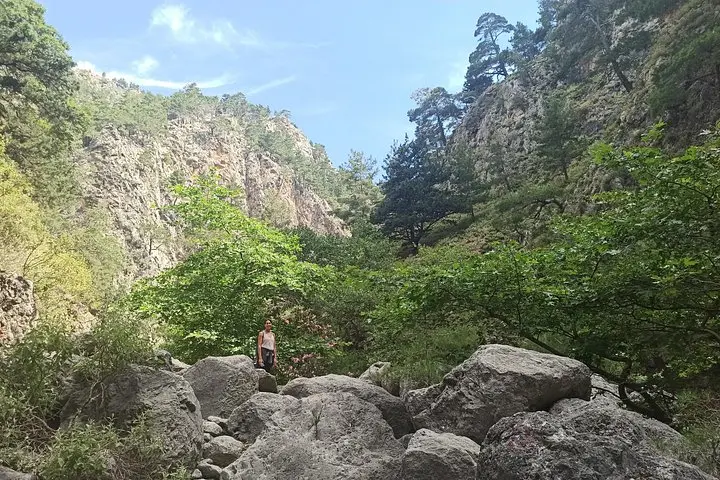
You step from the scrubby slope into a cool cleft of stone. Sunlight skitters across a shallow stream, and the gorge narrows into walls scored by water and wind — the air smells of pine resin and sea salt drifting up from the Libyan shore below.
You step from the scrubby slope into a cool cleft of stone. Sunlight skitters across a shallow stream, and the gorge narrows into walls scored by water and wind — the air smells of pine resin and sea salt drifting up from the Libyan shore below.
Agia Irini sits on the western flank of Crete’s White Mountains, declared a wildlife refuge for its endemic plants and rare fauna. Geologically it’s a compact limestone canyon carved by seasonal runoff; its terraces and sculpted boulders show the slow work of water against brittle rock. The area carries traces of rural Cretan life — shepherd trails, dry stone walls, and tiny chapels — and the village tavernas preserve recipes built around olive oil, goat cheese and freshly caught fish.
Expect a route that alternates shaded riverbed walking, short rocky scrambles and open sections with panoramic views toward the Libyan Sea. The terrain is uneven but not highly technical; you’re more likely to be tested by loose scree and sun exposure than by vertical cliffs. Wildlife encounters are possible: keep watch for kri-kri (wild Cretan goats) on the slopes and raptors overhead.
Practical tips: start early to avoid midday heat, wear sturdy trail shoes with good tread, and carry 2–3 liters of water. The tour commonly includes private transport and a post-hike swim at a pebble beach, followed by a tavern meal — ideal for families who want a full-day, low-stress introduction to Crete’s wild side. Respect trail markers and pack out waste to help preserve this quieter alternative to Samaria Gorge.