THE ADVENTURE COLLECTIVE® · Independent discovery and booking for outdoor travel

See the massive Neo-Panamax locks at Agua Clara and walk the cliff batteries of Castillo de San Lorenzo on a full-day tour from Panama City. Expect engineering displays, coastal geology, and colonial fortifications on this 7-hour Atlantic-side itinerary.
See the massive Neo-Panamax locks at Agua Clara and walk the cliff batteries of Castillo de San Lorenzo on a full-day tour from Panama City. Expect engineering displays, coastal geology, and colonial fortifications on this 7-hour Atlantic-side itinerary.
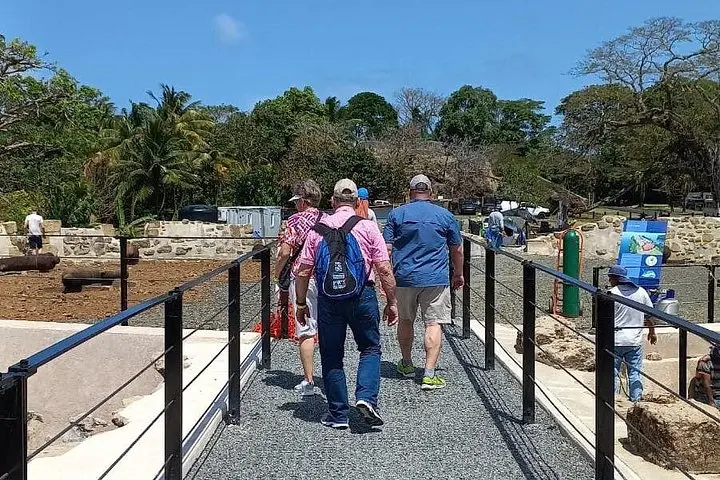
Morning light strips across the Atlantic side of the Panama Canal as the train slides into Colón and the landscape opens to steel and sea. At Agua Clara, the lock chambers and the visitor observation platform dominate the view—mechanical giants that move an ocean’s worth of commerce in measured steps. The theater here lays out the recent expansion: an engineering leap that used hundreds of thousands of tons of steel and concrete to create a new third set of locks built for Neo-Panamax ships.
Verified experiences and guided adventures in the surrounding area.
Operated by Panama Travel Corp · Colón, Colón Province
Morning light strips across the Atlantic side of the Panama Canal as the train slides into Colón and the landscape opens to steel and sea. At Agua Clara, the lock chambers and the visitor observation platform dominate the view—mechanical giants that move an ocean’s worth of commerce in measured steps. The theater here lays out the recent expansion: an engineering leap that used hundreds of thousands of tons of steel and concrete to create a new third set of locks built for Neo-Panamax ships.
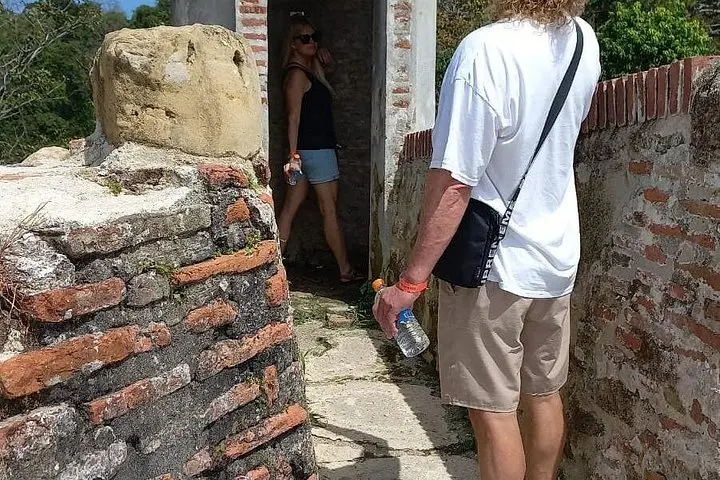
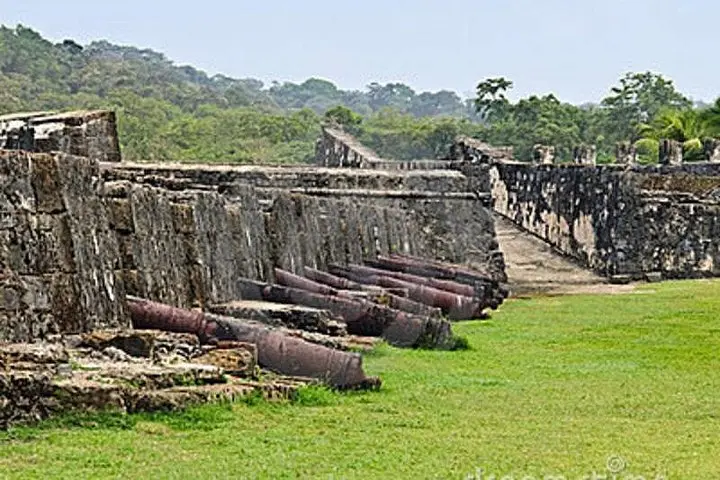
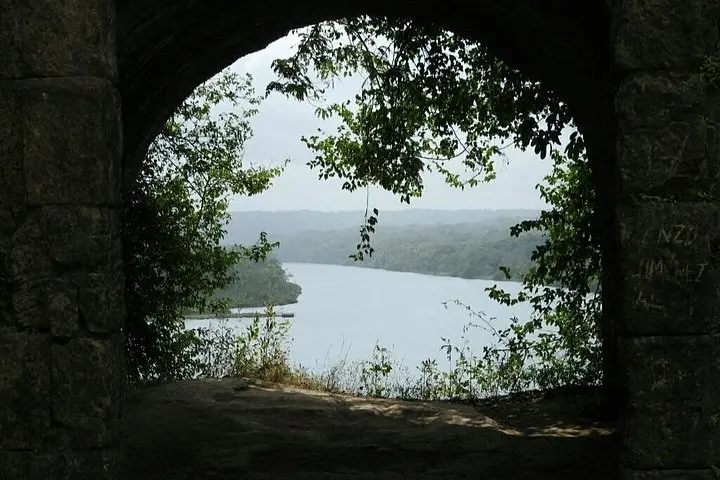
A short drive along the mangrove-fringed coast brings visitors to Castillo de San Lorenzo, a 16th-century Spanish fort perched where the Chagres River meets the Atlantic. Its earthen ramparts and stone batteries were sited to command the river mouth and the shipping lanes beyond; storms and tropical heat have weathered the walls, but the strategic logic remains legible in the layout and canon embrasures.
Geologically, the area sits on low limestone and alluvial deposits shaped by tidal marshes and river sediment—expect mudflats and mangrove roots between the road and the shoreline. Locally, the day ties modern Panamanian logistics to colonial maritime history; guide narration typically threads railroad lore, Afro-Caribbean culture in Colón, and canal mechanics.
Practical guidance: the full tour runs about seven hours including a one-hour train link from Panama City. Wear closed shoes for the fort (uneven stone and steep stairs), bring sun protection, and carry water—shade is sparse at the observation platforms. Photography is straightforward at the visitor center; access to some ramparts requires modest uphill walking. Timing your visit for morning light reduces glare on observation platforms and keeps temperatures lower during the fort walk.
The tour is approximately seven hours and typically includes hotel pickup in Panama City, train fare to Colón, entrance to Agua Clara Visitor Center and Castillo de San Lorenzo, guide services, and transportation between sites.
The tour is marketed as suitable for all fitness levels; Agua Clara visitor center is wheelchair accessible but the fort has uneven stone and steps—wheelchair access is limited at Castillo de San Lorenzo.
Lunch is usually optional; the itinerary often includes an optional stop at Port Colón for food, so bring cash or plan for a short meal during the tour.
Wide-angle lenses and polarizers help capture large lock chambers and reduce glare off water; bring extra batteries and a waterproof bag for gear near the shore.
Panama Travel Corp operates guided outdoor trips and adventures with an emphasis on safety, stewardship, and memorable experiences.
Morning light strips across the Atlantic side of the Panama Canal as the train slides into Colón and the landscape opens to steel and sea. At Agua Clara, the lock chambers and the visitor observation platform dominate the view—mechanical giants that move an ocean’s worth of commerce in measured steps. The theater here lays out the recent expansion: an engineering leap that used hundreds of thousands of tons of steel and concrete to create a new third set of locks built for Neo-Panamax ships.
Morning light strips across the Atlantic side of the Panama Canal as the train slides into Colón and the landscape opens to steel and sea. At Agua Clara, the lock chambers and the visitor observation platform dominate the view—mechanical giants that move an ocean’s worth of commerce in measured steps. The theater here lays out the recent expansion: an engineering leap that used hundreds of thousands of tons of steel and concrete to create a new third set of locks built for Neo-Panamax ships.
A short drive along the mangrove-fringed coast brings visitors to Castillo de San Lorenzo, a 16th-century Spanish fort perched where the Chagres River meets the Atlantic. Its earthen ramparts and stone batteries were sited to command the river mouth and the shipping lanes beyond; storms and tropical heat have weathered the walls, but the strategic logic remains legible in the layout and canon embrasures.
Geologically, the area sits on low limestone and alluvial deposits shaped by tidal marshes and river sediment—expect mudflats and mangrove roots between the road and the shoreline. Locally, the day ties modern Panamanian logistics to colonial maritime history; guide narration typically threads railroad lore, Afro-Caribbean culture in Colón, and canal mechanics.
Practical guidance: the full tour runs about seven hours including a one-hour train link from Panama City. Wear closed shoes for the fort (uneven stone and steep stairs), bring sun protection, and carry water—shade is sparse at the observation platforms. Photography is straightforward at the visitor center; access to some ramparts requires modest uphill walking. Timing your visit for morning light reduces glare on observation platforms and keeps temperatures lower during the fort walk.