THE ADVENTURE COLLECTIVE® · Independent discovery and booking for outdoor travel

Watch massive freighters cycle through the expanded Agua Clara Locks, explore the colonial ramparts of Fort San Lorenzo, and cross the Atlantic (Third) Bridge on a full-day, private tour that pairs engineering spectacle with coastal history.
Watch massive freighters cycle through the expanded Agua Clara Locks, explore the colonial ramparts of Fort San Lorenzo, and cross the Atlantic (Third) Bridge on a full-day, private tour that pairs engineering spectacle with coastal history.
You step off the air-conditioned van onto a broad concrete terrace and the canal declares itself: a flat sheet of steel-blue water, freighters dwarfing observation platforms while the locks breathe and click through their cycle. The wind from Gatun Lake pushes against you—not rude, but insistent—asking you to pay attention.
Verified experiences and guided adventures in the surrounding area.
Operated by Luz Gómez · Colón, Colón Province
You step off the air-conditioned van onto a broad concrete terrace and the canal declares itself: a flat sheet of steel-blue water, freighters dwarfing observation platforms while the locks breathe and click through their cycle. The wind from Gatun Lake pushes against you—not rude, but insistent—asking you to pay attention.
This day trip threads three stories: the engineering of the expanded Panama Canal at Agua Clara, the colonial military arc of Fort San Lorenzo guarding the Chagres River mouth, and the audacious span of the Atlantic (Third) Bridge. The locks themselves reveal modern canal geology—cut slopes held by concrete and riprap, freshwater backed by Gatun Lake, and the human choreography that moves thousands of tons of cargo between oceans.
Fort San Lorenzo traces 17th–18th century Spanish fortification techniques and the Caribbean trade routes that shaped Panama’s culture. The Third Bridge is a contemporary marker: cable-stayed spans and long central spans that reconfigure the coastal skyline and local transport.
Expect accessible walks, raised observation decks, and photo-ready panoramas rather than strenuous hiking. Bring sun protection, a camera with a zoom, and small bills for entrance fees ($10 Agua Clara, $5 Fort). The tour runs about seven hours, often returning to Panama City, and operates year-round—rain may be brief and intense; pockets of shade are limited at the locks.
Practical timing: arrive hydrated, plan for mosquitoes near mangroves, and leave space on your memory card—ships and bridges offer the slow, grand spectacle this route is built for.
No, entrance fees to Agua Clara (~$10) and Fort San Lorenzo (~$5) are paid locally by visitors.
Yes—an air-conditioned vehicle is included; most departures originate in Panama City with pickup options on booking.
Yes, the tour is suitable for all ages; infant seats are available on request and the walking is light and mostly flat.
Tours run year-round; brief tropical showers are common—cancellation for weather is not automatic, though operators may adjust timing for safety.
Luz Gómez operates guided outdoor trips and adventures with an emphasis on safety, stewardship, and memorable experiences.
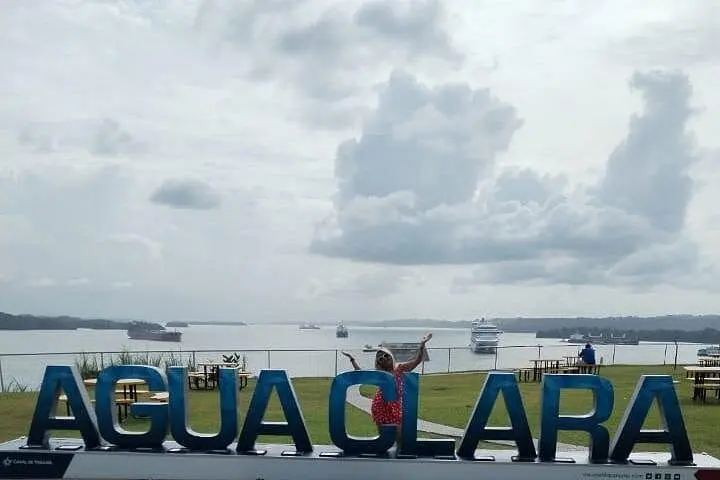
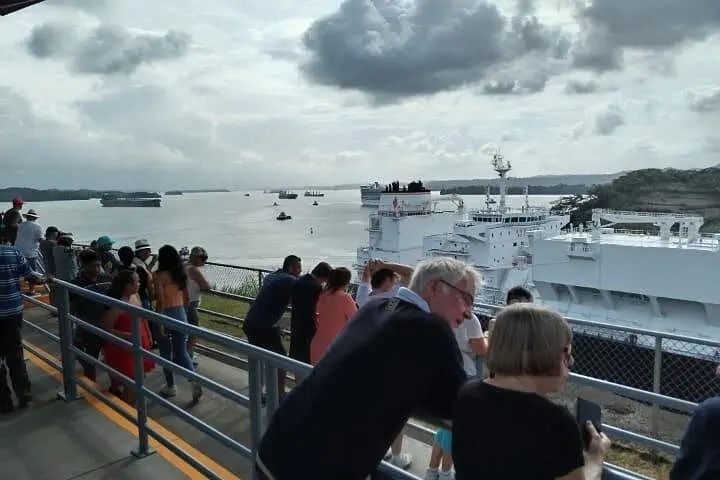
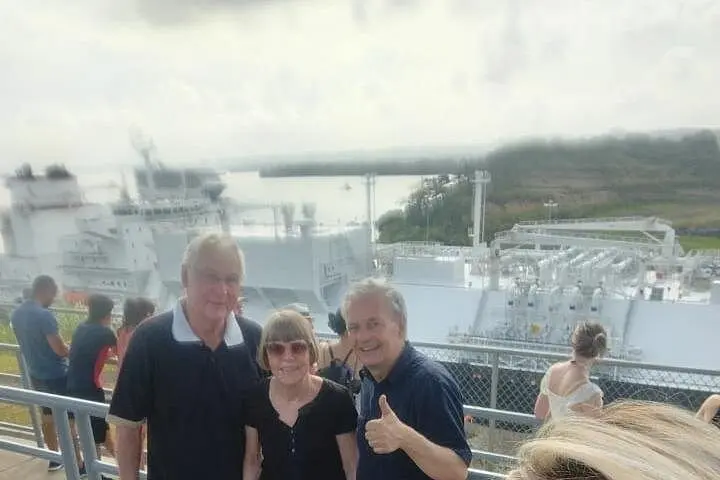
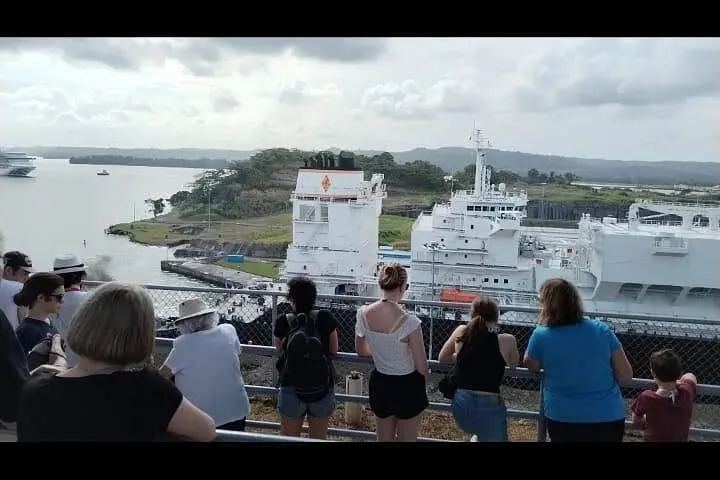
You step off the air-conditioned van onto a broad concrete terrace and the canal declares itself: a flat sheet of steel-blue water, freighters dwarfing observation platforms while the locks breathe and click through their cycle. The wind from Gatun Lake pushes against you—not rude, but insistent—asking you to pay attention.
You step off the air-conditioned van onto a broad concrete terrace and the canal declares itself: a flat sheet of steel-blue water, freighters dwarfing observation platforms while the locks breathe and click through their cycle. The wind from Gatun Lake pushes against you—not rude, but insistent—asking you to pay attention.
This day trip threads three stories: the engineering of the expanded Panama Canal at Agua Clara, the colonial military arc of Fort San Lorenzo guarding the Chagres River mouth, and the audacious span of the Atlantic (Third) Bridge. The locks themselves reveal modern canal geology—cut slopes held by concrete and riprap, freshwater backed by Gatun Lake, and the human choreography that moves thousands of tons of cargo between oceans.
Fort San Lorenzo traces 17th–18th century Spanish fortification techniques and the Caribbean trade routes that shaped Panama’s culture. The Third Bridge is a contemporary marker: cable-stayed spans and long central spans that reconfigure the coastal skyline and local transport.
Expect accessible walks, raised observation decks, and photo-ready panoramas rather than strenuous hiking. Bring sun protection, a camera with a zoom, and small bills for entrance fees ($10 Agua Clara, $5 Fort). The tour runs about seven hours, often returning to Panama City, and operates year-round—rain may be brief and intense; pockets of shade are limited at the locks.
Practical timing: arrive hydrated, plan for mosquitoes near mangroves, and leave space on your memory card—ships and bridges offer the slow, grand spectacle this route is built for.