THE ADVENTURE COLLECTIVE® · Independent discovery and booking for outdoor travel

Walk among seven ocean-gazing moai, explore the red scoria quarry where pukao were carved, and end at Tahai for a striking sunset. This compact half-day tour packs geology, history and unforgettable vistas into about three hours.
Walk among seven ocean-gazing moai, explore the red scoria quarry where pukao were carved, and end at Tahai for a striking sunset. This compact half-day tour packs geology, history and unforgettable vistas into about three hours.
The morning light on Rapa Nui hits the stone faces at Ahu Akivi with a blunt clarity — the seven moai stare out over the ocean, wind and time sharpening their profiles. A half-day tour moves deliberately: from the offshore-facing Ahu Akivi platform to the red scoria bowls of Puna Pau, then across rolling lava fields to the restored terraces of Tahai where the sunset paints the statues’ shadows long and cool.
Verified experiences and guided adventures in the surrounding area.
The morning light on Rapa Nui hits the stone faces at Ahu Akivi with a blunt clarity — the seven moai stare out over the ocean, wind and time sharpening their profiles. A half-day tour moves deliberately: from the offshore-facing Ahu Akivi platform to the red scoria bowls of Puna Pau, then across rolling lava fields to the restored terraces of Tahai where the sunset paints the statues’ shadows long and cool.
Geology here is raw: volcanic tuff carved into heads, and scoria from Puna Pau that became the pukao “hats” balancing atop selected moai. The island’s Polynesian culture and oral histories are present in the stonework and in the lines of ancient platforms (ahu) that map social and ritual life across the coast. European contact and later Chilean administration brought dramatic demographic and land-use changes, making today’s sites both archaeological record and living cultural landscape.
Expect short walks over uneven ground, loose volcanic gravel, and occasional low steps; total time on-site averages three hours. Guides typically combine clear archaeological context with practical routing — arrive with sun protection, a wind layer, and sturdy footwear. Photography is excellent in the golden hours, and Tahai is a practical sunset stop for smaller crowds than the main quarry.
Practical tips: book a morning or late-afternoon slot to avoid midday heat, carry water, and respect fenced areas — these ruins are fragile. For a compact, sensory introduction to Rapa Nui’s monumental past, this half-day loop is efficient, grounding and transportive.
The standard half-day itinerary runs about three hours, visiting Ahu Akivi, Puna Pau, and Tahai.
Yes—most sections are flat or short walks, but there is uneven terrain; bring supportive footwear and allow extra time for pacing.
No—climbing on moai or restored ahu is prohibited to protect the monuments and is enforced by guides and local authorities.
Most organized tours offer bilingual or English-speaking guides who explain the archaeology, legends, and geology of the sites.
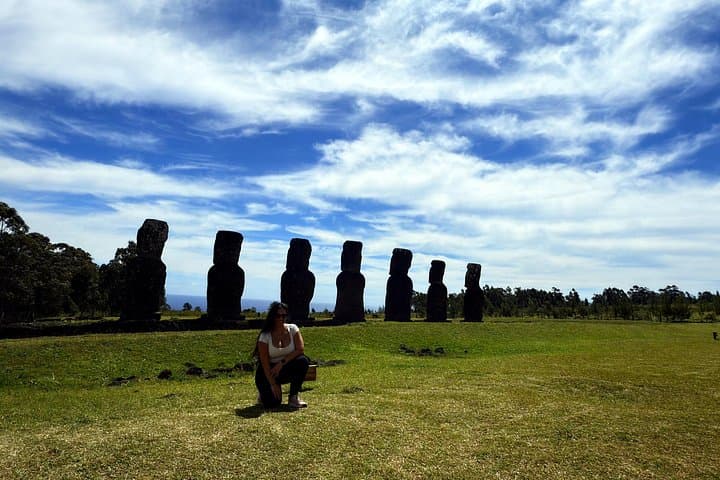
The morning light on Rapa Nui hits the stone faces at Ahu Akivi with a blunt clarity — the seven moai stare out over the ocean, wind and time sharpening their profiles. A half-day tour moves deliberately: from the offshore-facing Ahu Akivi platform to the red scoria bowls of Puna Pau, then across rolling lava fields to the restored terraces of Tahai where the sunset paints the statues’ shadows long and cool.
The morning light on Rapa Nui hits the stone faces at Ahu Akivi with a blunt clarity — the seven moai stare out over the ocean, wind and time sharpening their profiles. A half-day tour moves deliberately: from the offshore-facing Ahu Akivi platform to the red scoria bowls of Puna Pau, then across rolling lava fields to the restored terraces of Tahai where the sunset paints the statues’ shadows long and cool.
Geology here is raw: volcanic tuff carved into heads, and scoria from Puna Pau that became the pukao “hats” balancing atop selected moai. The island’s Polynesian culture and oral histories are present in the stonework and in the lines of ancient platforms (ahu) that map social and ritual life across the coast. European contact and later Chilean administration brought dramatic demographic and land-use changes, making today’s sites both archaeological record and living cultural landscape.
Expect short walks over uneven ground, loose volcanic gravel, and occasional low steps; total time on-site averages three hours. Guides typically combine clear archaeological context with practical routing — arrive with sun protection, a wind layer, and sturdy footwear. Photography is excellent in the golden hours, and Tahai is a practical sunset stop for smaller crowds than the main quarry.
Practical tips: book a morning or late-afternoon slot to avoid midday heat, carry water, and respect fenced areas — these ruins are fragile. For a compact, sensory introduction to Rapa Nui’s monumental past, this half-day loop is efficient, grounding and transportive.