THE ADVENTURE COLLECTIVE® · Independent discovery and booking for outdoor travel

Drive the High Atlas to reach Ait Ben Haddou’s fortified ksar and Ouarzazate’s kasbahs in a single long day from Marrakech. Expect mountain views, clay architecture, brief hikes and a peek at Morocco’s film-land landmarks.
Drive the High Atlas to reach Ait Ben Haddou’s fortified ksar and Ouarzazate’s kasbahs in a single long day from Marrakech. Expect mountain views, clay architecture, brief hikes and a peek at Morocco’s film-land landmarks.
A low sun slices across the High Atlas as the road climbs toward Tizi n’Tichka; rock and scrub press close to the bus windows while villages of flat-roofed houses cling to the slopes. By mid-morning the air cools and the ochre ramparts of Ait Ben Haddou appear, a compact maze of adobe towers and narrow alleys that catch light like a living relic.
Verified experiences and guided adventures in the surrounding area.
Operated by Day Out Marrakech · Ouarzazate, Drâa-Tafilalet
A low sun slices across the High Atlas as the road climbs toward Tizi n’Tichka; rock and scrub press close to the bus windows while villages of flat-roofed houses cling to the slopes. By mid-morning the air cools and the ochre ramparts of Ait Ben Haddou appear, a compact maze of adobe towers and narrow alleys that catch light like a living relic.
The ksar at Ait Ben Haddou traces its prominence to trans-Saharan trade routes and centuries of local craft, later becoming a backdrop for international film productions. Geologically the site sits where the Atlas folds give way to southern plains — red clay and mud-brick that justify careful preservation. Nearby Ouarzazate grew around a kasbah and, in the 20th century, film studios that shaped the town’s modern economy.
Expect about 10–12 hours total travel on this day trip: a high mountain pass (Tizi n’Tichka ~2,600 m), scenic overlooks, and short, uneven walks through historical compounds. Cultural cues matter — modest dress and polite photography etiquette help in village settings. Bring water, sun protection, and small bills for local purchases or entry fees; guides and museum stops vary by schedule.
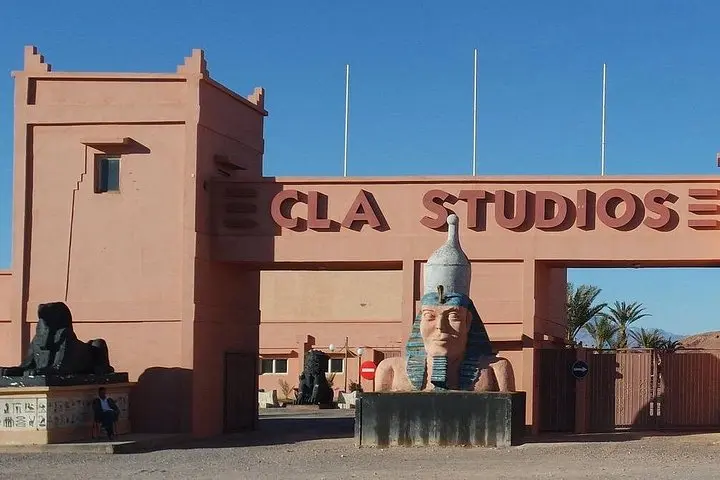
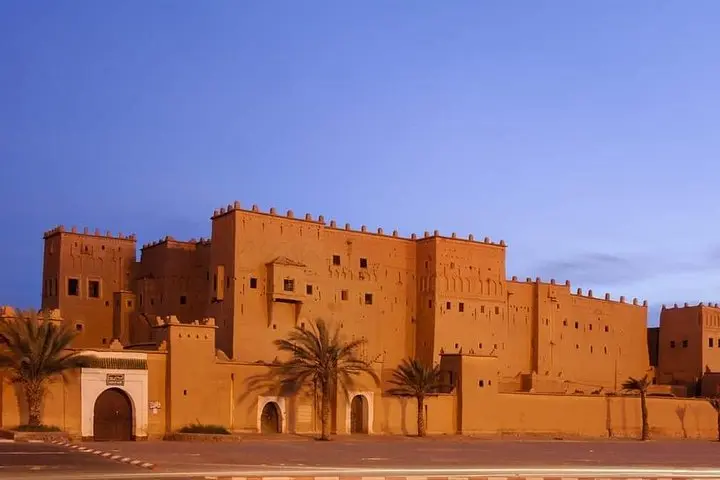
Practical timing: depart early from Marrakech to avoid afternoon heat and late return. The drive itself is part of the route’s appeal — watch for roadside argan and Berber villages that punctuate the route. For a full visit, pair the kasbah walk with a quick stop in Ouarzazate’s Taourirt for its intricate interiors and, time-permitting, a look at the film studio exteriors.
The round trip is roughly 380–400 km and typically takes 10–12 hours including stops; the pass itself reaches about 2,600 m.
Entrance to Ait Ben Haddou’s ksar is often a small local fee not always included — carry cash to cover admissions and optional museum or studio visits.
Tizi n’Tichka can have snow and icy conditions in winter; tours may be delayed or rerouted — check weather and operator cancellation policies.
Studio visits depend on schedules and shoots; some studios allow quick exterior or interior tours but check availability in advance.
Day Out Marrakech operates guided outdoor trips and adventures with an emphasis on safety, stewardship, and memorable experiences.
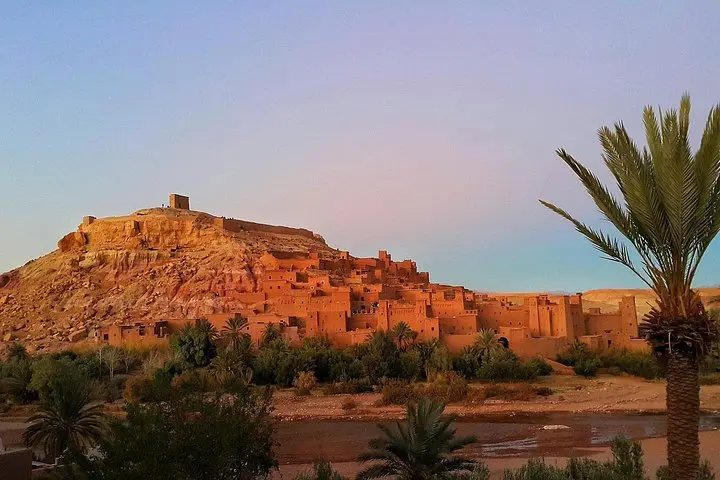
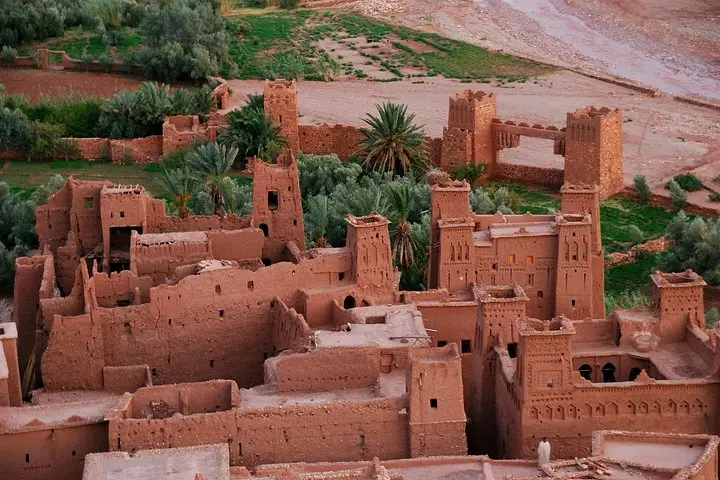
A low sun slices across the High Atlas as the road climbs toward Tizi n’Tichka; rock and scrub press close to the bus windows while villages of flat-roofed houses cling to the slopes. By mid-morning the air cools and the ochre ramparts of Ait Ben Haddou appear, a compact maze of adobe towers and narrow alleys that catch light like a living relic.
A low sun slices across the High Atlas as the road climbs toward Tizi n’Tichka; rock and scrub press close to the bus windows while villages of flat-roofed houses cling to the slopes. By mid-morning the air cools and the ochre ramparts of Ait Ben Haddou appear, a compact maze of adobe towers and narrow alleys that catch light like a living relic.
The ksar at Ait Ben Haddou traces its prominence to trans-Saharan trade routes and centuries of local craft, later becoming a backdrop for international film productions. Geologically the site sits where the Atlas folds give way to southern plains — red clay and mud-brick that justify careful preservation. Nearby Ouarzazate grew around a kasbah and, in the 20th century, film studios that shaped the town’s modern economy.
Expect about 10–12 hours total travel on this day trip: a high mountain pass (Tizi n’Tichka ~2,600 m), scenic overlooks, and short, uneven walks through historical compounds. Cultural cues matter — modest dress and polite photography etiquette help in village settings. Bring water, sun protection, and small bills for local purchases or entry fees; guides and museum stops vary by schedule.
Practical timing: depart early from Marrakech to avoid afternoon heat and late return. The drive itself is part of the route’s appeal — watch for roadside argan and Berber villages that punctuate the route. For a full visit, pair the kasbah walk with a quick stop in Ouarzazate’s Taourirt for its intricate interiors and, time-permitting, a look at the film studio exteriors.