THE ADVENTURE COLLECTIVE® · Independent discovery and booking for outdoor travel

Drive over the Tizi n'Tichka pass and step into the sun-baked alleys of Ait Ben Haddou, then explore Ouarzazate's Taourirt Kasbah—a full-day loop from Marrakech that blends High Atlas panoramas with UNESCO-listed history. Practical tips and what to expect on uneven, photogenic ground.
Drive over the Tizi n'Tichka pass and step into the sun-baked alleys of Ait Ben Haddou, then explore Ouarzazate's Taourirt Kasbah—a full-day loop from Marrakech that blends High Atlas panoramas with UNESCO-listed history. Practical tips and what to expect on uneven, photogenic ground.
A thin wind carries dust and light as your minivan climbs Tizi n'Tichka, the highest paved pass in Morocco at about 2,260 m. Ridges unroll to the south, adobe villages crouch on terraces, and the road narrows between weathered rock. By midmorning you can smell thyme and heated earth; the landscape feels pared-down and honest.
Verified experiences and guided adventures in the surrounding area.
Operated by Ni Lo Pienses Tour · Ait Ben Haddou, Drâa-Tafilalet
A thin wind carries dust and light as your minivan climbs Tizi n'Tichka, the highest paved pass in Morocco at about 2,260 m. Ridges unroll to the south, adobe villages crouch on terraces, and the road narrows between weathered rock. By midmorning you can smell thyme and heated earth; the landscape feels pared-down and honest.
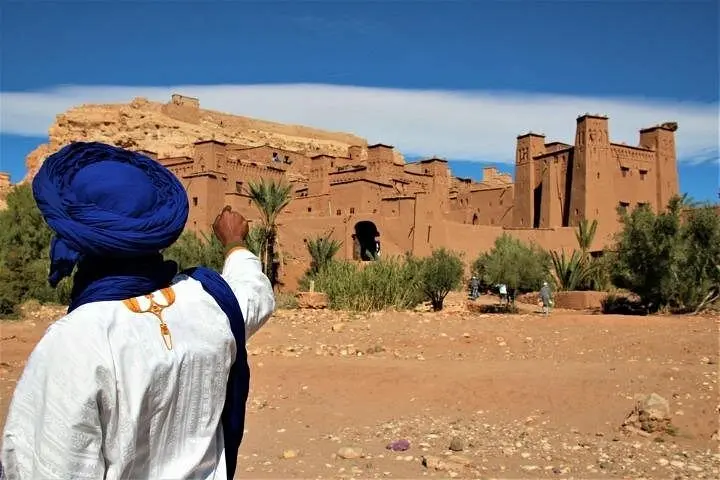
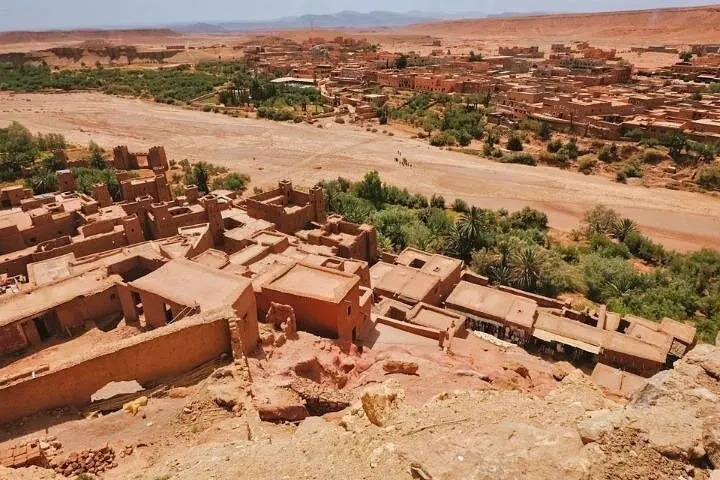
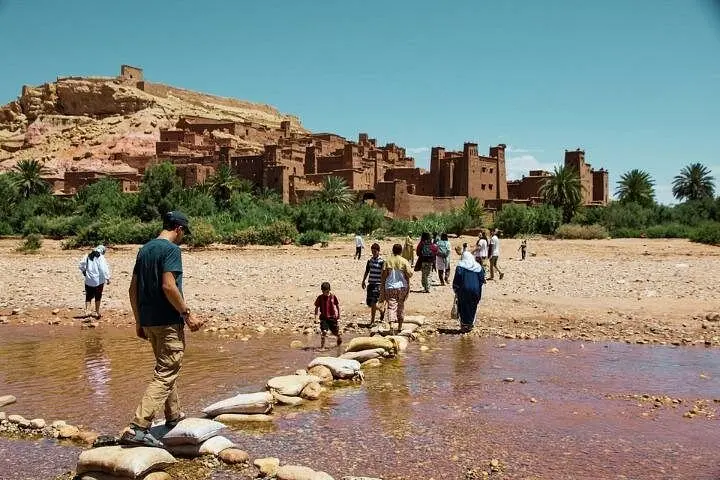
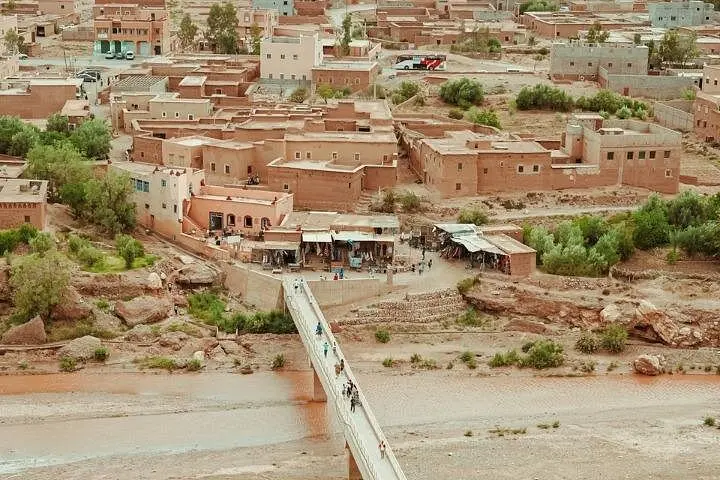
Ait Ben Haddou stands like a compact city of clay — towers, alleys and stepped roofs that catch the sun. The ksar’s compact streets reward slow exploration and a steady climb to the viewpoint above the village, where the Ounila Valley unfolds in ochre bands. Ouarzazate’s Taourirt Kasbah offers a contrasting urban fortress: vaulted grain stores, ornate plasterwork, and the echo of film crews that have used these backdrops for decades.
Geology here is simple and striking: folded sedimentary layers eroded into valleys and passes, with alluvial fans at their feet. Culturally the region mixes Berber village life, trans-Saharan caravan history, and a modern film industry centered in Ouarzazate.
Practical guidance: expect a long day (about 12–14 hours). The tour is mostly driving with short steep walks on uneven stone in the ksar and kasbah. Bring sun protection, a full water bottle, sturdy walking shoes, and small-change dirhams for entrance fees and local purchases. Mornings are cooler on the pass; late-afternoon light is best for photos. If you prefer less shared time, consider booking the private option. Stick to marked paths in the ksar to protect fragile mud-brick walls and support local artisans by buying textiles or tea from family-run stalls.
The tour runs about 12–14 hours (720–840 minutes) including driving time and stops; expect an early departure from Marrakech.
Admissions to Ait Ben Haddou and Taourirt Kasbah are listed as included in the itinerary, but bring local cash for incidental purchases.
Walking is short but on uneven, stepped surfaces; it's suitable for most travelers who can manage brief climbs and unpaved lanes.
Photography is welcome in public areas; be respectful of residents and check with guides about tripods in protected zones or inside private buildings.
Ni Lo Pienses Tour operates guided outdoor trips and adventures with an emphasis on safety, stewardship, and memorable experiences.
A thin wind carries dust and light as your minivan climbs Tizi n'Tichka, the highest paved pass in Morocco at about 2,260 m. Ridges unroll to the south, adobe villages crouch on terraces, and the road narrows between weathered rock. By midmorning you can smell thyme and heated earth; the landscape feels pared-down and honest.
A thin wind carries dust and light as your minivan climbs Tizi n'Tichka, the highest paved pass in Morocco at about 2,260 m. Ridges unroll to the south, adobe villages crouch on terraces, and the road narrows between weathered rock. By midmorning you can smell thyme and heated earth; the landscape feels pared-down and honest.
Ait Ben Haddou stands like a compact city of clay — towers, alleys and stepped roofs that catch the sun. The ksar’s compact streets reward slow exploration and a steady climb to the viewpoint above the village, where the Ounila Valley unfolds in ochre bands. Ouarzazate’s Taourirt Kasbah offers a contrasting urban fortress: vaulted grain stores, ornate plasterwork, and the echo of film crews that have used these backdrops for decades.
Geology here is simple and striking: folded sedimentary layers eroded into valleys and passes, with alluvial fans at their feet. Culturally the region mixes Berber village life, trans-Saharan caravan history, and a modern film industry centered in Ouarzazate.
Practical guidance: expect a long day (about 12–14 hours). The tour is mostly driving with short steep walks on uneven stone in the ksar and kasbah. Bring sun protection, a full water bottle, sturdy walking shoes, and small-change dirhams for entrance fees and local purchases. Mornings are cooler on the pass; late-afternoon light is best for photos. If you prefer less shared time, consider booking the private option. Stick to marked paths in the ksar to protect fragile mud-brick walls and support local artisans by buying textiles or tea from family-run stalls.