THE ADVENTURE COLLECTIVE® · Independent discovery and booking for outdoor travel

Walk through 5,000 lavender plants on a 90‑minute seasonal guided tour above Akaroa. Learn farm practices, taste the farm’s Lavenade and spend time in a picnic clearing beside regenerating forest.
Walk through 5,000 lavender plants on a 90‑minute seasonal guided tour above Akaroa. Learn farm practices, taste the farm’s Lavenade and spend time in a picnic clearing beside regenerating forest.
The morning light moves across rows of low purple heads while a cool sea breeze threads through the stems — on the Akaroa Lavender guided tour visitors step into five thousand plants arranged on gentle slopes above native forest.
Verified experiences and guided adventures in the surrounding area.
Operated by Akaroa Lavender · Akaroa, Canterbury
The morning light moves across rows of low purple heads while a cool sea breeze threads through the stems — on the Akaroa Lavender guided tour visitors step into five thousand plants arranged on gentle slopes above native forest.
The farm sits on Banks Peninsula, a landscape shaped by ancient volcanic calderas and uplifted coastal terraces; the lavender fields occupy sun-exposed ridges that warm quickly in late spring and summer. The tour blends a short history of the property and its role in local land regeneration with hands-on observation: guides explain planting cycles, soil choices and the small-scale distillation that produces essential oil and the farm’s signature Lavenade.
Culturally, Akaroa is a mix of Māori place names and 19th‑century French and British settler history; the lavender project is contemporary rural enterprise tied to conservation, with tour income supporting native planting and weed control. The farm’s track leads to a picnic clearing at the forest edge where bellbirds and kererū are often heard, and a composting toilet underscores low-impact visitor amenities.
Practical guidance: tours run late November to mid‑February and last about 90 minutes — booking is essential. Wear sturdy shoes for compact dirt tracks, bring sun protection and a refillable water bottle, and plan for limited shade during midday. Visitors with severe bee allergies should avoid the tour; stroller access is possible on the main path. Expect a relaxed, educational walk with a sampling of lavender products and time to explore the fields after the guided portion ends.
Yes—bookings are essential during the seasonal window (late November–mid‑February); no walk‑ins are accepted.
Yes; the main path accommodates prams and small children, but supervise little ones near plant rows and the picnic area.
Yes—there’s a selection of farm products and tastings, including the farm’s Lavender Lemonade (Lavenade) included with the tour.
Service animals are allowed; other pets are not recommended due to wildlife and bee activity.
Akaroa Lavender operates guided outdoor trips and adventures with an emphasis on safety, stewardship, and memorable experiences.
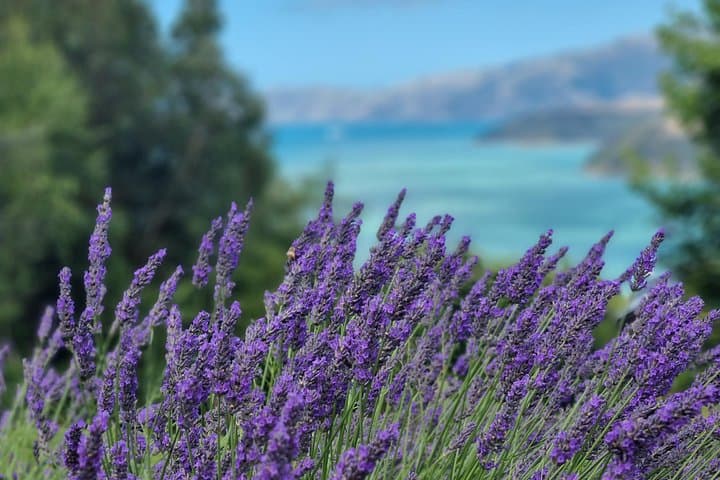
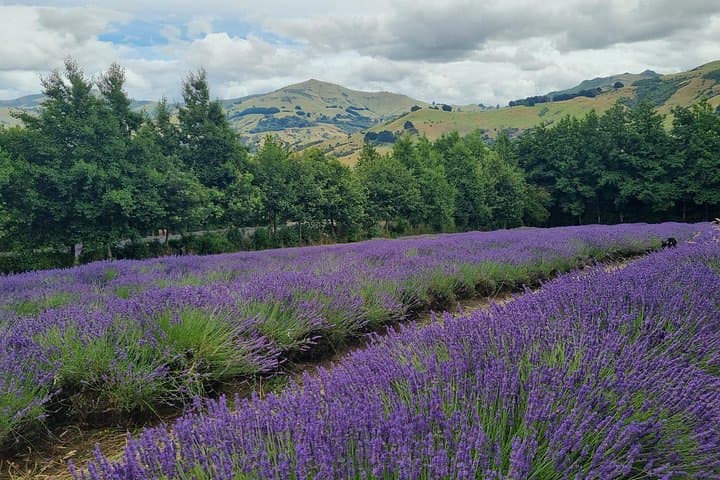
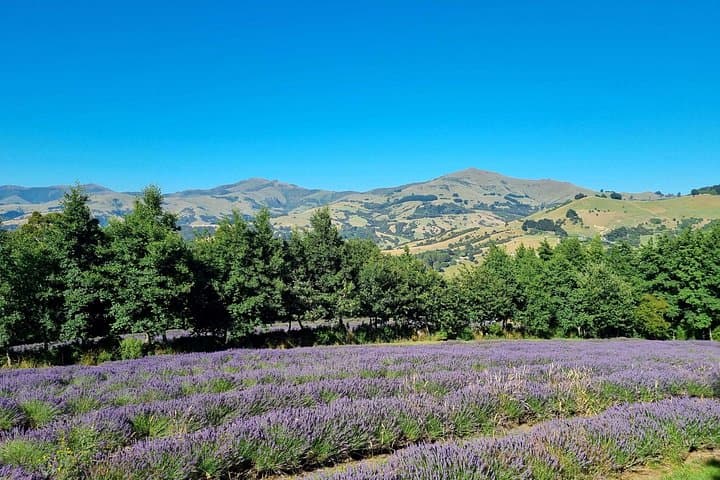
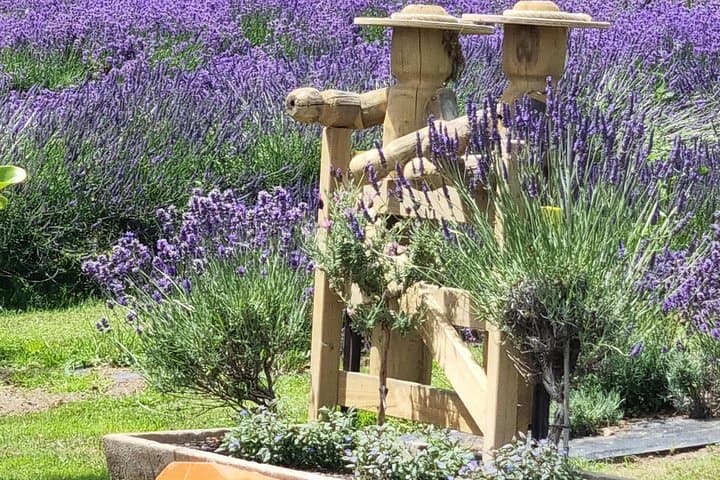
The morning light moves across rows of low purple heads while a cool sea breeze threads through the stems — on the Akaroa Lavender guided tour visitors step into five thousand plants arranged on gentle slopes above native forest.
The morning light moves across rows of low purple heads while a cool sea breeze threads through the stems — on the Akaroa Lavender guided tour visitors step into five thousand plants arranged on gentle slopes above native forest.
The farm sits on Banks Peninsula, a landscape shaped by ancient volcanic calderas and uplifted coastal terraces; the lavender fields occupy sun-exposed ridges that warm quickly in late spring and summer. The tour blends a short history of the property and its role in local land regeneration with hands-on observation: guides explain planting cycles, soil choices and the small-scale distillation that produces essential oil and the farm’s signature Lavenade.
Culturally, Akaroa is a mix of Māori place names and 19th‑century French and British settler history; the lavender project is contemporary rural enterprise tied to conservation, with tour income supporting native planting and weed control. The farm’s track leads to a picnic clearing at the forest edge where bellbirds and kererū are often heard, and a composting toilet underscores low-impact visitor amenities.
Practical guidance: tours run late November to mid‑February and last about 90 minutes — booking is essential. Wear sturdy shoes for compact dirt tracks, bring sun protection and a refillable water bottle, and plan for limited shade during midday. Visitors with severe bee allergies should avoid the tour; stroller access is possible on the main path. Expect a relaxed, educational walk with a sampling of lavender products and time to explore the fields after the guided portion ends.