THE ADVENTURE COLLECTIVE® · Independent discovery and booking for outdoor travel

Stand on the auction platform at Akashiura Port and watch a live fish auction, then sample some of Japan’s freshest sushi and visit a coastal distillery. Practical local insights and transport tips make this an accessible half-day cultural outing from Kobe or Osaka.
Stand on the auction platform at Akashiura Port and watch a live fish auction, then sample some of Japan’s freshest sushi and visit a coastal distillery. Practical local insights and transport tips make this an accessible half-day cultural outing from Kobe or Osaka.
Morning light skims the gray-green ribbon of the Akashi Strait as fishmongers and brokers move with practiced urgency across the auction floor.
You step onto the raised platform at Akashiura Port, the air raw with salt and the metallic tang of freshly cut fish, and watch live fish auctions that are rare elsewhere in Japan.
Verified experiences and guided adventures in the surrounding area.
Operated by Trip Designer Inc. · Akashi, Hyogo Prefecture
Morning light skims the gray-green ribbon of the Akashi Strait as fishmongers and brokers move with practiced urgency across the auction floor.
You step onto the raised platform at Akashiura Port, the air raw with salt and the metallic tang of freshly cut fish, and watch live fish auctions that are rare elsewhere in Japan.
Akashi grew as a working harbor on the Seto Inland Sea; its currents concentrate nutrients and produce the abundant seafood that built local markets. The Uo-no-Tana shopping street carries roughly 400 years of commerce in a compact arcade, while the Akashi Kaikyo Bridge cuts a modern line across the strait. Cultural rhythms here are straightforward: morning auctions, market bargaining, and chefs turning cooperative-caught fish into immediate sushi.
The tour moves from the auction platform through Uo-no-Tana to a short, focused sushi lunch where freshness is the point, then to a nearby distillery to inspect copper pot stills and learn about local sake and whisky. A final pause at Okura Beach gives a coastal view back toward the bridge.
Practicalities matter: the auction is loud, crowded and involves standing on concrete platforms with sea spray; follow guide instructions and keep valuables secure. Public transport links Akashi to Kobe and Osaka, making this an easy day trip. Bring layers for strait wind, a small daypack for purchases, non-slip shoes for wet surfaces, and cash—the market still favors yen.
Yes—children can attend but must stay close to the group and follow guide instructions; the environment can be noisy and fast-paced.
The sushi lunch is included; distillery tours may offer optional tastings that could cost extra or be limited by tour choices.
Akashi is accessible by JR and private rail lines from Kobe and Osaka; the tour typically includes a public transport ticket or guidance for transit connections.
Yes—many stalls sell whole fish and prepared items, but bring a cooler or plan same-day travel for perishable purchases and check vendor packaging options.
Trip Designer Inc. operates guided outdoor trips and adventures with an emphasis on safety, stewardship, and memorable experiences.
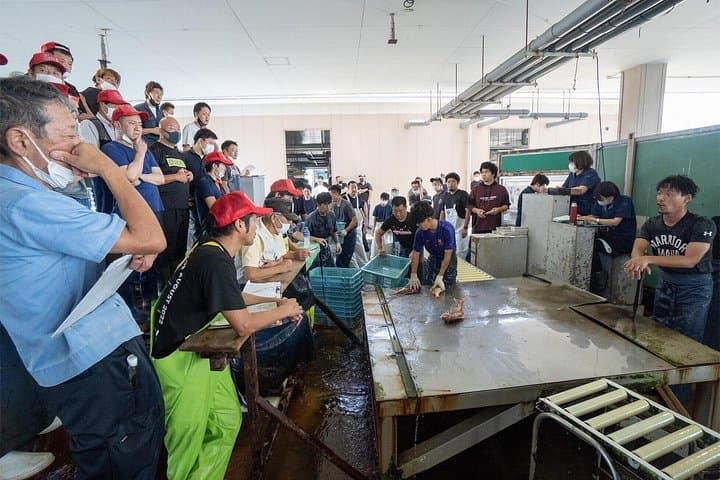


Morning light skims the gray-green ribbon of the Akashi Strait as fishmongers and brokers move with practiced urgency across the auction floor.
You step onto the raised platform at Akashiura Port, the air raw with salt and the metallic tang of freshly cut fish, and watch live fish auctions that are rare elsewhere in Japan.
Akashi grew as a working harbor on the Seto Inland Sea; its currents concentrate nutrients and produce the abundant seafood that built local markets. The Uo-no-Tana shopping street carries roughly 400 years of commerce in a compact arcade, while the Akashi Kaikyo Bridge cuts a modern line across the strait. Cultural rhythms here are straightforward: morning auctions, market bargaining, and chefs turning cooperative-caught fish into immediate sushi.
The tour moves from the auction platform through Uo-no-Tana to a short, focused sushi lunch where freshness is the point, then to a nearby distillery to inspect copper pot stills and learn about local sake and whisky. A final pause at Okura Beach gives a coastal view back toward the bridge.
Practicalities matter: the auction is loud, crowded and involves standing on concrete platforms with sea spray; follow guide instructions and keep valuables secure. Public transport links Akashi to Kobe and Osaka, making this an easy day trip. Bring layers for strait wind, a small daypack for purchases, non-slip shoes for wet surfaces, and cash—the market still favors yen.