THE ADVENTURE COLLECTIVE® · Independent discovery and booking for outdoor travel

Spend two days immersed in Akha village life outside Chiang Rai. This private eco-trek pairs short jungle hikes and waterfall dips with hands-on fishing, bamboo cooking, and an overnight stay in a working hill-tribe community.
Spend two days immersed in Akha village life outside Chiang Rai. This private eco-trek pairs short jungle hikes and waterfall dips with hands-on fishing, bamboo cooking, and an overnight stay in a working hill-tribe community.
Dawn breaks over the ridgelines outside Chiang Rai and the jungle exhales damp heat; you step from a pickup into a track threaded with ferns and bamboo, the air carrying the sharp scent of crushed herbs. The first day’s 2–3 hour trek follows narrow village trails and stream-scut paths—roughly 5–7 km of uneven ground with intermittent climbs (200–400 m of cumulative elevation)—ending at a waterfall where the current dares you to cool off before a bamboo-cooked lunch.
Verified experiences and guided adventures in the surrounding area.
Operated by Tourist Information Center Co. Ltd. · Chiang Rai, Chiang Rai
Dawn breaks over the ridgelines outside Chiang Rai and the jungle exhales damp heat; you step from a pickup into a track threaded with ferns and bamboo, the air carrying the sharp scent of crushed herbs. The first day’s 2–3 hour trek follows narrow village trails and stream-scut paths—roughly 5–7 km of uneven ground with intermittent climbs (200–400 m of cumulative elevation)—ending at a waterfall where the current dares you to cool off before a bamboo-cooked lunch.
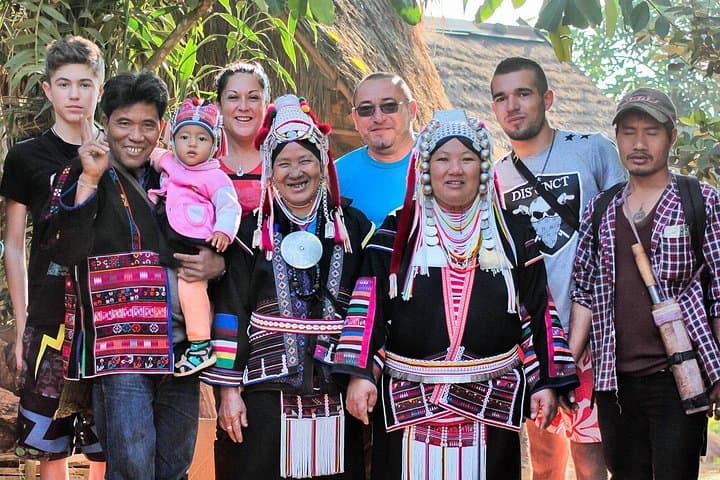
This route crosses terrain typical of northern Thailand’s hills: steep ridgelines of compacted soil and low sandstone outcrops, with patches of secondary forest. The region is home to Akha and Lahu communities; the Akha, whose ancestors migrated from Yunnan, keep distinctive embroidered attire and silver headdresses and practice swidden agriculture and river fishing. Local guides will interpret plants used for medicine and food, and show traditional fishing and agriculture skills.
Practicalities are simple and serviceable: private pickup from Chiang Rai around 8:30–9:00, village accommodation for one night, meals included, and short, guided treks each day (plan for 3–5 hours of walking total daily). Expect basic village sleeping arrangements, rustic toilets, and intermittent mobile signal.
Pack a lightweight rain shell, sturdy trail shoes, water and insect repellent, and a small donation-ready cash reserve for village craft. Move deliberately on wet roots, honor local customs—ask before photographing—and leave no trace. This is an accessible, low-impact overnight trek that trades summit conquest for cultural immersion and hands-on learning.
The walks are short to moderate (1–3 hours per segment) on uneven jungle trails; no technical climbing is required, and the tour is marketed as suitable for most fitness levels.
Accommodation is simple village lodging—shared rooms or basic huts with local bedding; bring personal items like a sleep sheet if you prefer.
Breakfast, lunch, and dinner are included with traditional village dishes; notify the operator in advance about allergies or strict diets so they can adapt menus where possible.
Yes—hotel pickup in Chiang Rai between 8:30–9:00 on day one and return transport to Chiang Rai at the end of day two are included.
Tourist Information Center Co. Ltd. operates guided outdoor trips and adventures with an emphasis on safety, stewardship, and memorable experiences.


Dawn breaks over the ridgelines outside Chiang Rai and the jungle exhales damp heat; you step from a pickup into a track threaded with ferns and bamboo, the air carrying the sharp scent of crushed herbs. The first day’s 2–3 hour trek follows narrow village trails and stream-scut paths—roughly 5–7 km of uneven ground with intermittent climbs (200–400 m of cumulative elevation)—ending at a waterfall where the current dares you to cool off before a bamboo-cooked lunch.
Dawn breaks over the ridgelines outside Chiang Rai and the jungle exhales damp heat; you step from a pickup into a track threaded with ferns and bamboo, the air carrying the sharp scent of crushed herbs. The first day’s 2–3 hour trek follows narrow village trails and stream-scut paths—roughly 5–7 km of uneven ground with intermittent climbs (200–400 m of cumulative elevation)—ending at a waterfall where the current dares you to cool off before a bamboo-cooked lunch.
This route crosses terrain typical of northern Thailand’s hills: steep ridgelines of compacted soil and low sandstone outcrops, with patches of secondary forest. The region is home to Akha and Lahu communities; the Akha, whose ancestors migrated from Yunnan, keep distinctive embroidered attire and silver headdresses and practice swidden agriculture and river fishing. Local guides will interpret plants used for medicine and food, and show traditional fishing and agriculture skills.
Practicalities are simple and serviceable: private pickup from Chiang Rai around 8:30–9:00, village accommodation for one night, meals included, and short, guided treks each day (plan for 3–5 hours of walking total daily). Expect basic village sleeping arrangements, rustic toilets, and intermittent mobile signal.
Pack a lightweight rain shell, sturdy trail shoes, water and insect repellent, and a small donation-ready cash reserve for village craft. Move deliberately on wet roots, honor local customs—ask before photographing—and leave no trace. This is an accessible, low-impact overnight trek that trades summit conquest for cultural immersion and hands-on learning.