THE ADVENTURE COLLECTIVE® · Independent discovery and booking for outdoor travel

Explore Al Bahah in a six-hour private tour that links panoramic parks, the historic Dhee Ain "Marble Village," Khairah Forest, and the old souq. Expect shaded forest paths, white-stone alleys, and local honey and crafts along the way.
Explore Al Bahah in a six-hour private tour that links panoramic parks, the historic Dhee Ain "Marble Village," Khairah Forest, and the old souq. Expect shaded forest paths, white-stone alleys, and local honey and crafts along the way.
A cool morning wind threads through pines and palm fronds as the city of Al Bahah unfolds below — terraced stone houses clinging to cliffs, a ribbon of road cutting through green valleys, and a spring-fed village that seems to have stepped out of another century.
Verified experiences and guided adventures in the surrounding area.
Operated by Al Bahah Trips · Al Bahah, Al Bahah
A cool morning wind threads through pines and palm fronds as the city of Al Bahah unfolds below — terraced stone houses clinging to cliffs, a ribbon of road cutting through green valleys, and a spring-fed village that seems to have stepped out of another century.
This six-hour private tour moves from an elevated park with panoramic views into the white‑stone lanes of Dhee Ain, often called the “Marble Village” for its pale façades and natural springs. Geologically, Al Bahah sits on the western escarpment of the Arabian Shield; granite cliffs and volcanic rocks frame narrow wadis and pockets of arable terraces where palms and citrus persist. Culturally, the area blends Hijazi and Asiri influences — tower houses, carved wooden details, and a souq economy built on honey, spices, and crafts.
Visitors should expect short, deliberate walks: 1–3 km at each stop with modest elevation changes as the route climbs to lookouts and drops into shaded groves. Trails in Khairah Forest Park are largely well-kept dirt paths shaded by tall trees; footing can be uneven near springs and rock outcrops.
Practicalities: morning departures beat the midday heat, bring a reusable water bottle and sun protection, and wear sturdy walking shoes for rocky alleys. Respect local customs by choosing modest attire and asking before photographing people. The tour’s rhythm mixes easy urban walking with low‑grade nature paths — ideal for travelers wanting a compact introduction to Al Bahah’s landscape, history, and everyday life.
The private tour lasts about six hours with an easy to moderate pace: short walks at each site and time for photo stops and light snacks.
The itinerary notes stroller and wheelchair accessibility in transportation and some sites, but historic alleys and rocky paths may limit full access—check specific pickup and mobility needs when booking.
Admission is listed as included for the heritage village; confirm with the operator for any optional site fees or additional activities.
Modest, breathable clothing, sun protection, sturdy shoes, and a refillable water bottle are recommended; bring cash for souq purchases.
Al Bahah Trips operates guided outdoor trips and adventures with an emphasis on safety, stewardship, and memorable experiences.
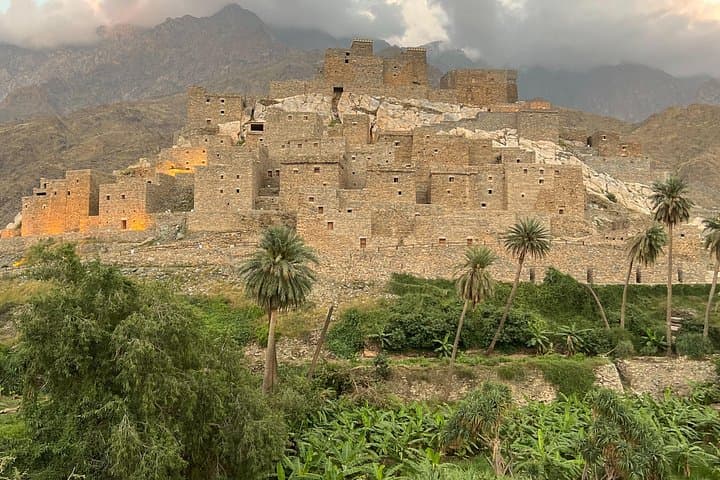

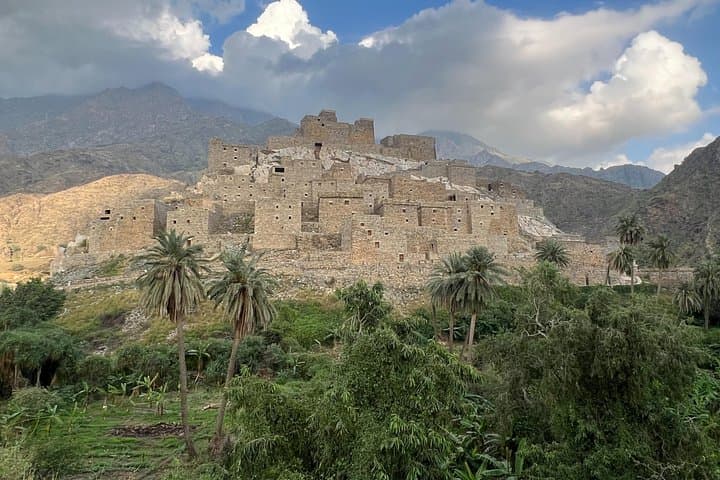

A cool morning wind threads through pines and palm fronds as the city of Al Bahah unfolds below — terraced stone houses clinging to cliffs, a ribbon of road cutting through green valleys, and a spring-fed village that seems to have stepped out of another century.
A cool morning wind threads through pines and palm fronds as the city of Al Bahah unfolds below — terraced stone houses clinging to cliffs, a ribbon of road cutting through green valleys, and a spring-fed village that seems to have stepped out of another century.
This six-hour private tour moves from an elevated park with panoramic views into the white‑stone lanes of Dhee Ain, often called the “Marble Village” for its pale façades and natural springs. Geologically, Al Bahah sits on the western escarpment of the Arabian Shield; granite cliffs and volcanic rocks frame narrow wadis and pockets of arable terraces where palms and citrus persist. Culturally, the area blends Hijazi and Asiri influences — tower houses, carved wooden details, and a souq economy built on honey, spices, and crafts.
Visitors should expect short, deliberate walks: 1–3 km at each stop with modest elevation changes as the route climbs to lookouts and drops into shaded groves. Trails in Khairah Forest Park are largely well-kept dirt paths shaded by tall trees; footing can be uneven near springs and rock outcrops.
Practicalities: morning departures beat the midday heat, bring a reusable water bottle and sun protection, and wear sturdy walking shoes for rocky alleys. Respect local customs by choosing modest attire and asking before photographing people. The tour’s rhythm mixes easy urban walking with low‑grade nature paths — ideal for travelers wanting a compact introduction to Al Bahah’s landscape, history, and everyday life.