THE ADVENTURE COLLECTIVE® · Independent discovery and booking for outdoor travel

Ride through Al Hamra’s historic falaj farms and mud-brick lanes on a 2-hour guided cycling tour. Expect shaded date palms, gentle farm tracks, and close-up cultural encounters with local farmers.
Ride through Al Hamra’s historic falaj farms and mud-brick lanes on a 2-hour guided cycling tour. Expect shaded date palms, gentle farm tracks, and close-up cultural encounters with local farmers.
The ride begins under the pale Oman sun, pedals whispering on compacted farm tracks as date palms lean in and the falaj water channels thread silver through the fields. Within minutes you’re moving between shaded alleys and low mud-brick walls; the town’s terraces and jagged mountain ridges keep watch behind you.
Verified experiences and guided adventures in the surrounding area.
Operated by WikiTours Adventures · Al Hamra, Ad Dakhiliyah
The ride begins under the pale Oman sun, pedals whispering on compacted farm tracks as date palms lean in and the falaj water channels thread silver through the fields. Within minutes you’re moving between shaded alleys and low mud-brick walls; the town’s terraces and jagged mountain ridges keep watch behind you.
Al Hamra sits at the edge of Oman’s Hajar foothills and is shaped by ancient irrigation—Aflaj systems that have sustained farming here for centuries and are recognized across Oman’s cultural landscape. Geology is visible in the folded limestone and alluvial terraces; the soil and water have created narrow, productive plots that define the area’s pattern. Local culture is evident in small stone houses, the seasonal crops, and farmers who still work by hand.
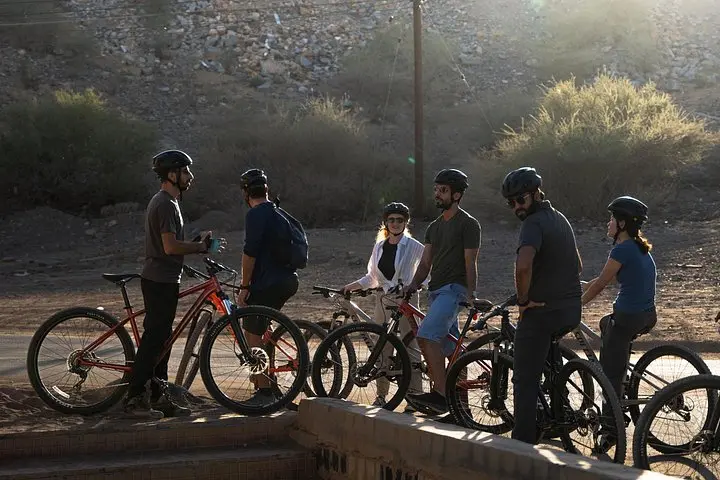
Practical guidance: expect a mostly flat to gently rolling 8–12 km route over packed earth, gravel and small paved sections with roughly 50–150 m of cumulative elevation gain depending on detours. Helmets are provided; basic bike-handling skills are required. Plan for direct sun—start early to avoid midday heat, carry at least 1–1.5 L of water, and leave space in your pack for a light layer if mornings are cool.
Photo stops are frequent: alleys of old lanes, the falaj channels, and vantage points over layered fields. Respect private plots and ask before photographing farmers working. This two-hour loop is as much a cultural ride as it is scenery: expect steady, unhurried pace, conversational guides, and a real connection to the rhythms of rural Oman.
Yes—participants should be able to ride a bicycle confidently; if not, the operator can offer a guided walking alternative.
Yes, helmets are included in the tour, but you may bring your own for comfort and fit.
Hotel pickup may be available for an extra charge; check booking details or request local transfer when you reserve.
Guides can moderate pace and shorten loops for families or less-experienced riders, but notify the operator in advance.
WikiTours Adventures operates guided outdoor trips and adventures with an emphasis on safety, stewardship, and memorable experiences.
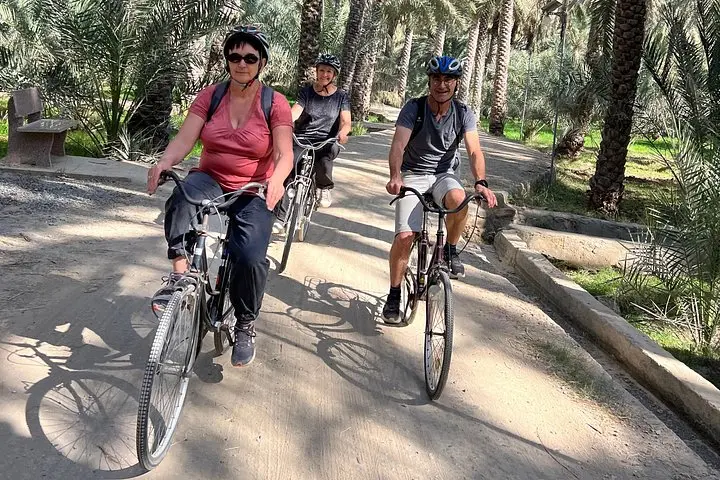
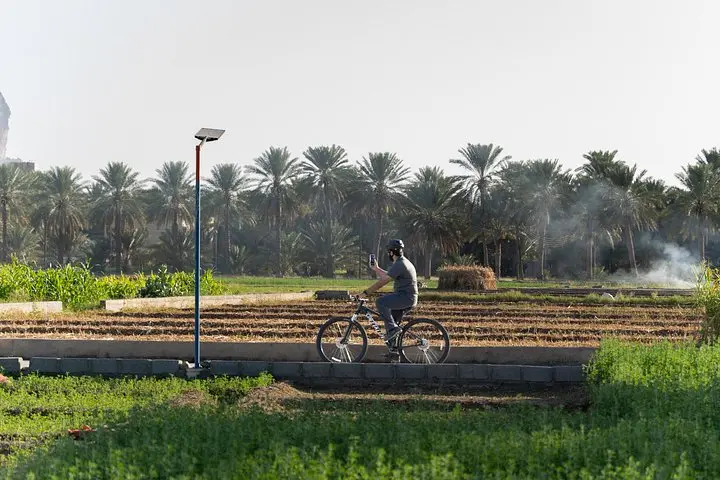
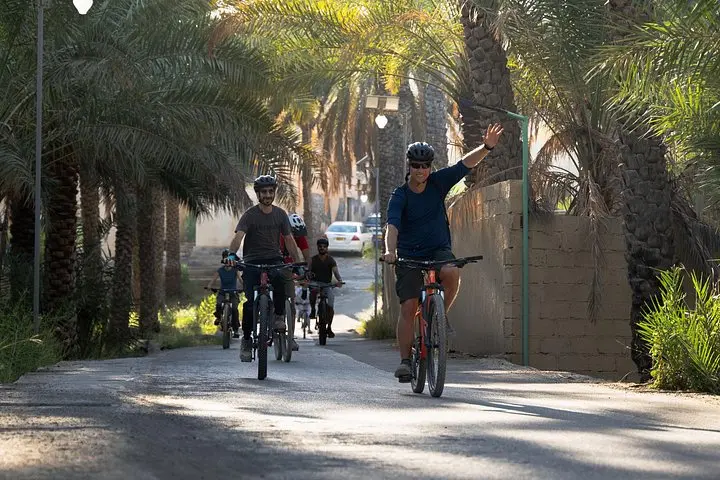
The ride begins under the pale Oman sun, pedals whispering on compacted farm tracks as date palms lean in and the falaj water channels thread silver through the fields. Within minutes you’re moving between shaded alleys and low mud-brick walls; the town’s terraces and jagged mountain ridges keep watch behind you.
The ride begins under the pale Oman sun, pedals whispering on compacted farm tracks as date palms lean in and the falaj water channels thread silver through the fields. Within minutes you’re moving between shaded alleys and low mud-brick walls; the town’s terraces and jagged mountain ridges keep watch behind you.
Al Hamra sits at the edge of Oman’s Hajar foothills and is shaped by ancient irrigation—Aflaj systems that have sustained farming here for centuries and are recognized across Oman’s cultural landscape. Geology is visible in the folded limestone and alluvial terraces; the soil and water have created narrow, productive plots that define the area’s pattern. Local culture is evident in small stone houses, the seasonal crops, and farmers who still work by hand.
Practical guidance: expect a mostly flat to gently rolling 8–12 km route over packed earth, gravel and small paved sections with roughly 50–150 m of cumulative elevation gain depending on detours. Helmets are provided; basic bike-handling skills are required. Plan for direct sun—start early to avoid midday heat, carry at least 1–1.5 L of water, and leave space in your pack for a light layer if mornings are cool.
Photo stops are frequent: alleys of old lanes, the falaj channels, and vantage points over layered fields. Respect private plots and ask before photographing farmers working. This two-hour loop is as much a cultural ride as it is scenery: expect steady, unhurried pace, conversational guides, and a real connection to the rhythms of rural Oman.