THE ADVENTURE COLLECTIVE® · Independent discovery and booking for outdoor travel

A full-day route from Madinah to Al Ula that visits Hegra (Madain Saleh)—Saudi Arabia’s first UNESCO site—then finishes at the sculpted form of Elephant Rock. Expect long drives, dramatic sandstone scenery, and guided exploration of Nabataean tombs.
A full-day route from Madinah to Al Ula that visits Hegra (Madain Saleh)—Saudi Arabia’s first UNESCO site—then finishes at the sculpted form of Elephant Rock. Expect long drives, dramatic sandstone scenery, and guided exploration of Nabataean tombs.
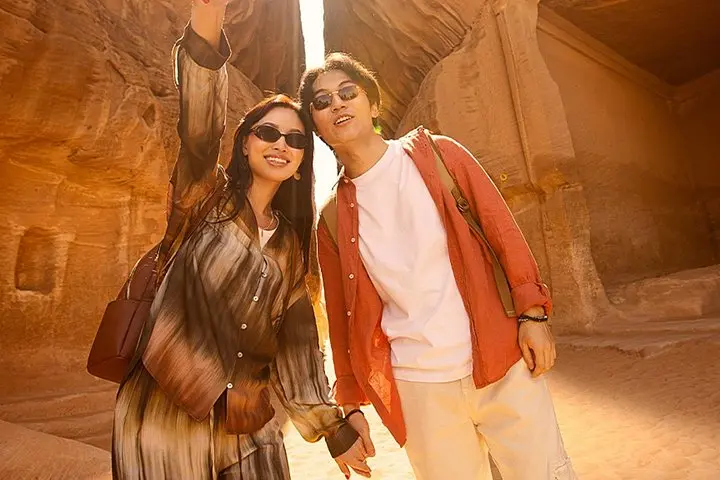
You leave Madinah before dawn, the bus lights cutting through a pale desert that widens as the road pulls you northwest toward Al Ula. By midmorning the sandstone cliffs have warmed to ochre and the wind carries the dry scent of stone; the ruins of Hegra appear like a city that the landscape itself decided to reveal.
Verified experiences and guided adventures in the surrounding area.
Operated by Desert Point Tourism LLC · AlUla, Al Madinah Region
You leave Madinah before dawn, the bus lights cutting through a pale desert that widens as the road pulls you northwest toward Al Ula. By midmorning the sandstone cliffs have warmed to ochre and the wind carries the dry scent of stone; the ruins of Hegra appear like a city that the landscape itself decided to reveal.
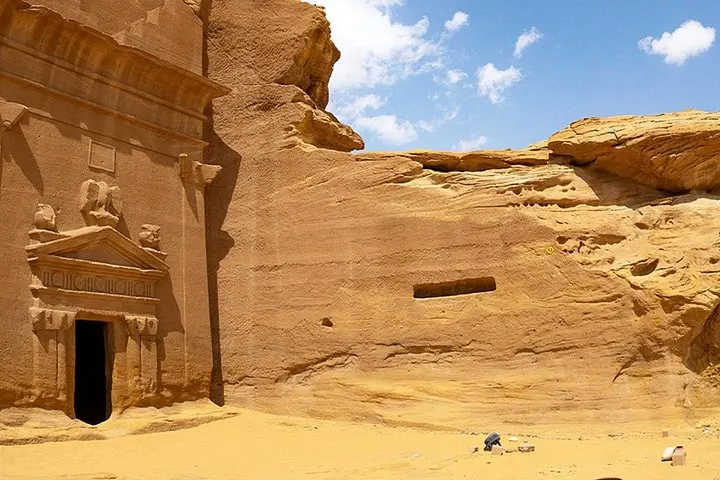
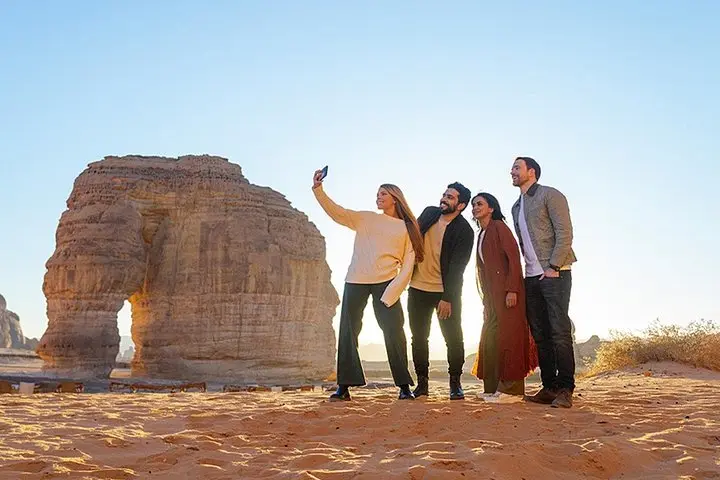
Hegra (Madain Saleh) is Saudi Arabia’s first UNESCO World Heritage Site and the southernmost major outpost of the Nabataean Kingdom. The site’s 94 decorated tombs—carved facades, inscriptions and rock-cut chambers—date mostly from the 2nd century BCE to the Roman annexation in 106 CE. Geologically, the region is sculpted by wind and episodic erosion: freestanding buttes, arches and the Elephant Rock (Jebel Al-Fil) show how sandstone layers react to rain, sun and sand over millennia. Local culture is rooted in oasis life; Al Ula town’s palm groves and recent conservation efforts aim to balance tourism and heritage protection.
Practical guidance: plan for a long day—expect 9–10 hours including a 3½-hour drive each way from Madinah. Wear sturdy walking shoes for uneven rock surfaces, protect skin and eyes from sun and wind, and carry at least 2 liters of water. Photography opportunities are plentiful but respect signs and fenced areas at archaeological features. Guides on-site provide historical context that brings Nabataean inscriptions to life.
The trip is accessible for most fitness levels but involves walking across sandy, rocky terrain and short climbs near tombs and viewpoints. Timing your visit for morning light at Hegra and late afternoon at Elephant Rock gives the best color and cooler temperatures.
The one-way drive is roughly 3½ hours, so expect a full day with travel and on-site visits.
Yes—this tour’s inclusions list entrance fees for Hegra as provided in the itinerary.
The tour is generally suitable for all ages, but participants should be prepared for a long day and some short walks on uneven terrain.
Photography is allowed in most outdoor areas; follow guide instructions and posted restrictions to protect fragile sites.
Desert Point Tourism LLC operates guided outdoor trips and adventures with an emphasis on safety, stewardship, and memorable experiences.

You leave Madinah before dawn, the bus lights cutting through a pale desert that widens as the road pulls you northwest toward Al Ula. By midmorning the sandstone cliffs have warmed to ochre and the wind carries the dry scent of stone; the ruins of Hegra appear like a city that the landscape itself decided to reveal.
You leave Madinah before dawn, the bus lights cutting through a pale desert that widens as the road pulls you northwest toward Al Ula. By midmorning the sandstone cliffs have warmed to ochre and the wind carries the dry scent of stone; the ruins of Hegra appear like a city that the landscape itself decided to reveal.
Hegra (Madain Saleh) is Saudi Arabia’s first UNESCO World Heritage Site and the southernmost major outpost of the Nabataean Kingdom. The site’s 94 decorated tombs—carved facades, inscriptions and rock-cut chambers—date mostly from the 2nd century BCE to the Roman annexation in 106 CE. Geologically, the region is sculpted by wind and episodic erosion: freestanding buttes, arches and the Elephant Rock (Jebel Al-Fil) show how sandstone layers react to rain, sun and sand over millennia. Local culture is rooted in oasis life; Al Ula town’s palm groves and recent conservation efforts aim to balance tourism and heritage protection.
Practical guidance: plan for a long day—expect 9–10 hours including a 3½-hour drive each way from Madinah. Wear sturdy walking shoes for uneven rock surfaces, protect skin and eyes from sun and wind, and carry at least 2 liters of water. Photography opportunities are plentiful but respect signs and fenced areas at archaeological features. Guides on-site provide historical context that brings Nabataean inscriptions to life.
The trip is accessible for most fitness levels but involves walking across sandy, rocky terrain and short climbs near tombs and viewpoints. Timing your visit for morning light at Hegra and late afternoon at Elephant Rock gives the best color and cooler temperatures.