THE ADVENTURE COLLECTIVE® · Independent discovery and booking for outdoor travel

Explore ancient Dadan, the Abu Raed Heritage Museum and wind-carved rock formations on a 6–8 hour guided circuit that finishes with a 4x4 desert drive and sunset campsite. A practical one-day introduction to Al Ula’s archaeology, geology and living oasis culture.
Explore ancient Dadan, the Abu Raed Heritage Museum and wind-carved rock formations on a 6–8 hour guided circuit that finishes with a 4x4 desert drive and sunset campsite. A practical one-day introduction to Al Ula’s archaeology, geology and living oasis culture.
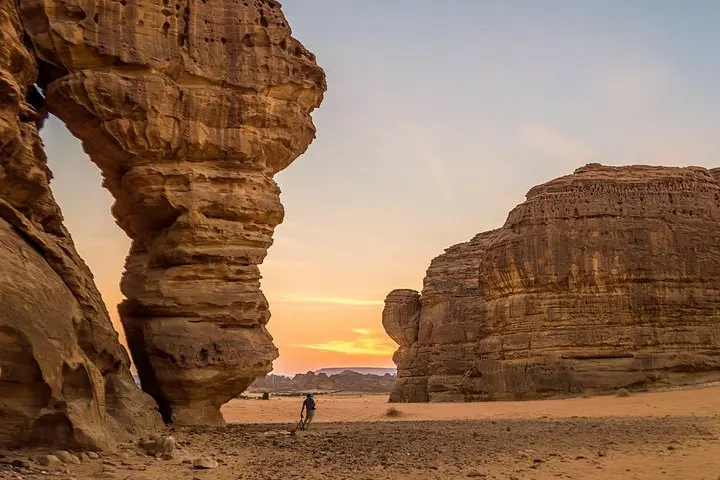
Dust lifts from the 4x4 as you roll away from the palm-lined oasis and into a landscape of ochre cliffs and carved sandstone. The guide points out layered cliffs that catch the sun; a wind-sculpted arch frames a far ridge while camel paths still faintly stitch the valley floor. You feel the desert push and invite in equal measure.
Verified experiences and guided adventures in the surrounding area.
Operated by PLT · AlUla, Al Madinah Region
Dust lifts from the 4x4 as you roll away from the palm-lined oasis and into a landscape of ochre cliffs and carved sandstone. The guide points out layered cliffs that catch the sun; a wind-sculpted arch frames a far ridge while camel paths still faintly stitch the valley floor. You feel the desert push and invite in equal measure.
This full-day guided loop visits the Abu Raed Heritage Museum, where local artifacts and agricultural tools sketch daily life in Al Ula, then moves to the ruins of Dadan — the stone-built capital of the Dadan (9th–8th century BCE) and Lihyan (5th–2nd century BCE) kingdoms — whose rock-cut inscriptions and tomb façades speak to ancient caravan trade. Geologically, the area is a patchwork of sandstone and volcanic outcrops shaped by wind and rare flash floods; Elephant Rock and nearby formations are classic examples of differential erosion.
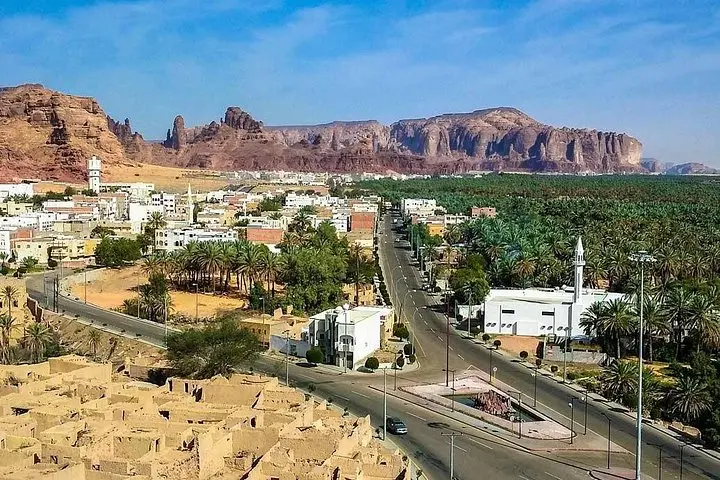
Culturally, Al Ula is an active living oasis: date palms, mud-brick neighborhoods, and a growing effort to preserve heritage under the Royal Commission for AlUla. The day includes a restaurant lunch, a late-afternoon 4x4 desert drive to a campsite for sunset, and a short climb to Hurat Alouird for a panoramic city view.
Practical guidance: expect a 6–8 hour day with periods of walking on uneven, sandy terrain and some short climbs. Bring at least 2 liters of water, sun protection, and sturdy shoes. Photography is excellent at golden hour; plan the desert leg for late afternoon to catch the light. The tour balances archaeology, landscape, and a practical dose of desert travel know-how.
The tour runs about 6–8 hours with guided stops of 1–3 hours each; expect gentle walking with short uphill sections and time in a 4x4 for the desert transfer.
Infants must sit on an adult’s lap; children able to walk on uneven ground can join, but the operator recommends moderate fitness for participants.
Yes—lunch, snacks, guided transportation and applicable fees are included in the tour price as described in the itinerary.
Photography is generally permitted; follow the guide’s directions and any site-specific rules to avoid restricted areas and protect fragile surfaces.
PLT operates guided outdoor trips and adventures with an emphasis on safety, stewardship, and memorable experiences.
Dust lifts from the 4x4 as you roll away from the palm-lined oasis and into a landscape of ochre cliffs and carved sandstone. The guide points out layered cliffs that catch the sun; a wind-sculpted arch frames a far ridge while camel paths still faintly stitch the valley floor. You feel the desert push and invite in equal measure.
Dust lifts from the 4x4 as you roll away from the palm-lined oasis and into a landscape of ochre cliffs and carved sandstone. The guide points out layered cliffs that catch the sun; a wind-sculpted arch frames a far ridge while camel paths still faintly stitch the valley floor. You feel the desert push and invite in equal measure.
This full-day guided loop visits the Abu Raed Heritage Museum, where local artifacts and agricultural tools sketch daily life in Al Ula, then moves to the ruins of Dadan — the stone-built capital of the Dadan (9th–8th century BCE) and Lihyan (5th–2nd century BCE) kingdoms — whose rock-cut inscriptions and tomb façades speak to ancient caravan trade. Geologically, the area is a patchwork of sandstone and volcanic outcrops shaped by wind and rare flash floods; Elephant Rock and nearby formations are classic examples of differential erosion.
Culturally, Al Ula is an active living oasis: date palms, mud-brick neighborhoods, and a growing effort to preserve heritage under the Royal Commission for AlUla. The day includes a restaurant lunch, a late-afternoon 4x4 desert drive to a campsite for sunset, and a short climb to Hurat Alouird for a panoramic city view.
Practical guidance: expect a 6–8 hour day with periods of walking on uneven, sandy terrain and some short climbs. Bring at least 2 liters of water, sun protection, and sturdy shoes. Photography is excellent at golden hour; plan the desert leg for late afternoon to catch the light. The tour balances archaeology, landscape, and a practical dose of desert travel know-how.