THE ADVENTURE COLLECTIVE® · Independent discovery and booking for outdoor travel

Travel from Perito Moreno into the Patagonian steppe to reach Alero Charcamata, an immense rock shelter with thousands of ancient paintings. This private, full‑day tour blends easy hiking, estanciascapes and guided interpretation of 5,000+ year‑old art.
Travel from Perito Moreno into the Patagonian steppe to reach Alero Charcamata, an immense rock shelter with thousands of ancient paintings. This private, full‑day tour blends easy hiking, estanciascapes and guided interpretation of 5,000+ year‑old art.
Dawn lifts over the Patagonian steppe and the road out of Perito Moreno becomes a long ribbon through wind-sculpted grass. The vehicle crosses shallow fords of the Pinturas River, and the landscape opens into cañadones where guanacos move like living punctuation marks. At the mouth of Charcamata, a cavernous roof—an 80‑meter aperture with walls 40 meters high—hollows the rock, revealing panels of pigments left by people more than five millennia ago.
Verified experiences and guided adventures in the surrounding area.
Operated by Receptivo Aborigen Tours · Perito Moreno, Santa Cruz
Dawn lifts over the Patagonian steppe and the road out of Perito Moreno becomes a long ribbon through wind-sculpted grass. The vehicle crosses shallow fords of the Pinturas River, and the landscape opens into cañadones where guanacos move like living punctuation marks. At the mouth of Charcamata, a cavernous roof—an 80‑meter aperture with walls 40 meters high—hollows the rock, revealing panels of pigments left by people more than five millennia ago.
The paintings record hunting scenes, guanacos, choiques and geometric marks; they were created by hunter-gatherer groups whose relationship with the river and its seasons shaped daily life. Geologically, Charcamata is an eroded shelter carved by wind and occasional floods; the overhang protects fragile organic pigments from sun and rain, helping preserve imagery that national authorities recognize as historically significant.
Culturally, the route threads through working estancias—modern ranches that speak to Patagonia’s livestock history and the region’s gaucho traditions. A knowledgeable guide decodes symbols and points out landscape features that explain why people lived here for millennia.
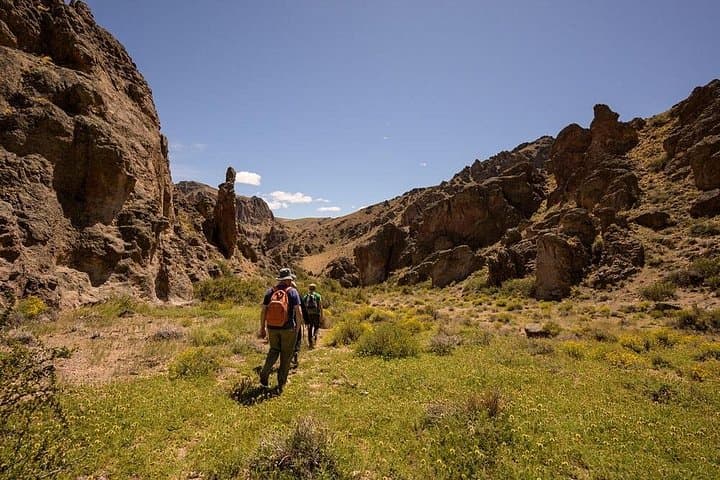
Practical notes: the tour is private, departs Perito Moreno around 09:00 and returns near 18:00, includes a boxed lunch and transport in an air‑conditioned vehicle. The walking portion is an easy ~1‑hour out-and-back on uneven ground; expect some loose scree and a short ford in the vehicle. Dress in layers, bring 2–3 liters of water, sun protection, and follow the guide’s instructions—do not touch the paintings. The experience pairs natural drama with clear, low‑impact interpretation, making it accessible to most travelers who want to stand face to face with Patagonia’s deep past.
No—the on‑site walk is an easy, roughly one‑hour out‑and‑back over uneven ground; mobility assistance may be limited so check with the operator if you have mobility concerns.
Yes, this private tour can accommodate children; guardians should ensure kids stay close to the guide and avoid touching the rock art.
The drive is about 60 km to the historic ranch area and another ~30 km on internal roads—expect roughly 90 km each way with varied surfaces and a short river crossing by vehicle.
Photography for personal use is typically allowed, but flash and close contact are prohibited; follow your guide’s instructions to protect pigments.
Receptivo Aborigen Tours operates guided outdoor trips and adventures with an emphasis on safety, stewardship, and memorable experiences.
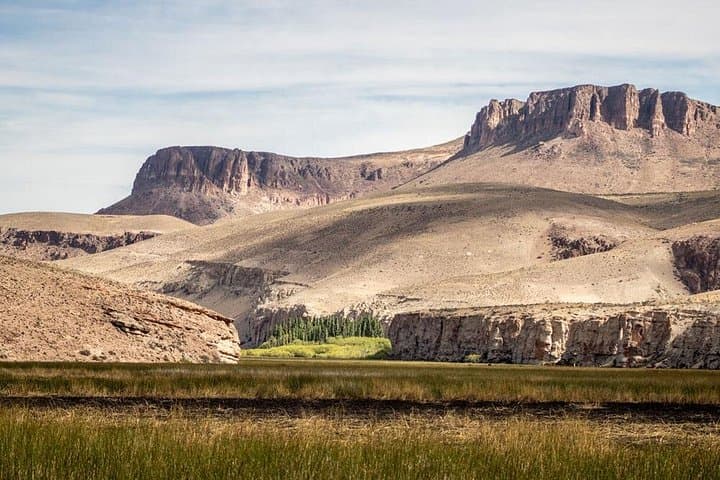
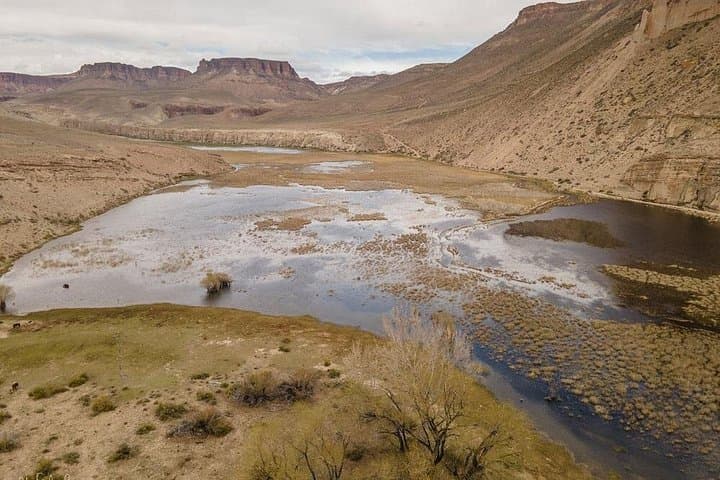
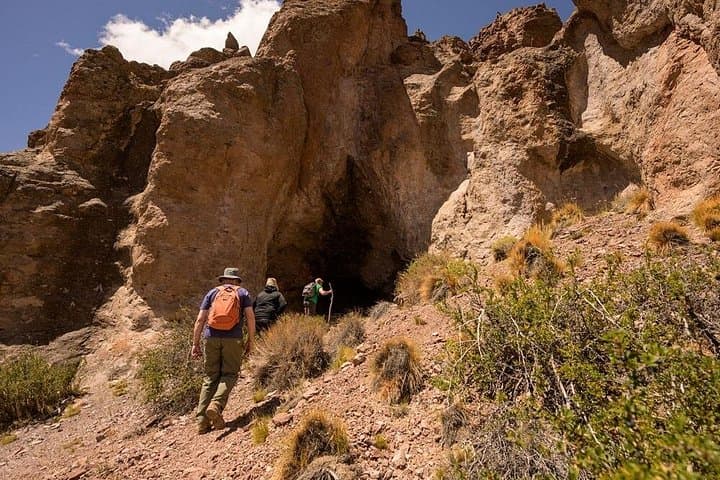
Dawn lifts over the Patagonian steppe and the road out of Perito Moreno becomes a long ribbon through wind-sculpted grass. The vehicle crosses shallow fords of the Pinturas River, and the landscape opens into cañadones where guanacos move like living punctuation marks. At the mouth of Charcamata, a cavernous roof—an 80‑meter aperture with walls 40 meters high—hollows the rock, revealing panels of pigments left by people more than five millennia ago.
Dawn lifts over the Patagonian steppe and the road out of Perito Moreno becomes a long ribbon through wind-sculpted grass. The vehicle crosses shallow fords of the Pinturas River, and the landscape opens into cañadones where guanacos move like living punctuation marks. At the mouth of Charcamata, a cavernous roof—an 80‑meter aperture with walls 40 meters high—hollows the rock, revealing panels of pigments left by people more than five millennia ago.
The paintings record hunting scenes, guanacos, choiques and geometric marks; they were created by hunter-gatherer groups whose relationship with the river and its seasons shaped daily life. Geologically, Charcamata is an eroded shelter carved by wind and occasional floods; the overhang protects fragile organic pigments from sun and rain, helping preserve imagery that national authorities recognize as historically significant.
Culturally, the route threads through working estancias—modern ranches that speak to Patagonia’s livestock history and the region’s gaucho traditions. A knowledgeable guide decodes symbols and points out landscape features that explain why people lived here for millennia.
Practical notes: the tour is private, departs Perito Moreno around 09:00 and returns near 18:00, includes a boxed lunch and transport in an air‑conditioned vehicle. The walking portion is an easy ~1‑hour out-and-back on uneven ground; expect some loose scree and a short ford in the vehicle. Dress in layers, bring 2–3 liters of water, sun protection, and follow the guide’s instructions—do not touch the paintings. The experience pairs natural drama with clear, low‑impact interpretation, making it accessible to most travelers who want to stand face to face with Patagonia’s deep past.