THE ADVENTURE COLLECTIVE® · Independent discovery and booking for outdoor travel

Three hours of harbor air, market lanes and seaside forts—this guided route from Manshieh to Ras El Tin stitches Alexandria’s Ottoman alleys and coastal landmarks into a tidy cultural primer. Learn the city’s layered history while navigating markets, a short harbor sail, and the Corniche.
Three hours of harbor air, market lanes and seaside forts—this guided route from Manshieh to Ras El Tin stitches Alexandria’s Ottoman alleys and coastal landmarks into a tidy cultural primer. Learn the city’s layered history while navigating markets, a short harbor sail, and the Corniche.
You step out at Manshieh Square and the city feels kinetic: gulls wheel above the harbor, the Corniche hums with scooters, and the air carries a salt-and-spice mix that tells you you’re on the edge of continents.
Verified experiences and guided adventures in the surrounding area.
Operated by NORTH AFRICAN SHIPPING AND TOURISM COMPANY (NASCO TOURS) · Alexandria, Alexandria Governorate
You step out at Manshieh Square and the city feels kinetic: gulls wheel above the harbor, the Corniche hums with scooters, and the air carries a salt-and-spice mix that tells you you’re on the edge of continents.
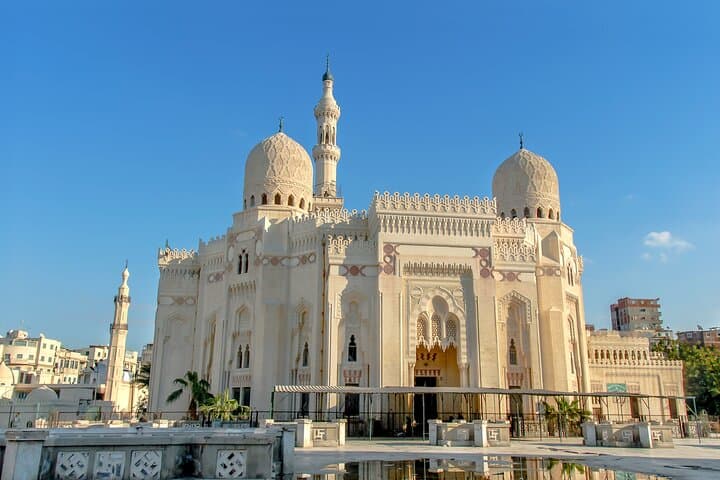
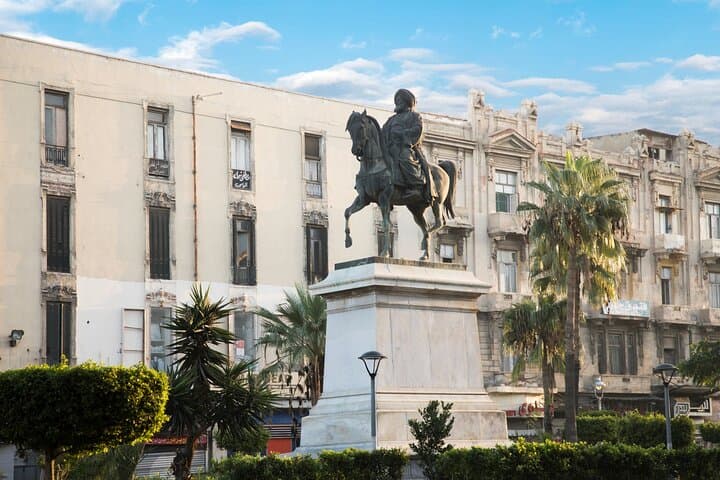
The three-hour loop moves quickly from Ottoman statues to narrow market lanes. Walk past the Mohammed Ali statue into an Islamic-period enclave where the old Heptastadion once linked island and mainland—its buried stones still shaping the coastline. Faransa Street offers layered façades: Ottoman-era mosques, merchants’ arcades like Wakalat Fatima Khatoun, and Terbana’s small courtyard rhythms. The guide steers the group through Khyateen markets and Zanket El Sittat, where trade defined the city’s cosmopolitan fabric.
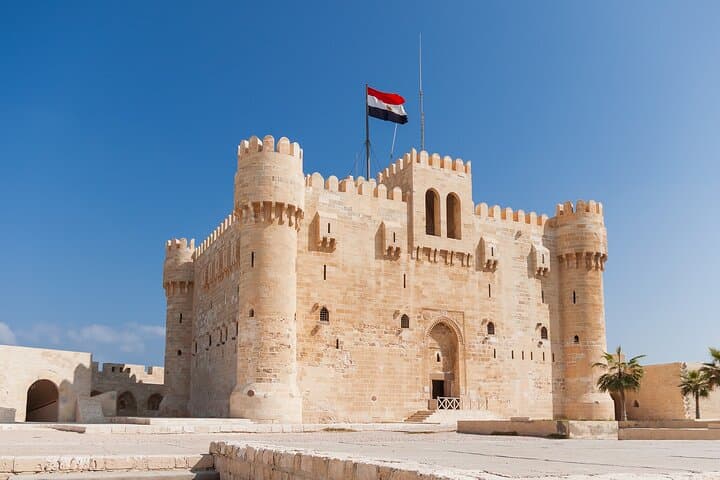
A short harbor sail shifts the perspective: the Eastern Harbor narrows, the Greek Club’s columns drift astern, and Fort Qaitbey sits on the Pharos’ memory—stone defending stone. The boat nudges Ras El Tin’s shoreline; palace terraces and fishermen’s wharves reveal everyday Alexandria—housing stacked along the Corniche, kids testing the current, and cafés spilling onto the promenade.
Practical notes: terrain alternates flat sidewalks, uneven market alleys and a calm short boat ride—expect about 3 hours total. Wear sturdy walking shoes, sun protection, and bring a small bottle of water; mornings are cooler and softer for photos. The tour is suitable for most fitness levels but includes some crowded streets and steps at viewpoints. Respect prayer spaces, ask before photographing people, and keep small change for local vendors and your guide. This is a compact cultural primer—history, shoreline, and city life stitched into a single, readable outing.
Yes; the standard itinerary includes a short, guided sail through the Eastern Harbor to view Fort Qaitbey, the Greek Club and Ras El Tin from the water.
The tour is mostly flat but includes narrow, uneven market alleys and boat boarding; travelers with limited mobility should check accessibility in advance and request details at booking.
This itinerary focuses on external viewpoints, markets and a harbor sail; entrance fees to specific monuments are generally not included—confirm with the operator if you want to enter sites like museums or Fort Qaitbey.
Many NASCO guides offer English and Arabic; confirm language needs at booking and request a guide who speaks your preferred language if necessary.
NORTH AFRICAN SHIPPING AND TOURISM COMPANY (NASCO TOURS) operates guided outdoor trips and adventures with an emphasis on safety, stewardship, and memorable experiences.

You step out at Manshieh Square and the city feels kinetic: gulls wheel above the harbor, the Corniche hums with scooters, and the air carries a salt-and-spice mix that tells you you’re on the edge of continents.
You step out at Manshieh Square and the city feels kinetic: gulls wheel above the harbor, the Corniche hums with scooters, and the air carries a salt-and-spice mix that tells you you’re on the edge of continents.
The three-hour loop moves quickly from Ottoman statues to narrow market lanes. Walk past the Mohammed Ali statue into an Islamic-period enclave where the old Heptastadion once linked island and mainland—its buried stones still shaping the coastline. Faransa Street offers layered façades: Ottoman-era mosques, merchants’ arcades like Wakalat Fatima Khatoun, and Terbana’s small courtyard rhythms. The guide steers the group through Khyateen markets and Zanket El Sittat, where trade defined the city’s cosmopolitan fabric.
A short harbor sail shifts the perspective: the Eastern Harbor narrows, the Greek Club’s columns drift astern, and Fort Qaitbey sits on the Pharos’ memory—stone defending stone. The boat nudges Ras El Tin’s shoreline; palace terraces and fishermen’s wharves reveal everyday Alexandria—housing stacked along the Corniche, kids testing the current, and cafés spilling onto the promenade.
Practical notes: terrain alternates flat sidewalks, uneven market alleys and a calm short boat ride—expect about 3 hours total. Wear sturdy walking shoes, sun protection, and bring a small bottle of water; mornings are cooler and softer for photos. The tour is suitable for most fitness levels but includes some crowded streets and steps at viewpoints. Respect prayer spaces, ask before photographing people, and keep small change for local vendors and your guide. This is a compact cultural primer—history, shoreline, and city life stitched into a single, readable outing.