THE ADVENTURE COLLECTIVE® · Independent discovery and booking for outdoor travel

A full-day private drive from Lisbon across the Algarve’s sunlit coast: enter Benagil’s sea cave by boat, walk Tavira’s Roman bridges, scan the lagoons of Ria Formosa and finish at Vilamoura’s polished marina. This guide covers what to expect, why the coast looks the way it does, and how to plan your day for the best light and least crowds.
A full-day private drive from Lisbon across the Algarve’s sunlit coast: enter Benagil’s sea cave by boat, walk Tavira’s Roman bridges, scan the lagoons of Ria Formosa and finish at Vilamoura’s polished marina. This guide covers what to expect, why the coast looks the way it does, and how to plan your day for the best light and least crowds.
The morning you leave Lisbon, the city’s tile-clad facades blur into olive groves and then into low, scrubby hills that lean toward the sea. By mid-morning the Atlantic is a constant presence: silver on the horizon, then a wall of ochre cliffs that drop sharply into turquoise water. Your private vehicle threads coastal roads, pulling up to the small boats that ferry visitors into the Benagil Sea Cave — a chamber whose ceiling has been pierced by light until the sand inside looks like a pocket of sun.
Verified experiences and guided adventures in the surrounding area.
Operated by Tour Travel & More · Lagoa, Faro District
The morning you leave Lisbon, the city’s tile-clad facades blur into olive groves and then into low, scrubby hills that lean toward the sea. By mid-morning the Atlantic is a constant presence: silver on the horizon, then a wall of ochre cliffs that drop sharply into turquoise water. Your private vehicle threads coastal roads, pulling up to the small boats that ferry visitors into the Benagil Sea Cave — a chamber whose ceiling has been pierced by light until the sand inside looks like a pocket of sun.
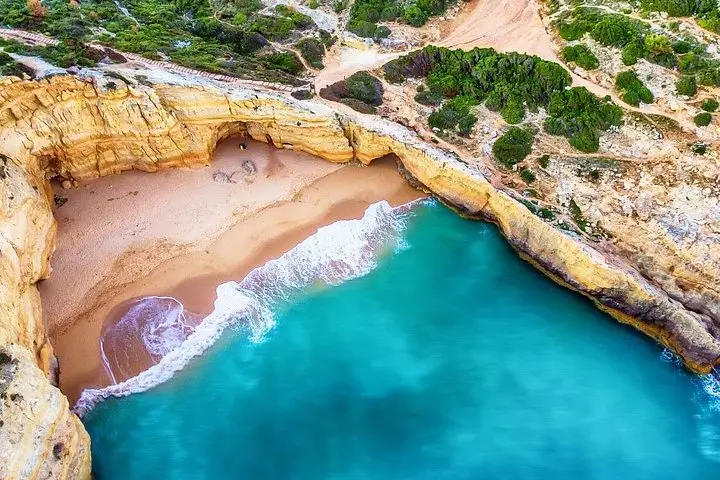
Benagil is geological theater. The Algarve’s cliffs are largely Miocene limestone sculpted by the Atlantic’s pounding — caves, arches and chimneys appear where fractures meet waves. Ponta da Piedade near Lagos shows the same process at work on a dramatic scale: staircases of strata, honeycombed faces and channels where the sea dares you to peer over the edge.
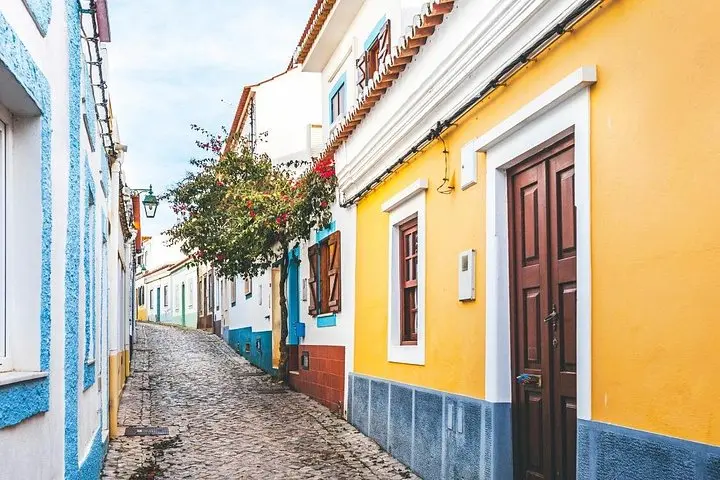
History is a quiet layer here. Romans harvested fish and built villas; later the Moors shaped irrigation and place names that survive today. Tavira still carries a medieval rhythm — narrow alleys, Roman bridges crossing the Gilão River, and a castle mound that rewards a short climb with terracotta roofs and citrus groves extending toward the salt pans of the Ria Formosa.
The Ria Formosa Natural Park reads like a manual of coastal life: barrier islands, tidal channels and salt flats that nurture fiddler crabs, seagrass beds and the flamingos that color the lagoons. Local fishermen still harvest clams and sea salt using methods little changed in generations.
Practical rhythm: this is a 12-hour private excursion from Lisbon with hotel pickup and drop-off. Expect roughly 2.5–3 hours each way by road and multiple short stops — a guided boat into Benagil (time on the sand depends on sea conditions), beach viewpoints, a walk through Tavira’s old town, a slow drive along the Ria Formosa and a finale at Vilamoura’s marina. The pace is tailored to your group: the guide typically provides about four hours of on-foot guiding in Algarve towns, with transport and a chauffeur for the day.
Plan for sun and salt: bring swimwear, reef-safe sunscreen, a hat and shoes that handle sand and coastal steps. If you want the cave interior in peace, request the earliest departure possible and ask about sea-state conditions the day before. Respect protected zones in Ria Formosa — boats keep out of bird nesting areas and anchors are discouraged in seagrass beds.
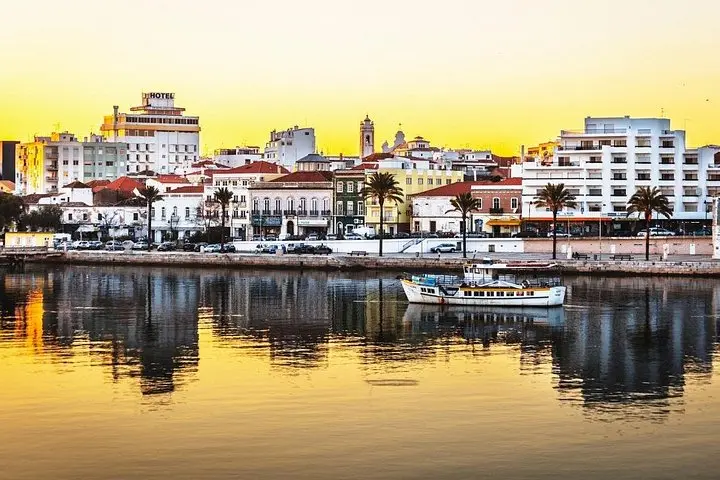
By evening, the marina lights in Vilamoura reflect on calm water and the busyness of the coast softens. You return to Lisbon with sand in your bags and a clear sense of how geology, sea and human history have shaped this southern shore.
Expect roughly 2.5–3 hours each way depending on traffic; the full experience is a 12-hour private tour with hotel pickup and drop-off.
Boat access is planned; entry to the small beach inside depends on sea conditions and operator decisions for safety.
Meals are not included; there are recommended stops where you can sample seafood — consider saving time for a seaside lunch in Tavira or Vilamoura.
Yes — infant seats are available on request but note the day is long and includes boat transfers; inform the operator at booking.
It’s a private tour, so the guide can tailor stops and timing within the 12-hour window; request specific interests when booking.
Bring binoculars and avoid disturbing mudflats and nesting areas — flamingos are common in certain seasons, but visibility depends on tides and time of day.
Tour Travel & More operates guided outdoor trips and adventures with an emphasis on safety, stewardship, and memorable experiences.
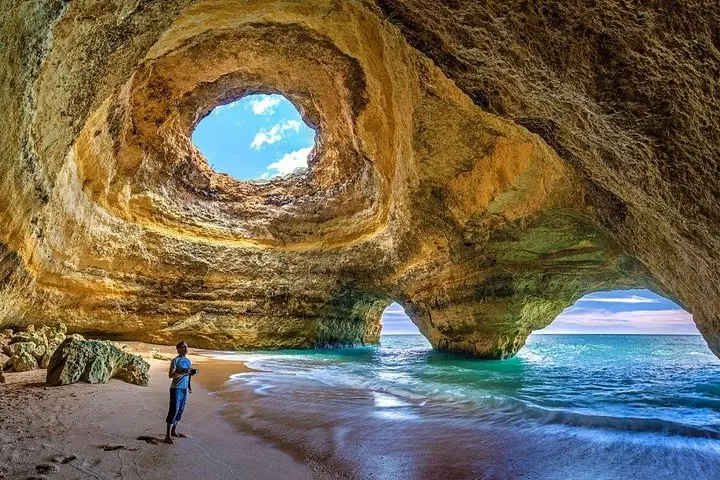
The morning you leave Lisbon, the city’s tile-clad facades blur into olive groves and then into low, scrubby hills that lean toward the sea. By mid-morning the Atlantic is a constant presence: silver on the horizon, then a wall of ochre cliffs that drop sharply into turquoise water. Your private vehicle threads coastal roads, pulling up to the small boats that ferry visitors into the Benagil Sea Cave — a chamber whose ceiling has been pierced by light until the sand inside looks like a pocket of sun.
The morning you leave Lisbon, the city’s tile-clad facades blur into olive groves and then into low, scrubby hills that lean toward the sea. By mid-morning the Atlantic is a constant presence: silver on the horizon, then a wall of ochre cliffs that drop sharply into turquoise water. Your private vehicle threads coastal roads, pulling up to the small boats that ferry visitors into the Benagil Sea Cave — a chamber whose ceiling has been pierced by light until the sand inside looks like a pocket of sun.
Benagil is geological theater. The Algarve’s cliffs are largely Miocene limestone sculpted by the Atlantic’s pounding — caves, arches and chimneys appear where fractures meet waves. Ponta da Piedade near Lagos shows the same process at work on a dramatic scale: staircases of strata, honeycombed faces and channels where the sea dares you to peer over the edge.
History is a quiet layer here. Romans harvested fish and built villas; later the Moors shaped irrigation and place names that survive today. Tavira still carries a medieval rhythm — narrow alleys, Roman bridges crossing the Gilão River, and a castle mound that rewards a short climb with terracotta roofs and citrus groves extending toward the salt pans of the Ria Formosa.
The Ria Formosa Natural Park reads like a manual of coastal life: barrier islands, tidal channels and salt flats that nurture fiddler crabs, seagrass beds and the flamingos that color the lagoons. Local fishermen still harvest clams and sea salt using methods little changed in generations.
Practical rhythm: this is a 12-hour private excursion from Lisbon with hotel pickup and drop-off. Expect roughly 2.5–3 hours each way by road and multiple short stops — a guided boat into Benagil (time on the sand depends on sea conditions), beach viewpoints, a walk through Tavira’s old town, a slow drive along the Ria Formosa and a finale at Vilamoura’s marina. The pace is tailored to your group: the guide typically provides about four hours of on-foot guiding in Algarve towns, with transport and a chauffeur for the day.
Plan for sun and salt: bring swimwear, reef-safe sunscreen, a hat and shoes that handle sand and coastal steps. If you want the cave interior in peace, request the earliest departure possible and ask about sea-state conditions the day before. Respect protected zones in Ria Formosa — boats keep out of bird nesting areas and anchors are discouraged in seagrass beds.
By evening, the marina lights in Vilamoura reflect on calm water and the busyness of the coast softens. You return to Lisbon with sand in your bags and a clear sense of how geology, sea and human history have shaped this southern shore.