THE ADVENTURE COLLECTIVE® · Independent discovery and booking for outdoor travel

Crack of dawn departures, 18-hour travel, and three signature walks: this private charter from Alice Springs compresses Uluru and Kata Tjuta into a single, immersive day—geology, Anangu culture, and Walpa Gorge’s rock-carved corridors.
Crack of dawn departures, 18-hour travel, and three signature walks: this private charter from Alice Springs compresses Uluru and Kata Tjuta into a single, immersive day—geology, Anangu culture, and Walpa Gorge’s rock-carved corridors.
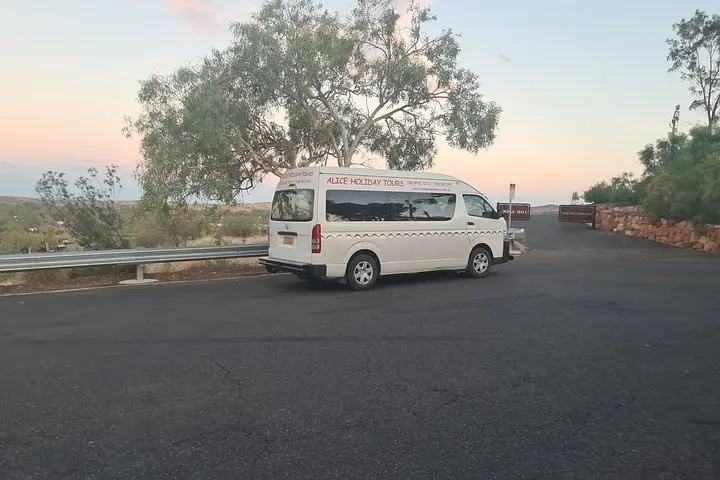
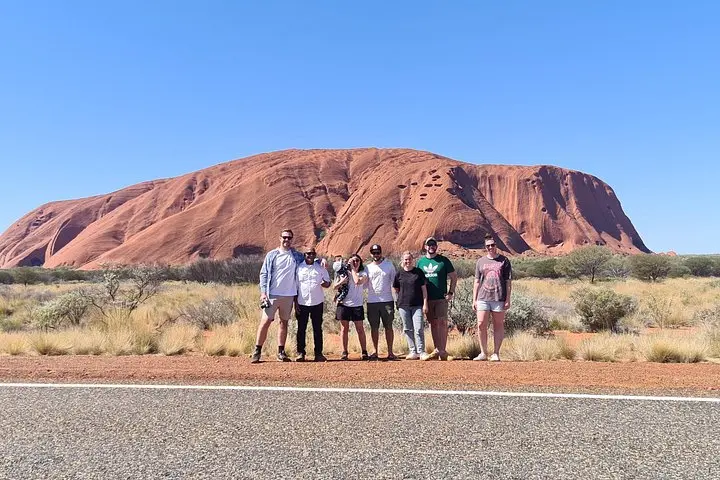
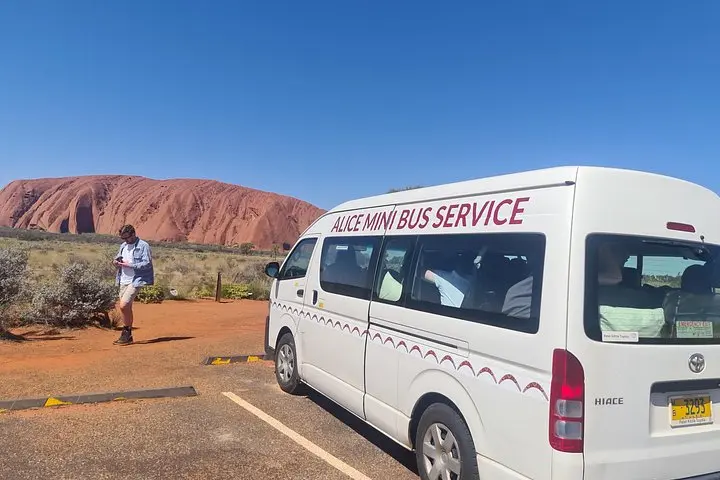
The bus eases out of Alice Springs before dawn, headlights cutting across red dust that still clings to the spinifex. For the next nine hundred kilometers the land opens and flattens into the Red Centre: long roadside horizons, the stubby peaks of the MacDonnell Ranges receding, and the geometry of desert light shifting from hard to honey. By midmorning the silhouette that has drawn pilgrims for centuries resolves itself—Uluru rises from the plain, a single, massive form that holds the weather and the stories of the Anangu people.
Verified experiences and guided adventures in the surrounding area.
Operated by Alice Holiday Tours · Yulara, Northern Territory
The bus eases out of Alice Springs before dawn, headlights cutting across red dust that still clings to the spinifex. For the next nine hundred kilometers the land opens and flattens into the Red Centre: long roadside horizons, the stubby peaks of the MacDonnell Ranges receding, and the geometry of desert light shifting from hard to honey. By midmorning the silhouette that has drawn pilgrims for centuries resolves itself—Uluru rises from the plain, a single, massive form that holds the weather and the stories of the Anangu people.
This private charter is built around walking the base of Uluru and a slow, respectful approach to Kata Tjuta. You’ll step off the bus for the Mala Walk, a two-kilometer loop that follows the rock’s face while local guides unpack Tjukurpa—the law, history and creation stories—attached to particular caves and rock markings. The Lungkata section and the Kuniya Walk continue the conversation between geology and culture: wind- and water-carved over millions of years, the stone displays stratified textures and sheltered crevices where birds roost and ancestral narratives are told.
Kata Tjuta, the domed cluster also known as the Olgas, reads differently—an arena of rounded giants and narrow canyons. The Walpa Gorge walk threads between domes, where ephemeral springs once mapped routes for people and animals. At the Cultural Centre, constructed in part from local mud bricks with Anangu consultation, you can expand what you’ve heard on the walks and buy craft made by community artists.
Practicalities matter as much as wonder. Expect an 18-hour day: the drive from Alice Springs to Erldunda is roughly two hours; Uluru is another three. The tour stages multiple one-hour walks—Mala (2 km return), Lungkata portions and Kuniya—and a 2.6 km Walpa Gorge return. Pack for heat, sun, and long seat time: sunscreen, wide-brim hat and a refillable water bottle are essential. The park charges an entry fee; check current rates and bring cash or card. Note respectful behavior: Uluru is a living cultural landscape—don’t climb and follow signage.
Timing shapes the experience: sunrise and sunset paint Uluru in rich hues, but the itinerary focuses on daytime walks and cultural interpretation. Wear sturdy shoes for sandy, sometimes rocky footing; be ready to move slowly through shaded caves and across exposed sections where the wind still scours the stone. For many travelers the day feels like a compact field school—geology, ecology and living culture knit into a long, quiet loop back to Alice Springs, where the desert’s pace resumes the moment you step off the coach.
The itinerary runs about 18 hours round-trip (fixed duration 1080 minutes), including multiple walks and long coach transfers—expect an early departure and late return.
Entry to Uluru-Kata Tjuta National Park requires a park pass; confirm with the operator whether entry fees are included or payable on arrival.
No—climbing Uluru is closed out of respect for Anangu cultural wishes; the tour focuses on base walks and cultural interpretation.
Bottled water is included; meals are generally at your own expense (stops at Erldunda and Curtin Springs offer food options).
Yes—infants and small children can ride in prams; indicate ages at booking and discuss any mobility needs with the operator.
Closed-toe shoes with good tread are recommended—sneakers or lightweight hiking shoes handle sandy, rocky and occasionally uneven terrain well.
Alice Holiday Tours operates guided outdoor trips and adventures with an emphasis on safety, stewardship, and memorable experiences.
The bus eases out of Alice Springs before dawn, headlights cutting across red dust that still clings to the spinifex. For the next nine hundred kilometers the land opens and flattens into the Red Centre: long roadside horizons, the stubby peaks of the MacDonnell Ranges receding, and the geometry of desert light shifting from hard to honey. By midmorning the silhouette that has drawn pilgrims for centuries resolves itself—Uluru rises from the plain, a single, massive form that holds the weather and the stories of the Anangu people.
The bus eases out of Alice Springs before dawn, headlights cutting across red dust that still clings to the spinifex. For the next nine hundred kilometers the land opens and flattens into the Red Centre: long roadside horizons, the stubby peaks of the MacDonnell Ranges receding, and the geometry of desert light shifting from hard to honey. By midmorning the silhouette that has drawn pilgrims for centuries resolves itself—Uluru rises from the plain, a single, massive form that holds the weather and the stories of the Anangu people.
This private charter is built around walking the base of Uluru and a slow, respectful approach to Kata Tjuta. You’ll step off the bus for the Mala Walk, a two-kilometer loop that follows the rock’s face while local guides unpack Tjukurpa—the law, history and creation stories—attached to particular caves and rock markings. The Lungkata section and the Kuniya Walk continue the conversation between geology and culture: wind- and water-carved over millions of years, the stone displays stratified textures and sheltered crevices where birds roost and ancestral narratives are told.
Kata Tjuta, the domed cluster also known as the Olgas, reads differently—an arena of rounded giants and narrow canyons. The Walpa Gorge walk threads between domes, where ephemeral springs once mapped routes for people and animals. At the Cultural Centre, constructed in part from local mud bricks with Anangu consultation, you can expand what you’ve heard on the walks and buy craft made by community artists.
Practicalities matter as much as wonder. Expect an 18-hour day: the drive from Alice Springs to Erldunda is roughly two hours; Uluru is another three. The tour stages multiple one-hour walks—Mala (2 km return), Lungkata portions and Kuniya—and a 2.6 km Walpa Gorge return. Pack for heat, sun, and long seat time: sunscreen, wide-brim hat and a refillable water bottle are essential. The park charges an entry fee; check current rates and bring cash or card. Note respectful behavior: Uluru is a living cultural landscape—don’t climb and follow signage.
Timing shapes the experience: sunrise and sunset paint Uluru in rich hues, but the itinerary focuses on daytime walks and cultural interpretation. Wear sturdy shoes for sandy, sometimes rocky footing; be ready to move slowly through shaded caves and across exposed sections where the wind still scours the stone. For many travelers the day feels like a compact field school—geology, ecology and living culture knit into a long, quiet loop back to Alice Springs, where the desert’s pace resumes the moment you step off the coach.