THE ADVENTURE COLLECTIVE® · Independent discovery and booking for outdoor travel

Skip the long drive and let the landscape speak: this Alice Springs to Uluru one-way shuttle turns a transfer into an interpretive crossing of the Red Centre. Along the way, expect photo stops, cultural context, and desert panoramas that set the tone for your Uluru visit.
Skip the long drive and let the landscape speak: this Alice Springs to Uluru one-way shuttle turns a transfer into an interpretive crossing of the Red Centre. Along the way, expect photo stops, cultural context, and desert panoramas that set the tone for your Uluru visit.
You wake before sunrise in Alice Springs, the town still cool as the coach eases away from motel carparks and caravan parks. The road unfolds like a copper ribbon into the Red Centre; spinifex and ghost gums slide past the window, and the horizon gives you the first hint of a monolith waiting at the end of the road. Conversation inside the vehicle softens as Mount Conner appears — an abrupt flat-topped silhouette that dares you to pull the camera from its case.
Verified experiences and guided adventures in the surrounding area.
Operated by AAT Kings · Alice Springs, Northern Territory
You wake before sunrise in Alice Springs, the town still cool as the coach eases away from motel carparks and caravan parks. The road unfolds like a copper ribbon into the Red Centre; spinifex and ghost gums slide past the window, and the horizon gives you the first hint of a monolith waiting at the end of the road. Conversation inside the vehicle softens as Mount Conner appears — an abrupt flat-topped silhouette that dares you to pull the camera from its case.
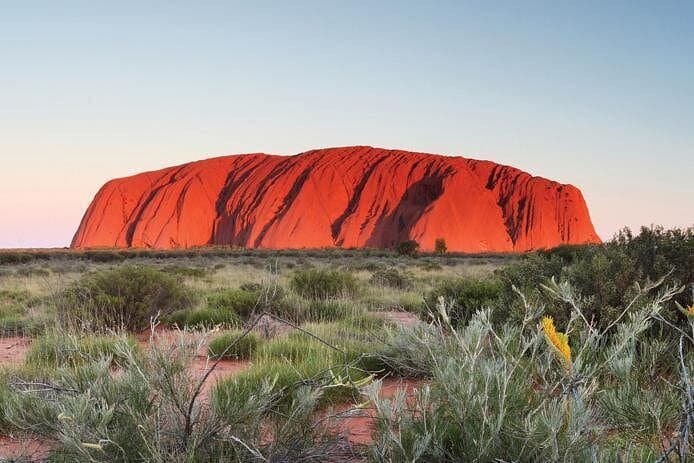
This isn’t just a transfer: it’s a moving primer on Central Australian geology and culture. The driver-guide narrates the landscape — how millennia of wind and water have stripped away softer rock and left sandstone and conglomerate standing as islands in a sea of saltbush. You’ll hear about the Anangu, the traditional owners, and why Uluru is both a physical landmark and a living cultural map marked by songlines, rock art and law. The coach pauses at roadside stations where you'll stretch, glimpse outback life and—weather permitting—see desert wildflowers or a wedge-tailed eagle riding the thermals.
Practically, the route covers roughly 450 km (about 280 miles) and takes around 5–6 hours including stops. The road is sealed and flat for most of the journey; elevation changes are modest, but exposure to sun and wind is constant. Expect brief photo stops: Mount Conner is the most photogenic, and the approach to Uluru frames the monolith in ways that make any lens feel inadequate.
For travelers, the shuttle is straightforward: hotel pick-up in Alice Springs, air-conditioned coach comfort, and a one-way drop at Yulara/Uluru accommodations. The service is ideal if you want to avoid the long drive, but it’s not a private transfer — carry-on access and a single checked bag (up to 20 kg) are standard. Mobile coverage can be patchy, so plan logistics ahead and reconfirm your pick-up window; operators often schedule picks within a 45-minute window around the voucher time.
Bring sun protection, a refillable water bottle, and layers for the temperature swing between dawn and late afternoon. If you want a quieter arrival, ask about midday vs. late-afternoon drop-offs; arriving close to sunset means sharing the approach with the crowds heading to Uluru’s viewing areas. Finally, treat the landscape with respect—Uluru is sacred, and the best souvenir is a memory rather than a stone in your pocket.
Expect about 5–6 hours door-to-door including scheduled stops for photos and comfort breaks.
One checked bag per person (maximum 20 kg) plus one small carry-on; valuables should travel in the carry-on.
Yes—pickups can occur up to 45 minutes after the voucher time; contact the operator to confirm your exact pick-up time.
Yes. The coach makes at least one comfort stop at a roadhouse or station; facilities are basic in remote areas.
Infants may travel on an adult’s lap free of charge but must be listed at booking; strollers are allowed for boarding and storage.
Vehicles are collapsible wheelchair accessible, but passengers needing assistance for boarding or alighting must bring a companion to help.
AAT Kings operates guided outdoor trips and adventures with an emphasis on safety, stewardship, and memorable experiences.
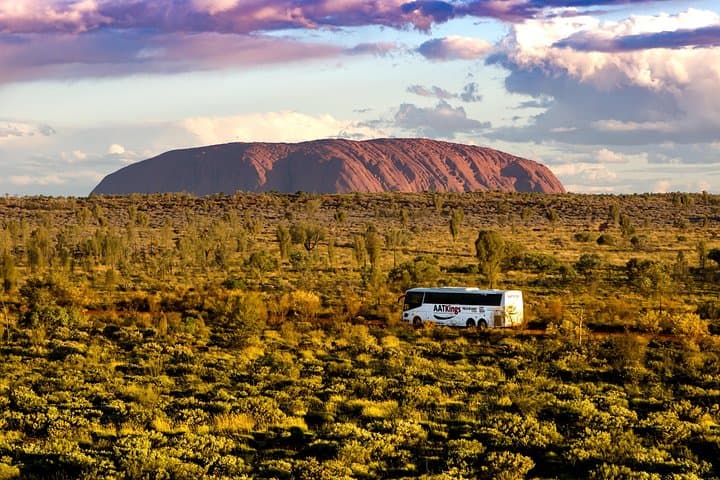
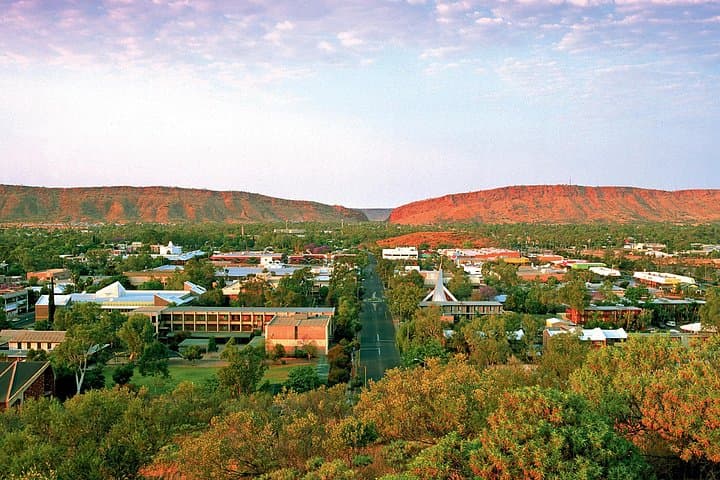

You wake before sunrise in Alice Springs, the town still cool as the coach eases away from motel carparks and caravan parks. The road unfolds like a copper ribbon into the Red Centre; spinifex and ghost gums slide past the window, and the horizon gives you the first hint of a monolith waiting at the end of the road. Conversation inside the vehicle softens as Mount Conner appears — an abrupt flat-topped silhouette that dares you to pull the camera from its case.
You wake before sunrise in Alice Springs, the town still cool as the coach eases away from motel carparks and caravan parks. The road unfolds like a copper ribbon into the Red Centre; spinifex and ghost gums slide past the window, and the horizon gives you the first hint of a monolith waiting at the end of the road. Conversation inside the vehicle softens as Mount Conner appears — an abrupt flat-topped silhouette that dares you to pull the camera from its case.
This isn’t just a transfer: it’s a moving primer on Central Australian geology and culture. The driver-guide narrates the landscape — how millennia of wind and water have stripped away softer rock and left sandstone and conglomerate standing as islands in a sea of saltbush. You’ll hear about the Anangu, the traditional owners, and why Uluru is both a physical landmark and a living cultural map marked by songlines, rock art and law. The coach pauses at roadside stations where you'll stretch, glimpse outback life and—weather permitting—see desert wildflowers or a wedge-tailed eagle riding the thermals.
Practically, the route covers roughly 450 km (about 280 miles) and takes around 5–6 hours including stops. The road is sealed and flat for most of the journey; elevation changes are modest, but exposure to sun and wind is constant. Expect brief photo stops: Mount Conner is the most photogenic, and the approach to Uluru frames the monolith in ways that make any lens feel inadequate.
For travelers, the shuttle is straightforward: hotel pick-up in Alice Springs, air-conditioned coach comfort, and a one-way drop at Yulara/Uluru accommodations. The service is ideal if you want to avoid the long drive, but it’s not a private transfer — carry-on access and a single checked bag (up to 20 kg) are standard. Mobile coverage can be patchy, so plan logistics ahead and reconfirm your pick-up window; operators often schedule picks within a 45-minute window around the voucher time.
Bring sun protection, a refillable water bottle, and layers for the temperature swing between dawn and late afternoon. If you want a quieter arrival, ask about midday vs. late-afternoon drop-offs; arriving close to sunset means sharing the approach with the crowds heading to Uluru’s viewing areas. Finally, treat the landscape with respect—Uluru is sacred, and the best souvenir is a memory rather than a stone in your pocket.