THE ADVENTURE COLLECTIVE® · Independent discovery and booking for outdoor travel

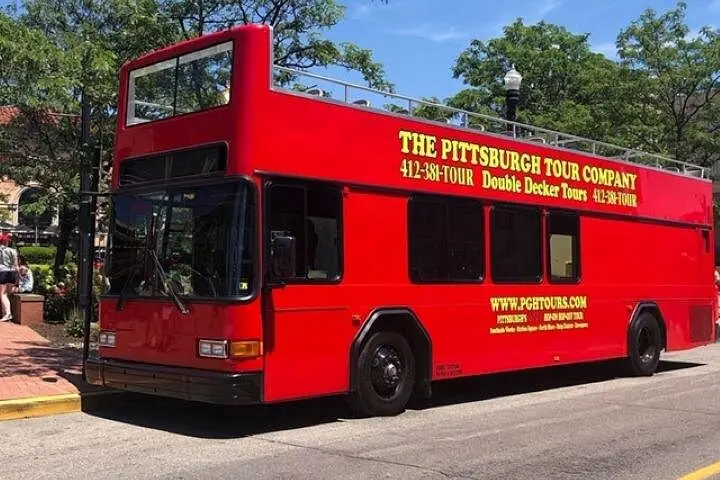
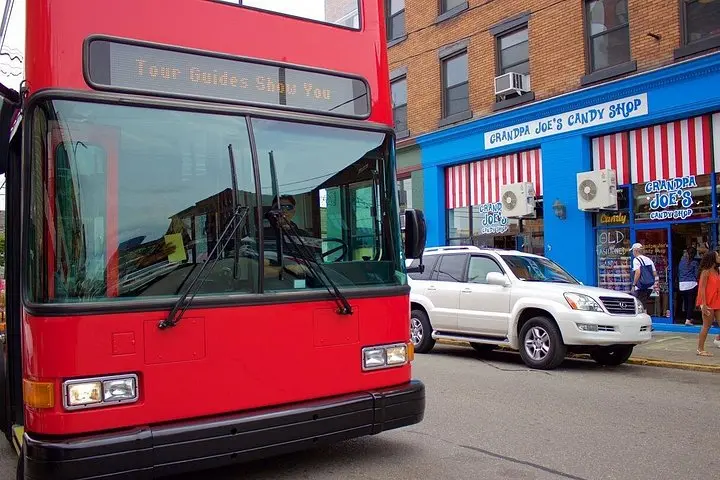
Take the open-top bus around Pittsburgh’s 21-stop loop to stitch together the riverfronts, markets, museums, and stadiums. Live guides bring industrial history and local culture to life while you decide where to hop off and explore.
Take the open-top bus around Pittsburgh’s 21-stop loop to stitch together the riverfronts, markets, museums, and stadiums. Live guides bring industrial history and local culture to life while you decide where to hop off and explore.
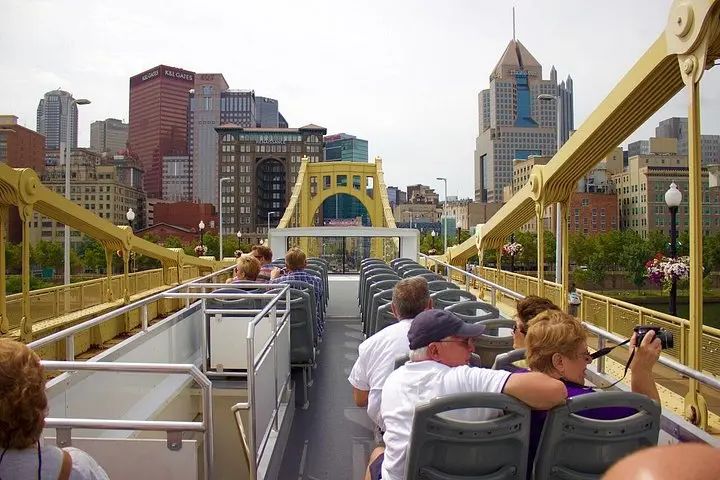
The top deck is where the city opens up. Wind moves across the open-air roof and the three rivers—Allegheny, Monongahela, and the Ohio they form—pull your attention toward bridges and steelwork that have shaped Pittsburgh for more than a century. Live narration from the guide slices between neighborhoods: the strip-market chatter of the Strip District, the brick and neon of the South Side, the institutional arches of Oakland. You can stay on and watch the city reveal itself in sequence, or jump off into a block of history and come back on the next circuit.
Verified experiences and guided adventures in the surrounding area.
Operated by The Pittsburgh Tour Company · Pittsburgh, Pennsylvania
The top deck is where the city opens up. Wind moves across the open-air roof and the three rivers—Allegheny, Monongahela, and the Ohio they form—pull your attention toward bridges and steelwork that have shaped Pittsburgh for more than a century. Live narration from the guide slices between neighborhoods: the strip-market chatter of the Strip District, the brick and neon of the South Side, the institutional arches of Oakland. You can stay on and watch the city reveal itself in sequence, or jump off into a block of history and come back on the next circuit.
Pittsburgh’s story is visible from the road. Once the nation’s steel capital, the city rebuilt itself around universities, museums, and riverside parks. The bus route crosses distinct layers: industrial yards turned waterfront recreation, warehouses repurposed into markets and galleries, and stair-cut neighborhoods that climb to panoramic vantage points. Geology matters here—the steep hills are the reason for steps, bridges, and the downtown grid that folds around river confluences; the city’s angles are a response to the land itself.
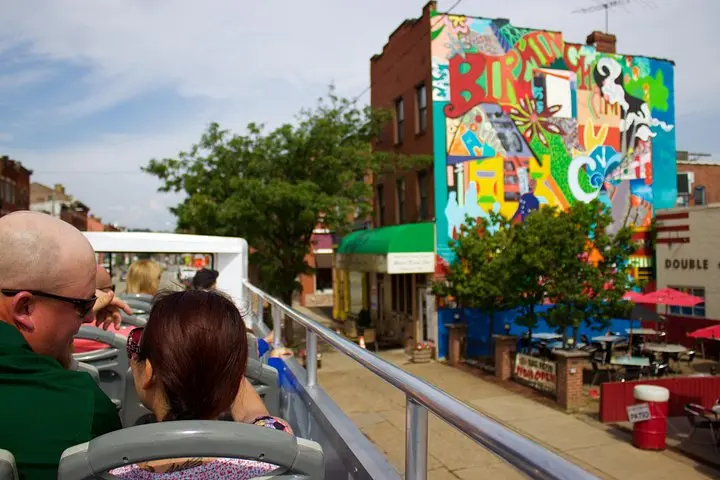
Culturally, this is a city of makers and sports fans. On any loop you’ll pass towering stadiums, civic murals, and the Strip’s stacked food vendors selling pierogies and ethnic fare that reflect waves of migration. Local guides mix architecture, sports lore, and oddball local history—who founded a neighborhood, where the oldest bar still serves, how a railroad yard became a riverside park.
Practical notes are simple: the pass runs a 21-stop loop and you can ride for most of the day—buses operate roughly between morning and early evening depending on season. There’s no restroom on board and schedules vary by season and day; arrive 10–15 minutes early at your chosen stop and always wave to signal the driver. Buses are wheelchair accessible and guides narrate live, which is ideal if you want context as you travel between stops.
Plan your day by deciding whether to use the pass as a shuttle between neighborhoods or as a rolling introduction to the city. For a food-focused day, hop off at the Strip District and pace vendor stops; history buffs should schedule time at the Heinz History Center or the Warhol Museum in the Cultural District. Wear layered clothing—the top deck is exposed—and bring sunscreen, a compact binocular or zoom lens for river and bridge details, and a small daypack for purchases.
For travelers who want a city primer that’s both relaxed and informative, the Hop-On Hop-Off pass is efficient, social, and low-effort. It’s a practical way to stitch together Pittsburgh’s disparate districts into one navigable story, letting the city’s angles and waterways do the rest of the directing.
The pass covers a full day of service—buses typically run from morning through late afternoon; check the operator’s schedule for seasonal variations.
Yes—board at any designated stop along the route; wave at the bus to signal the driver to stop.
Yes—vehicles and boarding options accommodate wheelchairs; notify the operator in advance if you need assistance.
No—there are no restrooms on board; plan stops at museums, hotels, or restaurants for facilities.
Yes—live guides provide historical, architectural, and cultural commentary throughout the route.
You can get a full refund if you cancel at least 24 hours before the scheduled departure time; check the operator’s policy for exceptions.
The Pittsburgh Tour Company operates guided outdoor trips and adventures with an emphasis on safety, stewardship, and memorable experiences.
The top deck is where the city opens up. Wind moves across the open-air roof and the three rivers—Allegheny, Monongahela, and the Ohio they form—pull your attention toward bridges and steelwork that have shaped Pittsburgh for more than a century. Live narration from the guide slices between neighborhoods: the strip-market chatter of the Strip District, the brick and neon of the South Side, the institutional arches of Oakland. You can stay on and watch the city reveal itself in sequence, or jump off into a block of history and come back on the next circuit.
The top deck is where the city opens up. Wind moves across the open-air roof and the three rivers—Allegheny, Monongahela, and the Ohio they form—pull your attention toward bridges and steelwork that have shaped Pittsburgh for more than a century. Live narration from the guide slices between neighborhoods: the strip-market chatter of the Strip District, the brick and neon of the South Side, the institutional arches of Oakland. You can stay on and watch the city reveal itself in sequence, or jump off into a block of history and come back on the next circuit.
Pittsburgh’s story is visible from the road. Once the nation’s steel capital, the city rebuilt itself around universities, museums, and riverside parks. The bus route crosses distinct layers: industrial yards turned waterfront recreation, warehouses repurposed into markets and galleries, and stair-cut neighborhoods that climb to panoramic vantage points. Geology matters here—the steep hills are the reason for steps, bridges, and the downtown grid that folds around river confluences; the city’s angles are a response to the land itself.
Culturally, this is a city of makers and sports fans. On any loop you’ll pass towering stadiums, civic murals, and the Strip’s stacked food vendors selling pierogies and ethnic fare that reflect waves of migration. Local guides mix architecture, sports lore, and oddball local history—who founded a neighborhood, where the oldest bar still serves, how a railroad yard became a riverside park.
Practical notes are simple: the pass runs a 21-stop loop and you can ride for most of the day—buses operate roughly between morning and early evening depending on season. There’s no restroom on board and schedules vary by season and day; arrive 10–15 minutes early at your chosen stop and always wave to signal the driver. Buses are wheelchair accessible and guides narrate live, which is ideal if you want context as you travel between stops.
Plan your day by deciding whether to use the pass as a shuttle between neighborhoods or as a rolling introduction to the city. For a food-focused day, hop off at the Strip District and pace vendor stops; history buffs should schedule time at the Heinz History Center or the Warhol Museum in the Cultural District. Wear layered clothing—the top deck is exposed—and bring sunscreen, a compact binocular or zoom lens for river and bridge details, and a small daypack for purchases.
For travelers who want a city primer that’s both relaxed and informative, the Hop-On Hop-Off pass is efficient, social, and low-effort. It’s a practical way to stitch together Pittsburgh’s disparate districts into one navigable story, letting the city’s angles and waterways do the rest of the directing.