THE ADVENTURE COLLECTIVE® · Independent discovery and booking for outdoor travel

Visit Haozous Place to walk among over 70 monumental works by Chiricahua Apache sculptor Allan Houser. This guided 1–2 hour tour pairs outdoor sculpture with an ethnographic exhibit and an intimate gallery of works on paper and cast editions.
Visit Haozous Place to walk among over 70 monumental works by Chiricahua Apache sculptor Allan Houser. This guided 1–2 hour tour pairs outdoor sculpture with an ethnographic exhibit and an intimate gallery of works on paper and cast editions.
The sun in Santa Fe sits wide and sharp, painting bronzes a deep burnished amber as you step into an open field of forms. On the Allan Houser Sculpture Garden and Studio Tour, oversized stone and cast-bronze figures stand against high desert sky—faces turned toward wind and mountain—and invite a slow circuit of discovery.
Verified experiences and guided adventures in the surrounding area.
Operated by Allan Houser Sculpture Gardens and Gallery · Santa Fe, New Mexico
The sun in Santa Fe sits wide and sharp, painting bronzes a deep burnished amber as you step into an open field of forms. On the Allan Houser Sculpture Garden and Studio Tour, oversized stone and cast-bronze figures stand against high desert sky—faces turned toward wind and mountain—and invite a slow circuit of discovery.
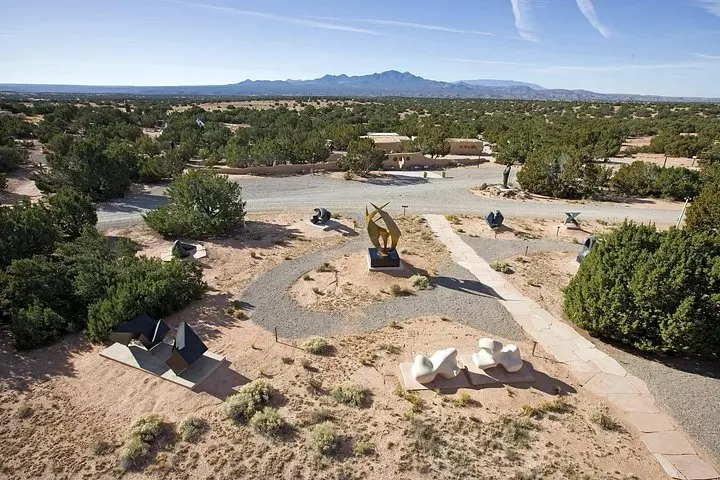
Allan Houser (Chiricahua Apache, 1914–1994) pushed Native American sculpture into public, monumental scale. The foundation at Haozous Place collects more than seventy of his major works and includes an Apache ethnographic exhibit that links contemporary sculpture to quilled beadwork, buckskin craft, and ceremonial objects passed through generations. Geologically the site sits on a highpoint above the Turquoise Trail; volcanic soils and scrub piñon-juniper slopes frame long views of the Sangre de Cristo range, so the art often reads as part of the land rather than displayed upon it.
The tour blends gallery time with outdoor walking—expect uneven paths and open, sun-exposed sections—plus a quieter gallery where charcoal, watercolor, and cast editions are available. Guides explain technique, foundry processes, and the political themes threaded through works by Houser and Bob Haozous.
Practical bits: plan 60–120 minutes, bring sun protection and a water bottle, and allow time for the small gallery and ethnographic room. The site is wheelchair accessible and offers a club cart for mobility needs, but outdoor surfaces can be dusty. Mornings or late afternoons provide softer light for photography and quieter conditions for reflection.
Tours run about 60–120 minutes, depending on group size and how much time you spend in the gallery and ethnographic exhibit.
Yes—the site and transportation options are wheelchair accessible and a club cart is available for guests with mobility impairments.
Yes—Allan Houser Gallery at Haozous Place offers cast-edition bronzes, charcoal drawings, watercolors, and select pieces for sale.
Service animals are permitted; pets are not listed as allowed due to the museum setting and outdoor exhibits.
Allan Houser Sculpture Gardens and Gallery operates guided outdoor trips and adventures with an emphasis on safety, stewardship, and memorable experiences.
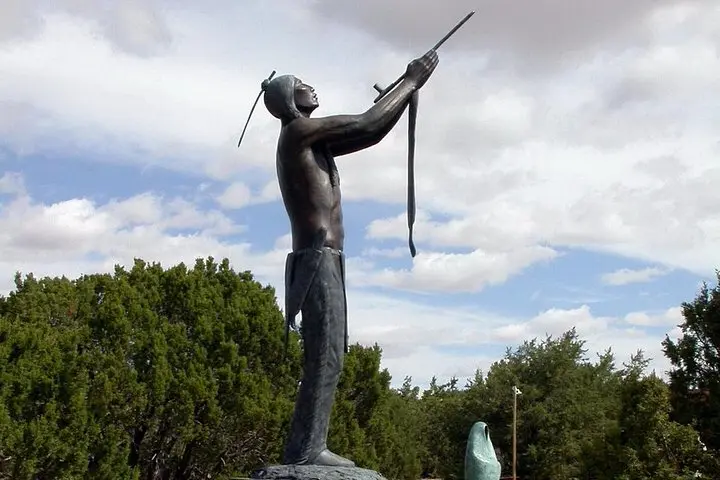
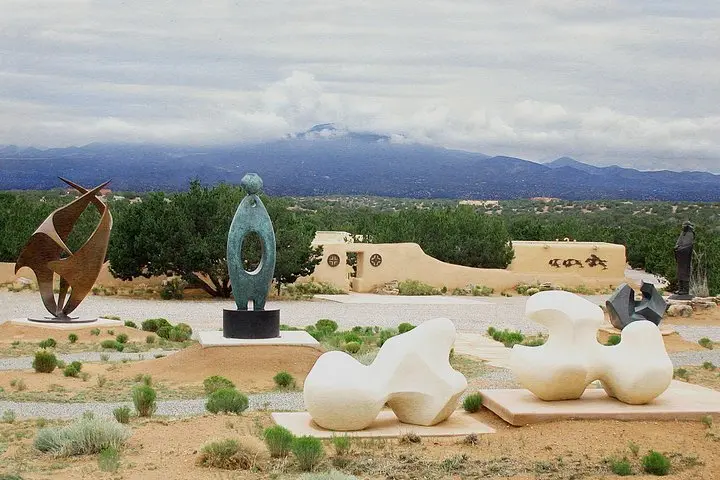
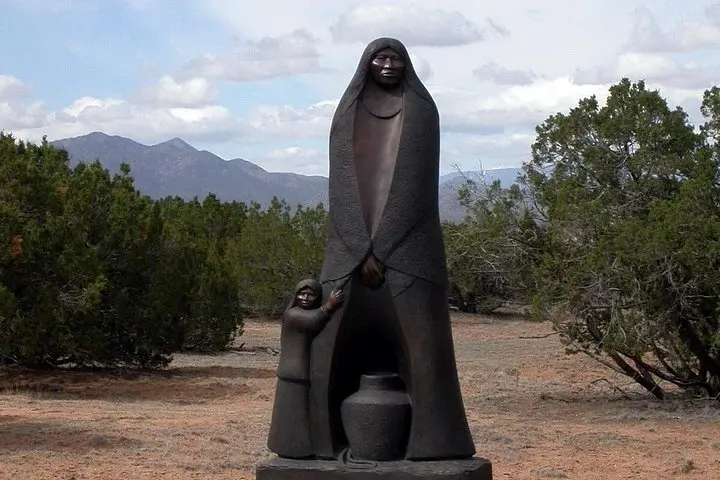
The sun in Santa Fe sits wide and sharp, painting bronzes a deep burnished amber as you step into an open field of forms. On the Allan Houser Sculpture Garden and Studio Tour, oversized stone and cast-bronze figures stand against high desert sky—faces turned toward wind and mountain—and invite a slow circuit of discovery.
The sun in Santa Fe sits wide and sharp, painting bronzes a deep burnished amber as you step into an open field of forms. On the Allan Houser Sculpture Garden and Studio Tour, oversized stone and cast-bronze figures stand against high desert sky—faces turned toward wind and mountain—and invite a slow circuit of discovery.
Allan Houser (Chiricahua Apache, 1914–1994) pushed Native American sculpture into public, monumental scale. The foundation at Haozous Place collects more than seventy of his major works and includes an Apache ethnographic exhibit that links contemporary sculpture to quilled beadwork, buckskin craft, and ceremonial objects passed through generations. Geologically the site sits on a highpoint above the Turquoise Trail; volcanic soils and scrub piñon-juniper slopes frame long views of the Sangre de Cristo range, so the art often reads as part of the land rather than displayed upon it.
The tour blends gallery time with outdoor walking—expect uneven paths and open, sun-exposed sections—plus a quieter gallery where charcoal, watercolor, and cast editions are available. Guides explain technique, foundry processes, and the political themes threaded through works by Houser and Bob Haozous.
Practical bits: plan 60–120 minutes, bring sun protection and a water bottle, and allow time for the small gallery and ethnographic room. The site is wheelchair accessible and offers a club cart for mobility needs, but outdoor surfaces can be dusty. Mornings or late afternoons provide softer light for photography and quieter conditions for reflection.