THE ADVENTURE COLLECTIVE® · Independent discovery and booking for outdoor travel

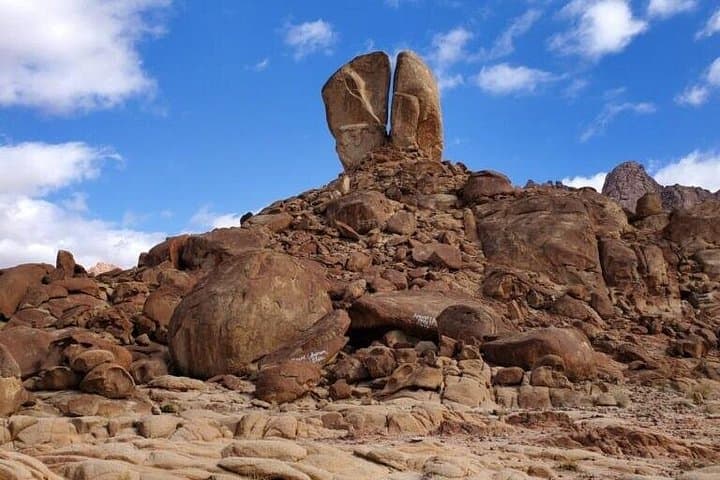
Explore the Tabuk Region’s volcanic ridges, Split Rock of Horeb, and petroglyph-covered hills on a guided three-day tour that follows sites tied to the Exodus traditions. Expect short walks, dramatic geology, and Bedouin stories brought to life by local guides.
Explore the Tabuk Region’s volcanic ridges, Split Rock of Horeb, and petroglyph-covered hills on a guided three-day tour that follows sites tied to the Exodus traditions. Expect short walks, dramatic geology, and Bedouin stories brought to life by local guides.
Dawn on the Red Sea leans cool and blue as the vehicle eases away from Haql toward a landscape of black volcanic ridges and wind-sculpted sandstone. Salt-scented air gives way to dry desert perfume; the road narrows and the mountains—ancient, folded, and raw—seem to watch as you step down to touch stones that local Bedouins and researchers identify with the stories of Moses.
Verified experiences and guided adventures in the surrounding area.
Operated by Sherif Hikes · Tabuk, Tabuk Province
Dawn on the Red Sea leans cool and blue as the vehicle eases away from Haql toward a landscape of black volcanic ridges and wind-sculpted sandstone. Salt-scented air gives way to dry desert perfume; the road narrows and the mountains—ancient, folded, and raw—seem to watch as you step down to touch stones that local Bedouins and researchers identify with the stories of Moses.
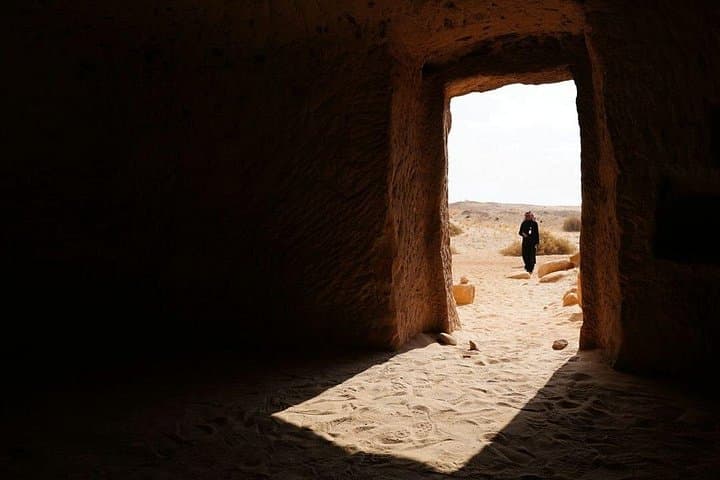
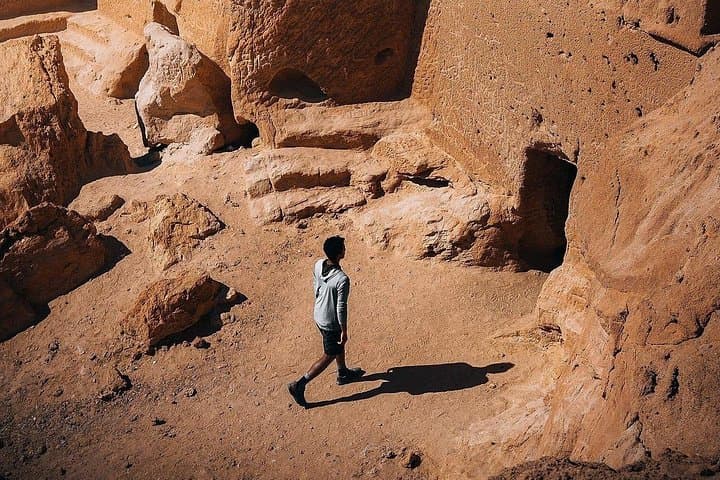
This guided three-day itinerary threads the Tabuk Region’s layered past: petroglyph-covered hills, rock-cut façades likened to Petra, the Split Rock of Horeb, and the broad plain where traditions place the Red Sea crossing. Geologically the area is young volcanic terrain overlain by sandstone and conglomerates, which produce the dramatic splits and alcoves that visitors explore. Culturally, the route is defined by Bedouin oral history and Muslim and Judeo-Christian antiquity claims, making it a crossroads of faith, archaeology, and living desert life.
Practically, expect mostly short walks, some uneven rocky scrambling to reach viewpoints and petroglyph sites, and one optional half-day ascent onto Al Lawz foothills that is steep and loose underfoot. Guides provide transport, lunches, and local context; overnight stops are in Haql or Tabuk depending on the schedule. Bring sun protection, layered clothing for cool nights, sturdy boots, and at least 2–3 liters of water per day. Respect private grazing areas and archaeological features by staying on worn tracks and following your guide’s directions. With modest fitness and curiosity, this trip offers tangible contact with landscape and lore—history you can stand on and stones you can read.
Most visits are arranged by the guided tour operator who secures access; independent travel into some archaeological areas may be restricted—confirm with your guide.
Short site visits are easy-to-moderate; the ascent to Elijah’s Cave or peak routes involve steep, loose sections and are recommended only for experienced, fit hikers.
Nights are usually spent in Haql or Tabuk in simple hotels; camping at the mountain base is an optional extension arranged in advance.
Guided vehicles carry drinking water and stops include basic facilities in towns; remote sites lack services so prepare accordingly.
Sherif Hikes operates guided outdoor trips and adventures with an emphasis on safety, stewardship, and memorable experiences.

Dawn on the Red Sea leans cool and blue as the vehicle eases away from Haql toward a landscape of black volcanic ridges and wind-sculpted sandstone. Salt-scented air gives way to dry desert perfume; the road narrows and the mountains—ancient, folded, and raw—seem to watch as you step down to touch stones that local Bedouins and researchers identify with the stories of Moses.
Dawn on the Red Sea leans cool and blue as the vehicle eases away from Haql toward a landscape of black volcanic ridges and wind-sculpted sandstone. Salt-scented air gives way to dry desert perfume; the road narrows and the mountains—ancient, folded, and raw—seem to watch as you step down to touch stones that local Bedouins and researchers identify with the stories of Moses.
This guided three-day itinerary threads the Tabuk Region’s layered past: petroglyph-covered hills, rock-cut façades likened to Petra, the Split Rock of Horeb, and the broad plain where traditions place the Red Sea crossing. Geologically the area is young volcanic terrain overlain by sandstone and conglomerates, which produce the dramatic splits and alcoves that visitors explore. Culturally, the route is defined by Bedouin oral history and Muslim and Judeo-Christian antiquity claims, making it a crossroads of faith, archaeology, and living desert life.
Practically, expect mostly short walks, some uneven rocky scrambling to reach viewpoints and petroglyph sites, and one optional half-day ascent onto Al Lawz foothills that is steep and loose underfoot. Guides provide transport, lunches, and local context; overnight stops are in Haql or Tabuk depending on the schedule. Bring sun protection, layered clothing for cool nights, sturdy boots, and at least 2–3 liters of water per day. Respect private grazing areas and archaeological features by staying on worn tracks and following your guide’s directions. With modest fitness and curiosity, this trip offers tangible contact with landscape and lore—history you can stand on and stones you can read.