THE ADVENTURE COLLECTIVE® · Independent discovery and booking for outdoor travel

Experience Mongolia’s high Altai on an 11-day trip that pairs multi-day trekking near the Potanin Glacier with the vibrant Golden Eagle Festival. Expect raw mountain scenery, Kazakh horsemanship and basic, authentic camp life.
Experience Mongolia’s high Altai on an 11-day trip that pairs multi-day trekking near the Potanin Glacier with the vibrant Golden Eagle Festival. Expect raw mountain scenery, Kazakh horsemanship and basic, authentic camp life.
A cold wind pushes across the broad Mongolian steppe as your vehicle eases over a high pass and the five holy peaks of Tavan Bogd loom like a jagged wall ahead. Camp smoke curls from a cluster of gers; somewhere nearby an eagle drops from its handler’s gloved arm and the bird’s shadow slips over the Potanin Glacier.
Verified experiences and guided adventures in the surrounding area.
Operated by Tuul Travel Mongolia · Ölgii (Ulgii), Bayan-Ölgii Province
A cold wind pushes across the broad Mongolian steppe as your vehicle eases over a high pass and the five holy peaks of Tavan Bogd loom like a jagged wall ahead. Camp smoke curls from a cluster of gers; somewhere nearby an eagle drops from its handler’s gloved arm and the bird’s shadow slips over the Potanin Glacier.
This 10–11 day journey combines high-altitude trekking in the Mongolian Altai with the living culture of Kazakh eagle hunters and a finale in the rolling woodlands of Gorkhi-Terelj. Geologically, Tavan Bogd is dominated by granitic massifs and long, cold glaciers carved during the Pleistocene; Khuiten (Kuiten) is Mongolia’s highest point and feeds glacial streams that cut broad alpine valleys. Culturally, Bayan-Ölgii’s Kazakh community preserves equestrian skills and eagle training passed down generations—festival competitions test speed, accuracy and the bond between bird and hunter.
Expect multi-day camping at 2,800–3,200 m with alpine tundra, muddy glacier runoffs and sustained uphill sections (day treks ~15–18 km, 4–6 hrs, up to 630 m ascent). Nights in gers are basic; facilities in remote areas are minimal. Photography is exceptional at dawn when eagles perch against snowfields; afternoons are best for hiking when winds calm.
Practical tips: acclimatize in Ölgii, pack layered insulation, bring gaiters for muddy crossings, and carry a reliable water filter. Travel windows are late spring to early autumn—festival dates vary—so confirm local schedules and permit requirements. Respect private camps and wildlife, and be prepared for rapid weather shifts that demand flexible plans and sturdy footwear.
No technical climbing is required for the standard itinerary, but participants should have prior multi-day trekking experience and be comfortable with high-altitude walking.
Festival timing varies by year, usually in late September to October or in autumn months—confirm exact dates before booking as they follow local calendars.
Expect a mix of 2–3 star hotels in Ulaanbaatar and Ölgii, ger camps near local families, and basic tents for high mountain nights with limited washing facilities.
Yes—horses or camels and local pack animals are arranged for carrying bulk luggage during the Tavan Bogd section, while you carry a daypack.
Tuul Travel Mongolia operates guided outdoor trips and adventures with an emphasis on safety, stewardship, and memorable experiences.
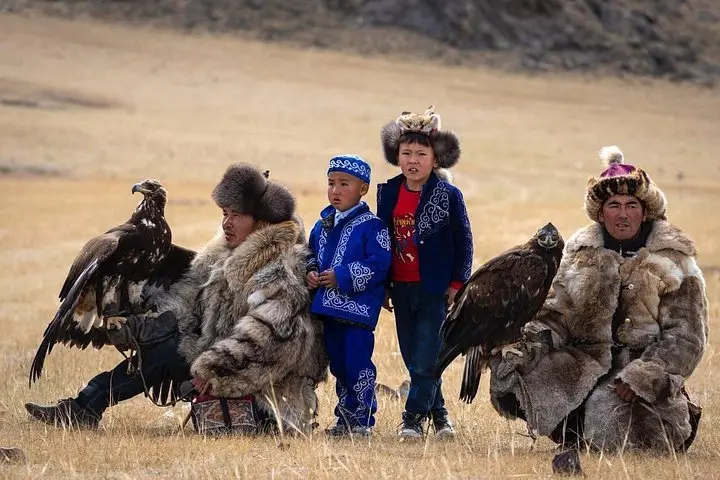
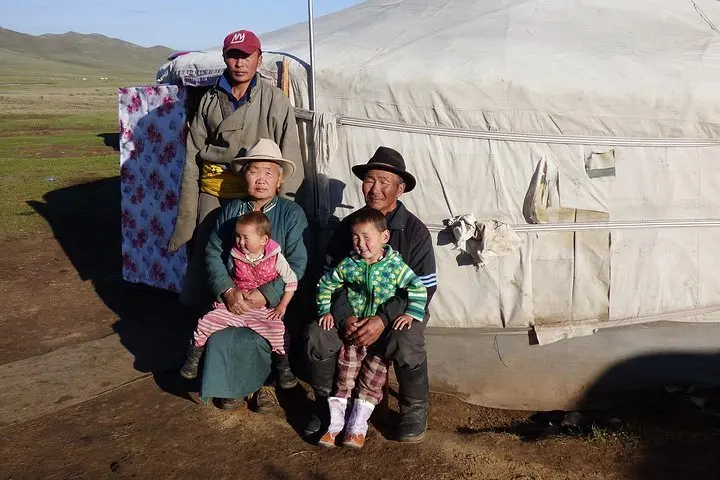
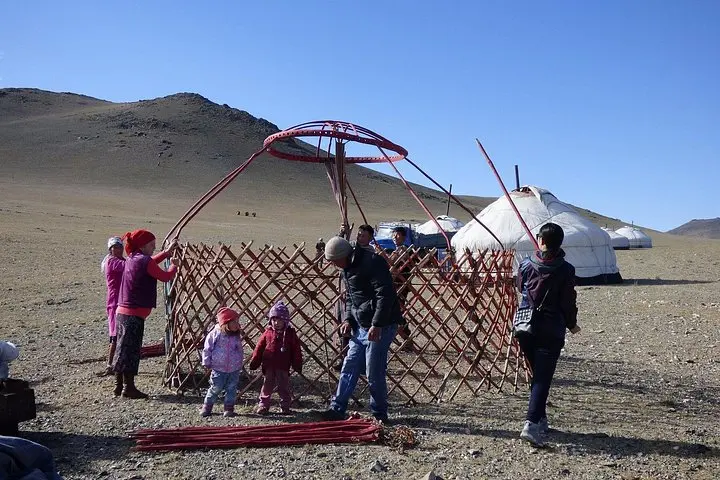
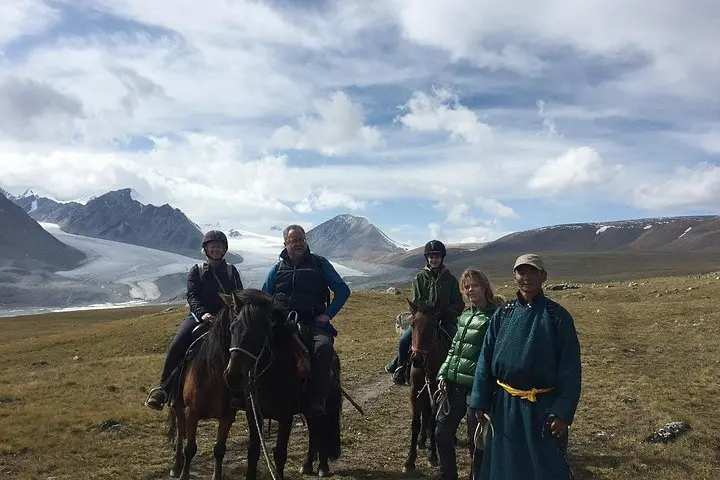
A cold wind pushes across the broad Mongolian steppe as your vehicle eases over a high pass and the five holy peaks of Tavan Bogd loom like a jagged wall ahead. Camp smoke curls from a cluster of gers; somewhere nearby an eagle drops from its handler’s gloved arm and the bird’s shadow slips over the Potanin Glacier.
A cold wind pushes across the broad Mongolian steppe as your vehicle eases over a high pass and the five holy peaks of Tavan Bogd loom like a jagged wall ahead. Camp smoke curls from a cluster of gers; somewhere nearby an eagle drops from its handler’s gloved arm and the bird’s shadow slips over the Potanin Glacier.
This 10–11 day journey combines high-altitude trekking in the Mongolian Altai with the living culture of Kazakh eagle hunters and a finale in the rolling woodlands of Gorkhi-Terelj. Geologically, Tavan Bogd is dominated by granitic massifs and long, cold glaciers carved during the Pleistocene; Khuiten (Kuiten) is Mongolia’s highest point and feeds glacial streams that cut broad alpine valleys. Culturally, Bayan-Ölgii’s Kazakh community preserves equestrian skills and eagle training passed down generations—festival competitions test speed, accuracy and the bond between bird and hunter.
Expect multi-day camping at 2,800–3,200 m with alpine tundra, muddy glacier runoffs and sustained uphill sections (day treks ~15–18 km, 4–6 hrs, up to 630 m ascent). Nights in gers are basic; facilities in remote areas are minimal. Photography is exceptional at dawn when eagles perch against snowfields; afternoons are best for hiking when winds calm.
Practical tips: acclimatize in Ölgii, pack layered insulation, bring gaiters for muddy crossings, and carry a reliable water filter. Travel windows are late spring to early autumn—festival dates vary—so confirm local schedules and permit requirements. Respect private camps and wildlife, and be prepared for rapid weather shifts that demand flexible plans and sturdy footwear.