THE ADVENTURE COLLECTIVE® · Independent discovery and booking for outdoor travel

A two-day expedition from Almaty into Altyn Emel National Park, pairing the acoustic phenomenon of the Singing Dune with the fractured cliffs of Aktau and Katutau. Long drives, tented nights and dramatic geology make this a compact, rugged introduction to Kazakhstan’s badlands.
A two-day expedition from Almaty into Altyn Emel National Park, pairing the acoustic phenomenon of the Singing Dune with the fractured cliffs of Aktau and Katutau. Long drives, tented nights and dramatic geology make this a compact, rugged introduction to Kazakhstan’s badlands.
You step out of the vehicle onto a hot sweep of sand and the dune seems to breathe—grain shifting underfoot, a low hum that rises when wind hits the ridge. Afternoon light slices the sand into hard shadow and pale gold as the Greater and Lesser Kalkans watch from a distance.
Verified experiences and guided adventures in the surrounding area.
Operated by FrozenRocks Backcountry Adventures · Bas'shi, Almaty Region
You step out of the vehicle onto a hot sweep of sand and the dune seems to breathe—grain shifting underfoot, a low hum that rises when wind hits the ridge. Afternoon light slices the sand into hard shadow and pale gold as the Greater and Lesser Kalkans watch from a distance.
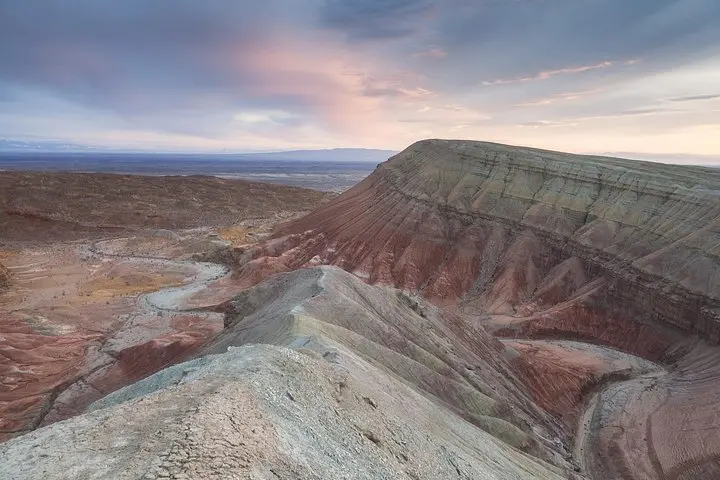
This two-day route follows the Ili River valley into Altyn Emel National Park, a landscape shaped by wind and ancient seas. The Singing Dune is a geomorphic oddity: a 150 m high ridge of mobile sand that, in certain winds, emits a deep, sustained sound. Nearby Aktau and Katutau are badland and volcanic formations—layers of clay, ash and tuff sculpted into cliffs, spires and bands of ochre by erosion over millennia.
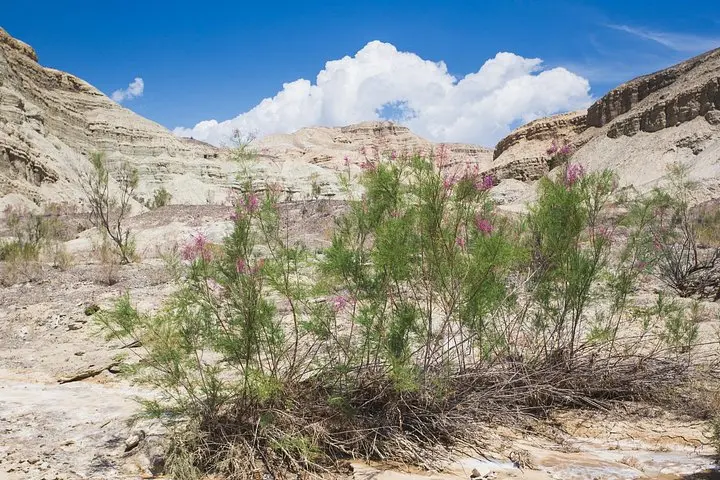
Culturally the area sits on caravan and Kazakh pastoral routes; local villages like Bas’shi serve as gateways and occasional homestay points. Wildlife is sparse but striking—desert-adapted species appear at dawn and dusk.
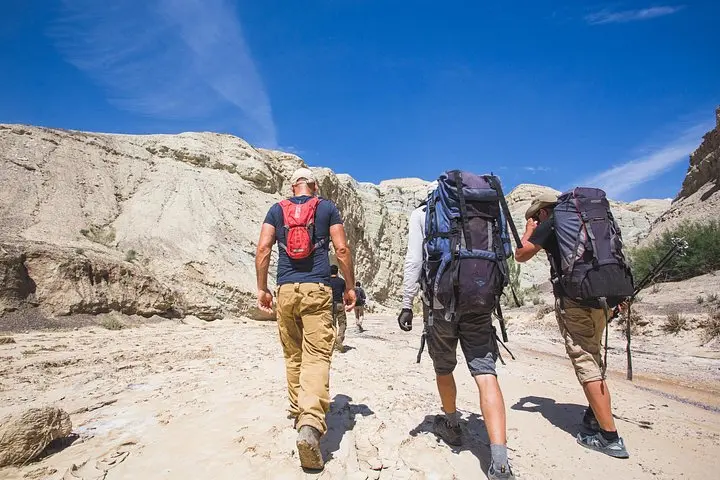
Practically, expect long drives from Almaty (roughly 6–7 hours to the park gate), basic tented accommodation at the foot of Aktau, and moderate hikes across uneven, crumbly terrain. Bring layers, sun protection and 2–3 liters of water per day; sand shifts underfoot so gaiters and sturdy boots matter. Sunrise and sunset are the visual and photographic highlights; wake early to work on trails before heat and winds rise. Guides handle permits and logistics—travelers should carry ID, emergency contact info and a compact first-aid kit.
This itinerary balances desert spectacle with geological variety: a short wilderness expedition that feels remote without being technical.
Expect about 5–7 hours driving to the northern Altyn Emel gate near Bas’shi, depending on road conditions and stops.
Yes—trails are non-technical but involve loose sand and uneven rock; moderate fitness and good footwear are recommended.
The dune produces sound under certain wind and sand conditions; it’s not guaranteed but late afternoon winds often increase the chance.
Accommodation is basic tent camping at the foot of Aktau hills with communal meals—expect rustic but safe conditions arranged by guides.
FrozenRocks Backcountry Adventures operates guided outdoor trips and adventures with an emphasis on safety, stewardship, and memorable experiences.
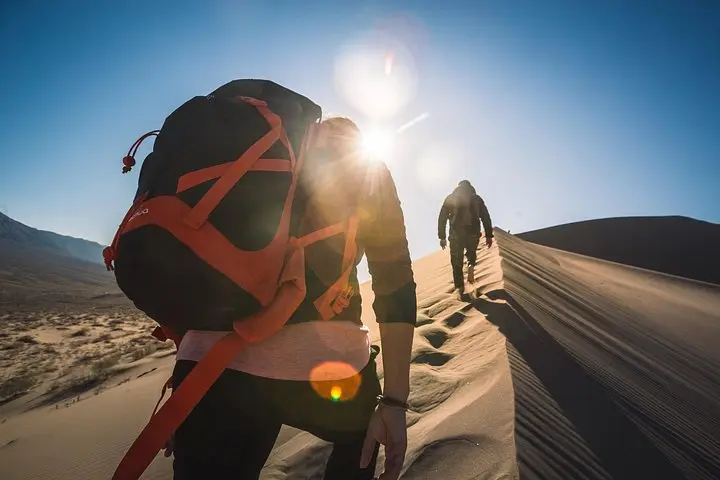
You step out of the vehicle onto a hot sweep of sand and the dune seems to breathe—grain shifting underfoot, a low hum that rises when wind hits the ridge. Afternoon light slices the sand into hard shadow and pale gold as the Greater and Lesser Kalkans watch from a distance.
You step out of the vehicle onto a hot sweep of sand and the dune seems to breathe—grain shifting underfoot, a low hum that rises when wind hits the ridge. Afternoon light slices the sand into hard shadow and pale gold as the Greater and Lesser Kalkans watch from a distance.
This two-day route follows the Ili River valley into Altyn Emel National Park, a landscape shaped by wind and ancient seas. The Singing Dune is a geomorphic oddity: a 150 m high ridge of mobile sand that, in certain winds, emits a deep, sustained sound. Nearby Aktau and Katutau are badland and volcanic formations—layers of clay, ash and tuff sculpted into cliffs, spires and bands of ochre by erosion over millennia.
Culturally the area sits on caravan and Kazakh pastoral routes; local villages like Bas’shi serve as gateways and occasional homestay points. Wildlife is sparse but striking—desert-adapted species appear at dawn and dusk.
Practically, expect long drives from Almaty (roughly 6–7 hours to the park gate), basic tented accommodation at the foot of Aktau, and moderate hikes across uneven, crumbly terrain. Bring layers, sun protection and 2–3 liters of water per day; sand shifts underfoot so gaiters and sturdy boots matter. Sunrise and sunset are the visual and photographic highlights; wake early to work on trails before heat and winds rise. Guides handle permits and logistics—travelers should carry ID, emergency contact info and a compact first-aid kit.
This itinerary balances desert spectacle with geological variety: a short wilderness expedition that feels remote without being technical.