THE ADVENTURE COLLECTIVE® · Independent discovery and booking for outdoor travel

A full-day journey from Almaty into Altyn Emel National Park leads to the famous Singing Dune — a towering sand ridge that emits a low hum when the grains shift. Expect a steep sand climb, steppe scenery and possible sightings of kulan and Przewalski’s horses.
A full-day journey from Almaty into Altyn Emel National Park leads to the famous Singing Dune — a towering sand ridge that emits a low hum when the grains shift. Expect a steep sand climb, steppe scenery and possible sightings of kulan and Przewalski’s horses.
Morning light slices across the dry steppe as a minivan pulls out of Almaty for the long, flat road toward Basshi village. By midmorning the foothills of the western Tian Shan appear on the horizon and the steppe widens into a landscape of grasses, salt pans and rising banks of ochre sand. The Singing Dune waits ahead — a vast, wind-sculpted ridge that, when the grains slip, emits a low, resonant hum that seems to push the air itself.
Verified experiences and guided adventures in the surrounding area.
Operated by Kazia Tour · Basshi (Bashy), Almaty Region
Morning light slices across the dry steppe as a minivan pulls out of Almaty for the long, flat road toward Basshi village. By midmorning the foothills of the western Tian Shan appear on the horizon and the steppe widens into a landscape of grasses, salt pans and rising banks of ochre sand. The Singing Dune waits ahead — a vast, wind-sculpted ridge that, when the grains slip, emits a low, resonant hum that seems to push the air itself.
Altyn Emel National Park protects wide steppe, relict sand seas and important migratory habitats. Geologically the dune is a barking barkhan of compacted quartz sand; friction between dry grains creates the acoustic phenomenon visitors come to test. Culturally, the area sits along historical trade and nomadic routes and is still home to pastoral communities in Basshi and surrounding villages. You may also glimpse rare steppe species — kulan and Przewalski’s horse are conserved here.
Practically, expect a full day: roughly 250 km each way from Almaty with a short, bumpy spur to the dune. The hike to the crest is steep sand, about 20–45 minutes for a fit walker; bring sturdy footwear, at least 2–3 liters of water, sun protection and a wind layer. Guides provide local history and ensure wildlife sightings are respectful and safe. Avoid hiking the dune in mid-afternoon heat; early morning or late afternoon offers cooler sand, clearer light and the best chance to hear the dune ‘sing.’ The route is exposed—leave no trace and plan for an 9-hour round trip.
The itinerary covers about 250 km each way to Basshi village and includes short tracked sections; expect roughly 4–5 hours driving total round-trip within the 9-hour day.
The sound depends on dry, well-sorted sand and movement; many visitors hear audible booming or humming when sand slips, especially during dry, windy conditions.
The tour requires moderate fitness and includes a steep sand climb; it's not recommended for travelers with spinal issues or pregnant guests. Check with the operator about young children.
Guided drives often report sightings of kulan (wild ass) and Przewalski’s horse in protected zones; sightings are never guaranteed but are possible with patience.
Kazia Tour operates guided outdoor trips and adventures with an emphasis on safety, stewardship, and memorable experiences.
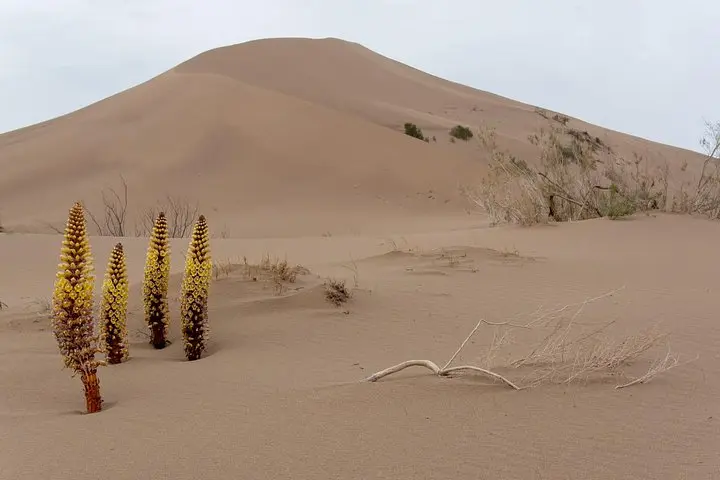
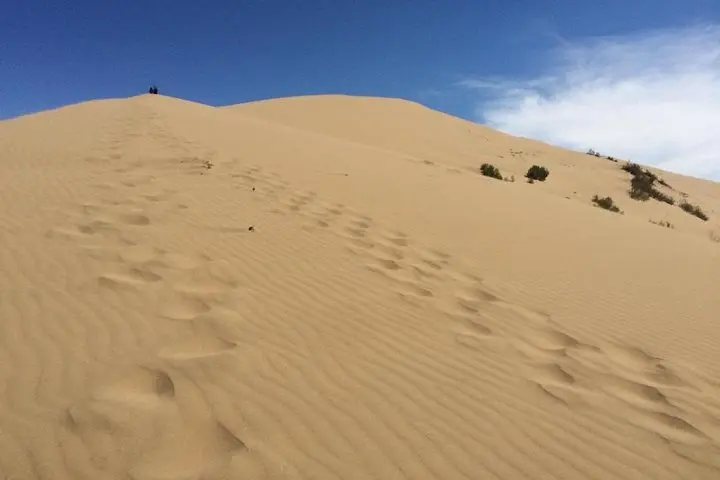
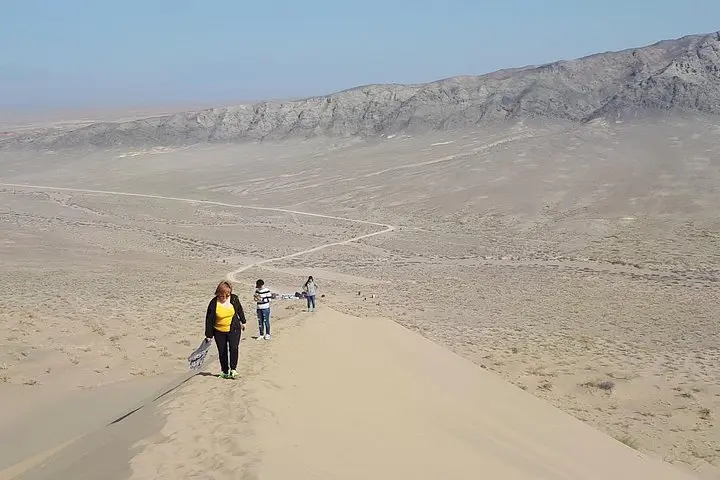
Morning light slices across the dry steppe as a minivan pulls out of Almaty for the long, flat road toward Basshi village. By midmorning the foothills of the western Tian Shan appear on the horizon and the steppe widens into a landscape of grasses, salt pans and rising banks of ochre sand. The Singing Dune waits ahead — a vast, wind-sculpted ridge that, when the grains slip, emits a low, resonant hum that seems to push the air itself.
Morning light slices across the dry steppe as a minivan pulls out of Almaty for the long, flat road toward Basshi village. By midmorning the foothills of the western Tian Shan appear on the horizon and the steppe widens into a landscape of grasses, salt pans and rising banks of ochre sand. The Singing Dune waits ahead — a vast, wind-sculpted ridge that, when the grains slip, emits a low, resonant hum that seems to push the air itself.
Altyn Emel National Park protects wide steppe, relict sand seas and important migratory habitats. Geologically the dune is a barking barkhan of compacted quartz sand; friction between dry grains creates the acoustic phenomenon visitors come to test. Culturally, the area sits along historical trade and nomadic routes and is still home to pastoral communities in Basshi and surrounding villages. You may also glimpse rare steppe species — kulan and Przewalski’s horse are conserved here.
Practically, expect a full day: roughly 250 km each way from Almaty with a short, bumpy spur to the dune. The hike to the crest is steep sand, about 20–45 minutes for a fit walker; bring sturdy footwear, at least 2–3 liters of water, sun protection and a wind layer. Guides provide local history and ensure wildlife sightings are respectful and safe. Avoid hiking the dune in mid-afternoon heat; early morning or late afternoon offers cooler sand, clearer light and the best chance to hear the dune ‘sing.’ The route is exposed—leave no trace and plan for an 9-hour round trip.