THE ADVENTURE COLLECTIVE® · Independent discovery and booking for outdoor travel

A full-day coastal circuit leaving Positano to visit Praiano, Amalfi, Ravello and Atrani — an 8-hour mix of cliffside views, medieval streets and iconic gardens. Practical stops, local culture and short walks make this an accessible way to see the Amalfi Coast.
A full-day coastal circuit leaving Positano to visit Praiano, Amalfi, Ravello and Atrani — an 8-hour mix of cliffside views, medieval streets and iconic gardens. Practical stops, local culture and short walks make this an accessible way to see the Amalfi Coast.
The road out of Positano clings to the cliff like a string of beads — each hairpin opens a new view where the Tyrrhenian Sea dares you to look deeper. You’ll leave the vertical houses of Positano behind and roll along coastal terraces, pausing in Praiano for a quieter panorama, slipping into Amalfi’s busy square, and ending with Ravello’s gardens where stone balustrades frame the horizon.
Verified experiences and guided adventures in the surrounding area.
Operated by city & tour soc coop arl · Positano, Campania
The road out of Positano clings to the cliff like a string of beads — each hairpin opens a new view where the Tyrrhenian Sea dares you to look deeper. You’ll leave the vertical houses of Positano behind and roll along coastal terraces, pausing in Praiano for a quieter panorama, slipping into Amalfi’s busy square, and ending with Ravello’s gardens where stone balustrades frame the horizon.
This route traces centuries of maritime power and coastal geology. Amalfi was once a Maritime Republic; its cathedral and arsenale reflect a trading past that made paper from local rags and waterpower. The cliffs are fractured limestone, sculpted by Mediterranean weather into sheer faces, sea caves and the tiny inlets that define the coastline’s character.
Culturally the drive stitches together small-town rhythms — fishermen mending nets, cafés serving sfogliatella, artisan shops selling hand-cut paper and limoncello. Atrani’s alleys feel distinctly local; Ravello’s Villa Rufolo and Villa Cimbrone speak to centuries of patronage and music festivals.
Practical guidance: the full loop runs about 8 hours including stops; expect short, uneven walks on cobbled streets and terraces. Bring comfortable, grippy shoes for stairways, sunscreen and a light waterproof layer — coastal weather changes fast. If you’re prone to motion sensitivity, sit forward on the vehicle and time rests around views rather than stretches of road. Aim for early starts to avoid the busiest hours in Amalfi and Positano; mid-afternoon light is best for Ravello’s terraces. Respect local business hours when shopping and carry small bills for artisan shops and cafés. With a clear itinerary and sensible gear, this drive is a compact immersion in coastal geology, maritime history and the sensory pleasures of southern Italy.
The tour is approximately 8 hours and includes pick-up/drop-off at designated meeting points, deluxe air-conditioned transport, and an English-speaking driver/guide; individual attraction admissions are generally not included.
Yes — expect short walks of 10–30 minutes at viewpoints, plazas and garden terraces; cobblestones and stairs are common but distances are short.
Infant seats are available and the tour lists stroller and wheelchair accessibility for transport, though some historic sites and alleys have steps limiting full access on foot.
Late spring to early fall offers the best weather; shoulder seasons (May–June, September) balance milder crowds with pleasant temperatures.
city & tour soc coop arl operates guided outdoor trips and adventures with an emphasis on safety, stewardship, and memorable experiences.



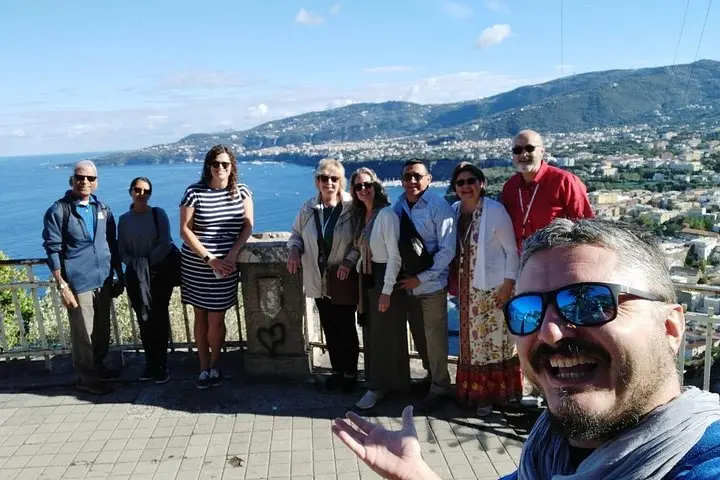
The road out of Positano clings to the cliff like a string of beads — each hairpin opens a new view where the Tyrrhenian Sea dares you to look deeper. You’ll leave the vertical houses of Positano behind and roll along coastal terraces, pausing in Praiano for a quieter panorama, slipping into Amalfi’s busy square, and ending with Ravello’s gardens where stone balustrades frame the horizon.
The road out of Positano clings to the cliff like a string of beads — each hairpin opens a new view where the Tyrrhenian Sea dares you to look deeper. You’ll leave the vertical houses of Positano behind and roll along coastal terraces, pausing in Praiano for a quieter panorama, slipping into Amalfi’s busy square, and ending with Ravello’s gardens where stone balustrades frame the horizon.
This route traces centuries of maritime power and coastal geology. Amalfi was once a Maritime Republic; its cathedral and arsenale reflect a trading past that made paper from local rags and waterpower. The cliffs are fractured limestone, sculpted by Mediterranean weather into sheer faces, sea caves and the tiny inlets that define the coastline’s character.
Culturally the drive stitches together small-town rhythms — fishermen mending nets, cafés serving sfogliatella, artisan shops selling hand-cut paper and limoncello. Atrani’s alleys feel distinctly local; Ravello’s Villa Rufolo and Villa Cimbrone speak to centuries of patronage and music festivals.
Practical guidance: the full loop runs about 8 hours including stops; expect short, uneven walks on cobbled streets and terraces. Bring comfortable, grippy shoes for stairways, sunscreen and a light waterproof layer — coastal weather changes fast. If you’re prone to motion sensitivity, sit forward on the vehicle and time rests around views rather than stretches of road. Aim for early starts to avoid the busiest hours in Amalfi and Positano; mid-afternoon light is best for Ravello’s terraces. Respect local business hours when shopping and carry small bills for artisan shops and cafés. With a clear itinerary and sensible gear, this drive is a compact immersion in coastal geology, maritime history and the sensory pleasures of southern Italy.