THE ADVENTURE COLLECTIVE® · Independent discovery and booking for outdoor travel

Spend a day on Kyoto’s northern coast cruising Ine Bay, photographing Amanohashidate’s pine sandbar, and strolling Miyama’s thatched-roof village. This full-day tour blends coastal scenery, traditional architecture, and easy walks suited to most travelers.
Spend a day on Kyoto’s northern coast cruising Ine Bay, photographing Amanohashidate’s pine sandbar, and strolling Miyama’s thatched-roof village. This full-day tour blends coastal scenery, traditional architecture, and easy walks suited to most travelers.
A chill wind off the Sea of Japan lifts the needles on Amanohashidate’s pines as the narrow sandbar unspools before you—a green bridge that divides and defines Miyazu Bay. The tour begins with a low-slung sightseeing boat easing into Ine Bay, where wooden funaya lean over the water like fishermen’s houses on stilts, their faces turned to the tide.
Verified experiences and guided adventures in the surrounding area.
Operated by Trevopedia Wonders · Miyazu, Kyoto Prefecture
A chill wind off the Sea of Japan lifts the needles on Amanohashidate’s pines as the narrow sandbar unspools before you—a green bridge that divides and defines Miyazu Bay. The tour begins with a low-slung sightseeing boat easing into Ine Bay, where wooden funaya lean over the water like fishermen’s houses on stilts, their faces turned to the tide.
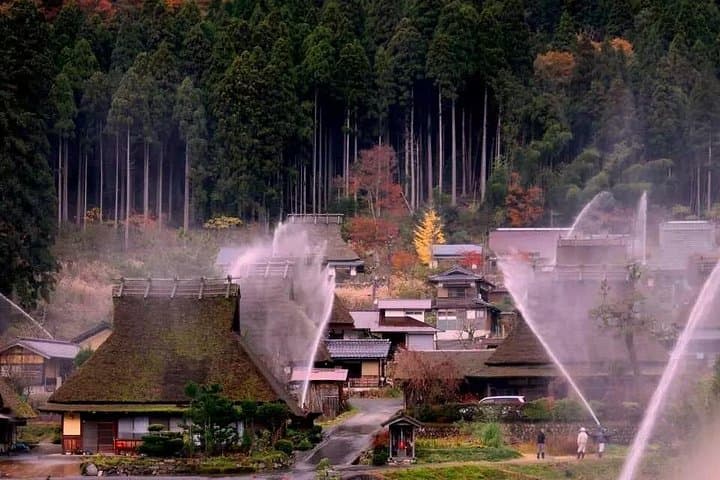
Geology here speaks in sand and stone: the sandbar formed by longshore drift, planting a line of pine that has drawn eyes for centuries. Amanohashidate has been celebrated since Heian-era poets named it one of Japan’s three best views; nearby villages like Ine and Miyama preserve rural lifeways—kayabuki thatched roofs, centuries-old carpentry, and coastal fisheries that shaped local culture.
Expect photo-ready panoramas, short coastal walks, and a paced boat cruise that offers close looks at the funaya boathouses. Miyama’s lanes are compact and gentle—no steep alpine climbs, but uneven paths and wooden thresholds require attention. Guides point out regional crafts and seasonal foods: in colder months, the landscape dons snow and the harbor hushes under a different light.
Practical guidance: bring sturdy shoes for wet docks and village streets, a wind layer for exposed viewpoints, and a camera with a mid-range zoom for boat shots. Plan for a full day—9–10 hours—including transport time from larger hubs. If you want quieter photos, aim for early departure dates outside peak holiday windows. The day is built for curiosity—listen to the sea and the old roofs as you move between eras of Japan’s coast.
The full-day tour runs about 9–10 hours with short, gentle walks at viewpoints, the boat cruise, and village lanes—no long hikes.
Yes; the 25-minute sightseeing cruise is calm and family-friendly but involves boarding a small boat and exposed decks.
Vegetarian requests must be noted at booking—on-the-day changes usually cannot be accepted.
Many areas are accessible and transportation is wheelchair-friendly, but some village streets and boat boarding can be uneven—check specifics in advance.
Trevopedia Wonders operates guided outdoor trips and adventures with an emphasis on safety, stewardship, and memorable experiences.

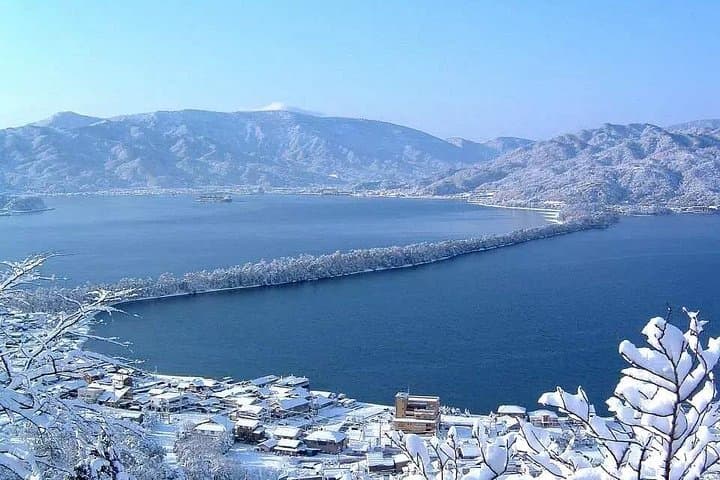
A chill wind off the Sea of Japan lifts the needles on Amanohashidate’s pines as the narrow sandbar unspools before you—a green bridge that divides and defines Miyazu Bay. The tour begins with a low-slung sightseeing boat easing into Ine Bay, where wooden funaya lean over the water like fishermen’s houses on stilts, their faces turned to the tide.
A chill wind off the Sea of Japan lifts the needles on Amanohashidate’s pines as the narrow sandbar unspools before you—a green bridge that divides and defines Miyazu Bay. The tour begins with a low-slung sightseeing boat easing into Ine Bay, where wooden funaya lean over the water like fishermen’s houses on stilts, their faces turned to the tide.
Geology here speaks in sand and stone: the sandbar formed by longshore drift, planting a line of pine that has drawn eyes for centuries. Amanohashidate has been celebrated since Heian-era poets named it one of Japan’s three best views; nearby villages like Ine and Miyama preserve rural lifeways—kayabuki thatched roofs, centuries-old carpentry, and coastal fisheries that shaped local culture.
Expect photo-ready panoramas, short coastal walks, and a paced boat cruise that offers close looks at the funaya boathouses. Miyama’s lanes are compact and gentle—no steep alpine climbs, but uneven paths and wooden thresholds require attention. Guides point out regional crafts and seasonal foods: in colder months, the landscape dons snow and the harbor hushes under a different light.
Practical guidance: bring sturdy shoes for wet docks and village streets, a wind layer for exposed viewpoints, and a camera with a mid-range zoom for boat shots. Plan for a full day—9–10 hours—including transport time from larger hubs. If you want quieter photos, aim for early departure dates outside peak holiday windows. The day is built for curiosity—listen to the sea and the old roofs as you move between eras of Japan’s coast.