THE ADVENTURE COLLECTIVE® · Independent discovery and booking for outdoor travel

Spend a full day in Amboseli National Park watching elephants roam beneath the gaze of Mount Kilimanjaro, plus a cultural stop at a Maasai village. This practical guide outlines what to expect, how to prepare, and the best ways to maximize a single-day safari.
Spend a full day in Amboseli National Park watching elephants roam beneath the gaze of Mount Kilimanjaro, plus a cultural stop at a Maasai village. This practical guide outlines what to expect, how to prepare, and the best ways to maximize a single-day safari.
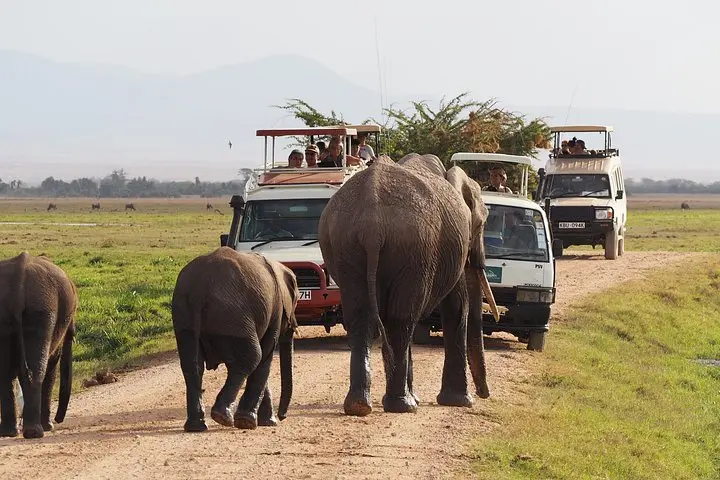
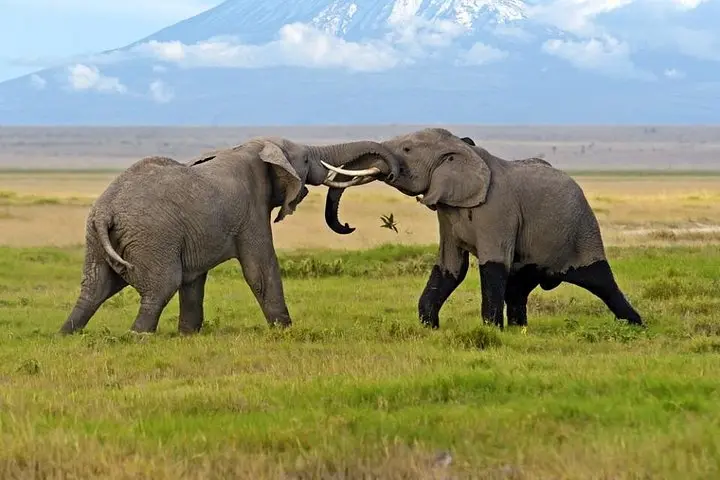
Dawn breaks across the dry salt flats of Amboseli and Mount Kilimanjaro pins the horizon with a snow-capped crown. The tour van hums over rutted tracks; elephants move like weathered monuments in the close light while plains birds stir the shallow wetlands. This is a safari of scale—big skies, big animals, and a mountain that seems to watch every pass.
Verified experiences and guided adventures in the surrounding area.
Operated by Gracepatt Ecotours Kenya · Amboseli, Kajiado County
Dawn breaks across the dry salt flats of Amboseli and Mount Kilimanjaro pins the horizon with a snow-capped crown. The tour van hums over rutted tracks; elephants move like weathered monuments in the close light while plains birds stir the shallow wetlands. This is a safari of scale—big skies, big animals, and a mountain that seems to watch every pass.
Amboseli sits at roughly 1,150 m on the Kenya–Tanzania border and covers about 392 km². The basin was shaped by volcanic activity and the ancient shifts that set Kilimanjaro towering to the south. Human histories here are recent and living: the Maasai have grazed and managed these plains for generations, and local lodges and guides weave cultural visits—like a Maasai village stop—into game-viewing days.
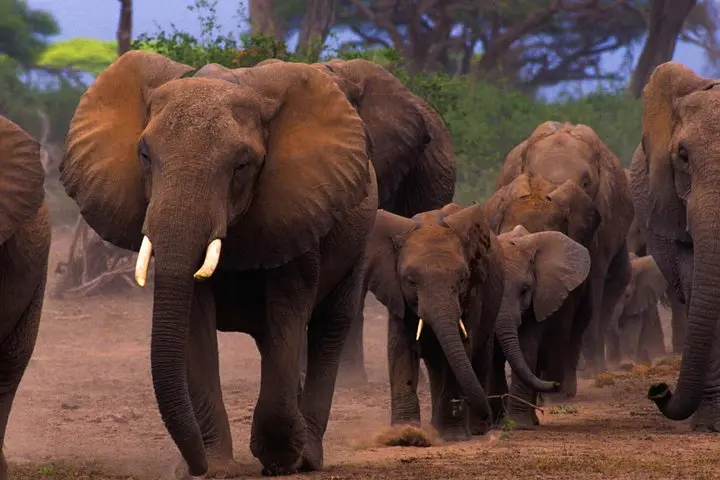
Expect a full-day rhythm: a multi-hour drive from Nairobi (roughly 4–5 hours depending on traffic), extended game drives inside the park, lunch at a park lodge, and a guided stop at a community village. Wildlife highlights commonly include large elephant herds, lion sightings at dawn or dusk, grazing zebra, buffalo, and a diversity of waterbirds around seasonal swamps.
Practical guidance: bring binoculars, layered clothing for chilly mornings and hot midday sun, and a charged camera with spare batteries. The terrain is vehicle-based—most viewing happens from a custom safari van—so mobility needs are low but camera-ready patience and sun protection are essential. Most operators include pickup, bottled water, and park access; confirm exact pickup point and timing the day before departure.
Expect roughly 4–5 hours each way depending on traffic and road conditions; many operators include hotel pickup early in the morning.
Amboseli is famous for its large elephant herds and clear mountain views but sightings are never guaranteed—Kilimanjaro visibility depends on weather and cloud cover.
Many full-day tours include an optional Maasai village visit; confirm with the operator as some visits are subject to timing and community availability.
Inclusions vary by operator—this tour typically covers transportation, bottled water, park access, and lunch at a lodge, but verify details at booking.
Gracepatt Ecotours Kenya operates guided outdoor trips and adventures with an emphasis on safety, stewardship, and memorable experiences.
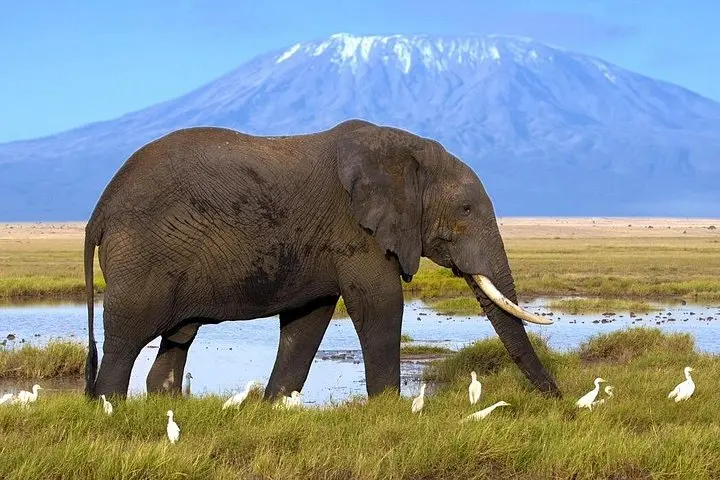
Dawn breaks across the dry salt flats of Amboseli and Mount Kilimanjaro pins the horizon with a snow-capped crown. The tour van hums over rutted tracks; elephants move like weathered monuments in the close light while plains birds stir the shallow wetlands. This is a safari of scale—big skies, big animals, and a mountain that seems to watch every pass.
Dawn breaks across the dry salt flats of Amboseli and Mount Kilimanjaro pins the horizon with a snow-capped crown. The tour van hums over rutted tracks; elephants move like weathered monuments in the close light while plains birds stir the shallow wetlands. This is a safari of scale—big skies, big animals, and a mountain that seems to watch every pass.
Amboseli sits at roughly 1,150 m on the Kenya–Tanzania border and covers about 392 km². The basin was shaped by volcanic activity and the ancient shifts that set Kilimanjaro towering to the south. Human histories here are recent and living: the Maasai have grazed and managed these plains for generations, and local lodges and guides weave cultural visits—like a Maasai village stop—into game-viewing days.
Expect a full-day rhythm: a multi-hour drive from Nairobi (roughly 4–5 hours depending on traffic), extended game drives inside the park, lunch at a park lodge, and a guided stop at a community village. Wildlife highlights commonly include large elephant herds, lion sightings at dawn or dusk, grazing zebra, buffalo, and a diversity of waterbirds around seasonal swamps.
Practical guidance: bring binoculars, layered clothing for chilly mornings and hot midday sun, and a charged camera with spare batteries. The terrain is vehicle-based—most viewing happens from a custom safari van—so mobility needs are low but camera-ready patience and sun protection are essential. Most operators include pickup, bottled water, and park access; confirm exact pickup point and timing the day before departure.